

BY GLORIA AKUDORO
The Fiscal Responsibility Commission (FRC) has championed the broader implementation and integration of the Fiscal Responsibility Act (FRA) throughout all 36 states of the Federation, aiming to bolster debt management and enhance fiscal transparency.
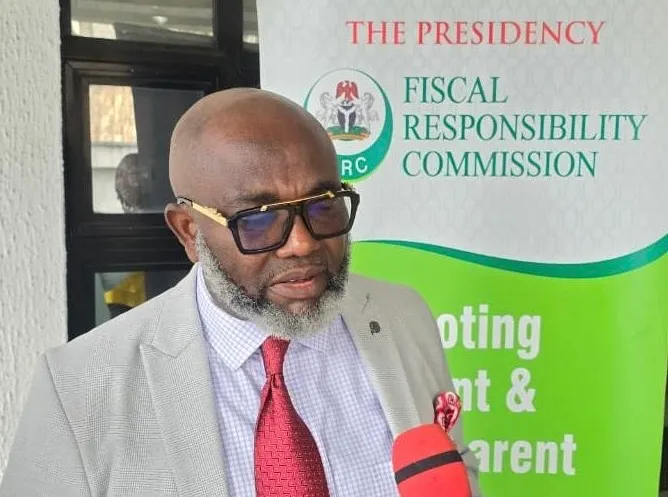
The Chairman of FRC, Mr Victor Muruako,spoke during the 2025 National Conference on Public Accounts and Fiscal Governance organized by the Public Accounts Committees of the Senate and the House of Representatives in Abuja, recently.
The conference was themed, “Debt Control and Transparency in Fiscal Matters: The Imperative of Operationalising the Fiscal Responsibility Act Across the States.”
He underscored the importance of prudent debt management and transparent fiscal practices as essential foundations for enduring national progress.
Muruako highlighted the pressing need to address the country’s rising subnational debt levels and fragmented fiscal governance landscape.
He said prior to the FRA’s enactment in 2007, Nigeria grappled with a “boom-bust” fiscal cycle characterised by unsustainable borrowing, lack of a savings culture, poor intergovernmental fiscal relations, and minimal transparency. He cited staggering pre-2005 external debt figures exceeding \$34 billion and widespread uncoordinated expenditure as evidence of the country’s past fiscal ills.
He noted that while the Federal Government responded by enacting the FRA to enforce budget discipline, set debt limits, and improve accountability, only 26 out of 36 states have adopted similar fiscal responsibility laws, and even fewer have operationalised them effectively.
“The fragmented implementation of the FRA at the state level undermines national fiscal stability and perpetuates unsustainable debt burdens,” he warned.
Muruako outlined key pillars for achieving effective debt control at subnational levels, including the establishment of independent monitoring agencies, strict adherence to borrowing limits, prudent project selection, robust debt management units, and regular debt sustainability analyses. He stressed the importance of timely and accurate fiscal reporting, open budgeting, public access to financial data, and active citizen engagement to reinforce transparency and accountability.
The chairman further called for harmonised frameworks between national and state fiscal governance structures, joint monitoring and reporting mechanisms, and enhanced information-sharing platforms.
Muruako suggested a multifaceted approach moving forward, including robust legislative advocacy to amend and fortify the FRA, enhanced initiatives for complete domestication in the remaining states, focused technical support programs, and the utilization of digital platforms for the immediate dissemination of fiscal data. Additionally, he advocated for the implementation of incentives to encourage state compliance, akin to the SFTAS (States Fiscal Transparency, Accountability, and Sustainability) program.
The session concluded with a rousing call to action, urging all stakeholders to unite in promoting fiscal responsibility, curbing unsustainable debt, and fostering greater transparency across all levels of government.
“Let us commit to enhancing transparency, curbing unsustainable debt, and fostering unprecedented fiscal coordination for a fiscally responsible and accountable Nigeria,” Muruako stated.



