

…Says allegation economically unrealistic
…Sales agreements, tender conditions prohibit buyers from re-importing products into Nigeria
… Analysts say fuel prices rise lie rockets when crude prices increase but descend like feathers when oil prices retreat
By Simeon Ogoegbulam
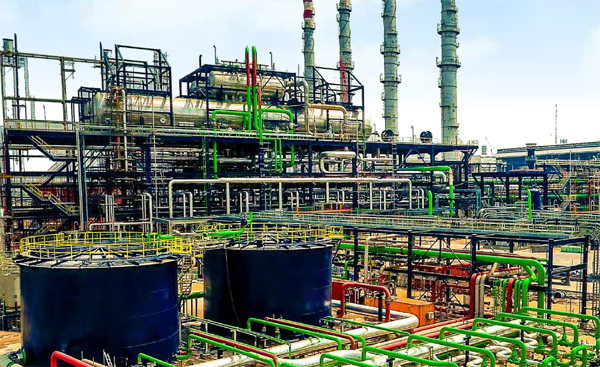
Dangote Petroleum Refinery has dismissed allegations that petroleum products refined at its facility were exported to Lomé, Togo, and later re-imported into Nigeria, describing the claims as false and lacking commercial justification.
An analyst from S&P Global Commodity Insights had revealed during a Major Energies Marketers Association of Nigeria (MEMAN) webinar recently that Nigerian fuel marketers are increasingly importing Dangote-origin fuel via the offshore Lomé hub.
Discussions at the webinar suggested that Nigerian fuel marketers were utilising an offshore ship-to-ship trading hub in Lomé, Togo, to buy Dangote-refined products and route them back into the Nigerian market, fuelling allegations of “round-tripping” and arbitrage pricing, exposing deep divisions between the refinery and domestic fuel distributors.
This sparked a public debate amid ongoing resistance between local oil marketers and the refinery over local wholesale pricing strategies.
Mr Tony Chiejina, Head of Corporate Communications, Dangote Group, said in a statement, that the allegation had no economic, strategic, or operational basis.
The company expressed concern over the circulation of what it described as unfounded reports suggesting that products refined at its facility are being routed through neighbouring countries before finding their way back into the Nigerian market.
The Refinery stated that facilitating the importation of products that compete with its own output would be contrary to its business objectives.
“However, we have decided to clear the air on this ill-motivated web of falsehoods for posterity,” the company said.
The company explained that its commercial strategy is focused on strengthening its position in Nigeria’s domestic fuel market, making any arrangement that encourages competing imports commercially unreasonable.
“A key objective of Dangote Refinery is to maintain and strengthen its position as a leading supplier of petroleum products to the Nigerian market. Facilitating imports that compete directly with our own production would be inconsistent with this objective,” the management stated.
According to the Refinery, transporting products from its facility to Togo and then back into Nigeria would significantly increase costs and reduce profitability.
“The estimated logistics cost of moving products from Dangote Refinery to Lomé and subsequently back into Nigeria is approximately $80–90 per metric ton. These additional costs would significantly erode margins and make such transactions commercially unattractive,” the statement noted.
The company also revealed that its sales agreements and tender conditions expressly prohibit buyers from re-importing products into Nigeria. It added that it maintains comprehensive records of product sales, including lifting locations, vessels, counterparties, and destination declarations where required.
“Dangote Refinery maintains comprehensive records of all product sales, including lifting locations, nominated vessels, counterparties, and destination declarations where applicable.
“Any suggestion that the refinery is knowingly facilitating re-importation is inconsistent with the contractual restrictions imposed on buyers and the refinery’s established compliance procedures,” continued the Refinery.
It reaffirmed its support for local refining, stressing that dependence on imported petroleum products undermines domestic industrial growth and puts additional pressure on foreign exchange reserves.
“It would, therefore, be inconsistent with both the refinery’s commercial interests and its publicly stated position to support or encourage practices that increase imports into Nigeria,” the management stated.
Nigerians, however, quickly reacted to the rebuttal on Dangote Refinery Facebook page, enquiring why the Refinery did not address concerns over why its products cost more in Nigeria than in neighbouring West African countries, even when the hostilities in the Middle East are over and the Strait of Hormuz has been reopened.
A resident of Lagos, Mohammed Sani urged Dangote to bring down the price of its products as “the war between US and Iran is over, Strait of Hormuz is opened and price of crude oil is down,” saying that there is no further justification for the price of fuel to be high.
Others like Newton Atenaga Ezekiel, Shamusu abdulahi, and Ikenna Ezeugwu, an Abuja resident want product price reduction as seen in other West African countries.
“We only want you to state how much you are selling your products to Nigerians as against the neighbouring countries. We do not want to know your company policies neither did we study company law nor interested in your company policies,” Ezeugwu stated.
Meanwhile, crude prices surged by approximately 85 per cent, pump prices climbing to around N1,360 per litre, representing an increase of about 54 per cent. While crude oil has declined from much of its war-induced gains, domestic petrol prices have been far slower to follow suit.
Analysts say the discrepancy highlights an asymmetry that has long characterised fuel markets globally where prices rise like rockets when crude prices increase but descend like feathers when oil prices retreat.
The de-escalation of tensions and diplomatic efforts between Washington and Tehran have eased concerns over supply disruptions, leading to a broad sell-off in oil markets.
Additional downward pressure came from expectations that Iranian exports could return more fully to international markets and that shipping through the Strait of Hormuz would normalise.
Concerns about weaker global demand and rising output from non-OPEC producers have also contributed to the decline.
As a result, Brent crude has retreated to levels last seen before the outbreak of hostilities.
Interestingly, the easing of tensions prompted Dangote Petroleum Refinery to slash its ex-depot price by N75 per litre from N1,250 to N1,175 effective June 16, retail prices have remained around ₦1,200 per litre in many parts of Nigeria.
The refinery attributed the reduction to improved market fundamentals following the de-escalation of tensions in the Middle East.
It also lowered its coastal supply price from N1,595,790 to N1,495,215 per metric tonne, reducing procurement costs for marketers.
The move strengthened expectations that pump prices would decline further.
Historical price transmission patterns suggest they should.
When crude prices climbed from $68 to $126 per barrel, an increase of about 85 per cent, petrol prices rose from roughly N850 to N1,300 per litre, a rise of about 53 per cent.
Using the same transmission mechanism, the current decline in crude prices of more than 41 per cent should ordinarily place petrol prices between ₦900 and ₦1,000 per litre.
A simple proportional calculation would imply an even lower price of below ₦800 per litre.
However, analysts cautioned that crude oil accounts for only part of the final cost of petrol.
Findings further showed that exchange rates, shipping charges, storage costs, transportation expenses, dealer margins and taxes all influence the retail price.
Even after accounting for these variables, energy experts say PMS should realistically retail around ₦1,000 per litre.
In Nigeria, marketers have similarly attributed the slow pace of reductions to inventories purchased at higher prices, exchange-rate volatility and logistics costs.



