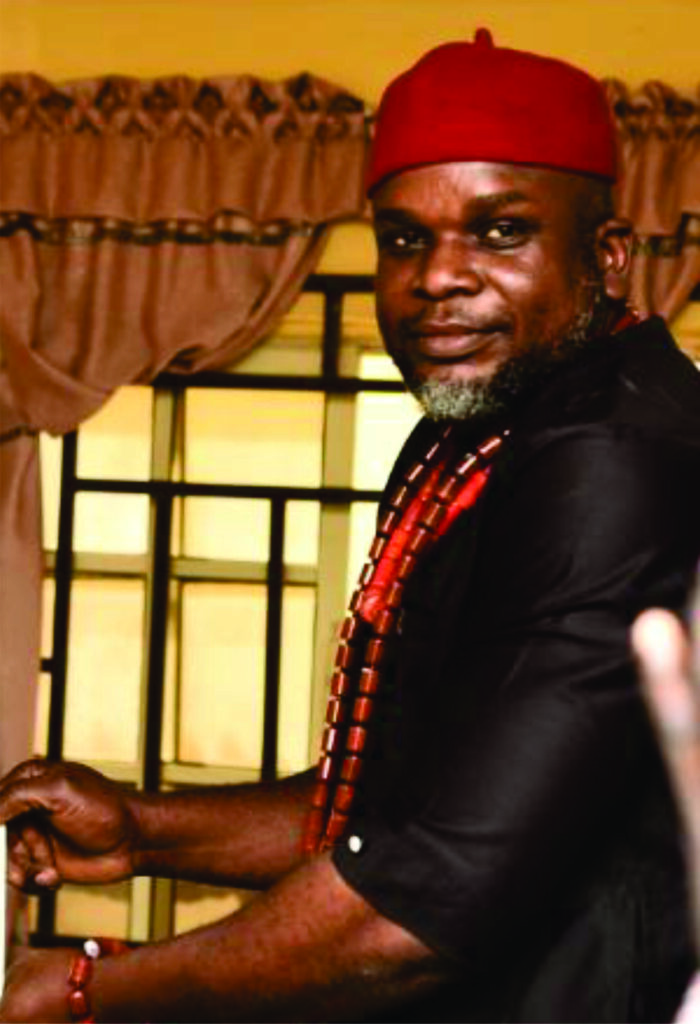
In this interview with our Senior Correspondent, ABBANOBI – EKU ONYEKA, the Chairman, Feed Nation Ltd, a company operates in many sectors, Amaobichukwu Unaegbu, who doubles as the Igbo traditional ruler in Tasha, Abuja, draws government’s attention to the plight needs of traders in the markets in the nation’s capital. Excerpts:
What message do you have for your subjects this year?
Last year wasn’t a good one, both in business and everything. So I believe that this is the year of adjustment and encouragement. Therefore, let us encourage ourselves to do our best. The upcoming elections hold a lot for us, especially if we put the right candidates into positions, Nigeria will pick up again, because so many things aren’t functioning well; no light, no diesel. The scarcity and high cost of gas, petrol and other things made many things difficult. The Small, Medium Enterprises (SMEs) can’t cope. Hopefully things will be good this year. So I urge them to do their best.
What do you mean by them doing their best?
General Ibrahim Babangida once said in an interview that Nigerians are resilient, resourceful and productive, they can survive in anything. What I mean is resourcefulness. If a situation presents you with minimal or no resources, it provides in so many ways; you cut down unhealthy expenses; ensure you didn’t soil your hand. You must be very resilious in what you are doing.
Your subjects, Igbo people (Nd’Igbo) are known for business but the economy isn’t friendly to all. What effort is this palace making for them to cope?
In our little capacity, we have done many things. We organized a free seminar last year and this year, we are planning to do such a seminar on skill acquisition and financial management.
We have also reorganized the South East Political Forum (SEPF) for Nd’Igbo. Last year alone, SEPF connected the grassroots here to the councillor and the chairman of Abuja Municipal Area Council (AMAC). They made requests and problems known to the government on matters like poor road networks, the uncompleted market in the forest, among others.
For the first time, my people have got a front through which they can discuss with the politicians. This will go a long way to address our problems.
Traders have decried high rates charged them for loans by commercial and microfinance banks. What is the Association of Microfinance Banks doing to address this, because most people under you are Igbo traders?
The business environment in Nigeria isn’t standard and it is of recent you may trace Nigerians. What I mean is that a bank giving you N1 million is risking about N950,000. Now that Bank Verification Number (BVN) has been introduced, that risk has come down. The instability in the government has made things unworkable and it is affecting microfinance also. If you give loan to a person and demolition comes and he is relocated or you give loan to a poultry farmer, another policy opens the border for people to import chicken. and he can’t sell his products, what can he do?
Most things the government is doing is affecting everybody. So the introduction of the BVN is a very good one. Another thing is that a borrower should be educated to know how much he has, or if he will be able to pay from what he is doing. You don’t just get a loan without studying very well, to know if you can make it and pay back. No bank will give you money freely. A bank once gave me N4 million to pay back in six months; that is ugly. They call it quick buck. I collected it because I needed the money. Not all loan structures are good for business. The banks are trying, because the environment isn’t matured for long term loans.
Still talking about the welfare of your subjects who are mainly traders, can you shed light on the market you said was moved from Jabi to here?
The Government gave the allocation at N20,000 per shop; about N100,000 per warehouse and the traders have built the structures. What we are looking at now are the infrastructure like the road network especially, electricity, water, among others. Although people can get light from elsewhere, if it is done by the government and also put in water and roads, the market will look neater.
As you rightly said, my people are in the business of buying and selling and I want the best for them. You go to Wuse, Gudu, Garki, Dei Dei and other markets in the FCT, they are more populated by Ndigbo than other tribes. Based on their contributions to the development of Abuja I would like the government to always improve these markets for them to do more.
However, there are the problems of government negligence and that of people not knowing what they want and even if they do, how to go about it. You need to wake up from your slumber to get what you need. For business to thrive, electricity which is irregular is very important and the traders are expected to come out in an organised way to make a demand to that effect. If they organise themselves and go to the AMAC and even to the FCT Administration (FCTA) and present their needs, they will certainly listen to them. Energy and water are very important in whatever we are doing. For you to have water, you have to pay through your nose. So, I decided to concentrate on the borehole.
There are many problems within and outside the markets. The sanitary people don’t extend their services there: no toilets in some, not to talk of gutters.
If you go to some market, such as Dei Dei, insecurity has always been a problem and you find out that they have lost a lot of goods as a result of that. Non Igbos usually make trouble there and loot goods worth billions of Naira. I know more than 10 traders in Dei Dei market who can afford to buy many Toyota Hilux Pickups. I urge them to buy even two or three to assist the Police in the discharge of their duties. Dei Dei market traders do a huge turnover and so can afford to do that.
How do you combine traditional rulership with your chains of business?
I want to use this time, based on your question, to commend Chief of Jiwa Chiefdom, HRH, Idris Musa, for his fatherly advice and mentorship. He gives advice that helps you in your rulership and business too. What I learned from him is that there is time for everything. While you are going about your position with fear of God, you do your business. For you to be a traditional ruler, you must have something to do, otherwise you end up soiling your hands by illegally feeding from your subjects, among others.
As a traditional ruler, what are you doing to rekindle the dying Igbo culture, language, tradition?
There are a lot of issues surrounding the traditional rulers in the diaspora. Firstly, how some of them came into the throne; secondly, the mindset and personality of a particular traditional ruler. At our meetings, I usually wonder why and how some characters became traditional rulers. So to me, we need reorientation, by inviting resource persons who are well equipped in Igbo culture and norms to educate them on how to go about the position they are holding.