By Ameh George
The Independent National Electoral Commission (INEC) has uploaded the preliminary voter register to its online platform following calls for broader public access ahead of the 2027 general election.
In a statement on Monday, Mohammed Haruna, chairman of INEC’s information and voter education committee, said the preliminary register of voters displayed between October 9 and 15 will be updated.
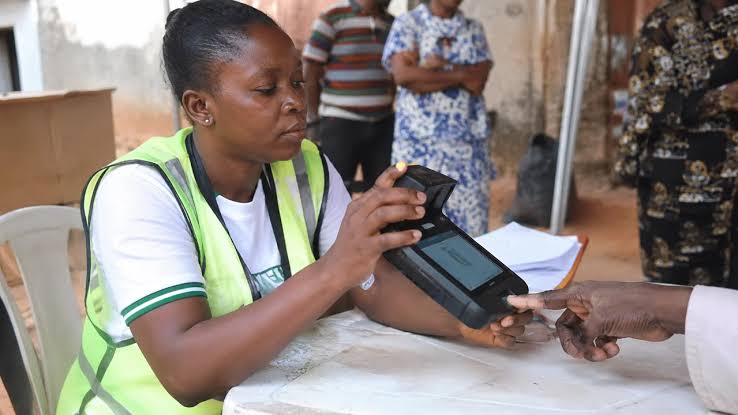
“In accordance with section 19 of the Electoral Act, 2026, the commission conducted the physical display of the register at registration areas nationwide from 9th to 15th October, 2026, providing registered voters the opportunity to inspect their particulars and submit claims and objections as prescribed by law,” he said.
Haruna added that the online publication followed the physical display of the preliminary register at registration areas nationwide, in line with Section 19 of the Electoral Act 2026.
The chairman of the information and voter education committee said the online publication would complement the physical exercise and provide wider access to the register.
“Accordingly, and in furtherance of its commitment to transparency, accessibility and public confidence in the electoral process, the commission has decided to make available on its online platform https://display.inecnigeria.
“This additional measure complements the physical display already undertaken and is intended to facilitate wider public access to the register.
“Meanwhile, the commission continues to process claims and objections arising from the exercise in accordance with the Electoral Act, 2026, preparatory to the certification and publication of the final register of voters on 15th December 2026.”
He reiterated the commission’s commitment to transparency, accountability and implementation of the Electoral Act 2026.
Meanwhile, there appears to be some irregularities in the tentative voter register released by INEC with screenshots circulating on social media showing questionable voter entries and raising serious concerns about the credibility of the database ahead of the general elections.
The latest revelations come after Nigerians began scrutinising the register published online, uncovering entries that have triggered questions about how INEC verifies voters’ identities and prevents duplication in the electoral database.
Screenshots shared on X by users, including Morris Monye, showed multiple entries bearing similar names but different photographs and voter identification numbers. Among the names highlighted in the posts are “Akpaudo Emmanuel E.” and “Bassey Ukeme P.”
The emerging discrepancies have intensified concerns over the reliability of the voter register, particularly as the country prepares for next year’s general elections. The findings have also fuelled public questions about whether INEC’s verification procedures are adequate to prevent questionable entries from appearing in the database.
The fresh controversy extends to allegations that AI-generated images have been used to create fake voters, alongside claims that duplicated records contain the same photographs and National Identification Numbers (NINs) but different voter numbers.
The latest controversy adds to longstanding concerns over duplicate registrations and other irregularities in the national voter database, placing INEC’s voter registration and verification processes under renewed scrutiny.
With the 2027 elections approaching, the reported discrepancies have raised further questions about the commission’s ability to ensure that the register accurately reflects eligible voters and does not contain duplicated or fabricated entries.
In a similar vein, INEC has also been accused over the use of AI-generated images to create fake voters in Ward 11, Uzairue South East, Etsako West Local Government Area of Edo State, following the appearance of suspicious photographs in the commission’s preliminary voters’ register published online.
The development has raised fresh concerns about the integrity of Nigeria’s electoral database ahead of the 2027 general elections, with questions emerging over how photographs suspected to have been generated using artificial intelligence found their way into the official voter register.
The issue became public on October 26, 2026, after housing advocate and property expert Decosule, known on X as @SuleDeco, shared screenshots from INEC’s online voter register display portal, displaying voter entries with photographs that he questioned as potentially AI-generated.
The screenshots featured voter records across several polling units in Ward 11, including Iyoku-Utukwe Afashio Booth and Ikabigbo Primary School.
The photographs, presented alongside voter details, triggered questions about the authenticity of the records and the process through which the images were uploaded into the commission’s database.
Decosule demanded explanations from INEC over who uploaded the photographs, who captured them and whether Permanent Voter Cards (PVCs) had been collected for the affected entries.
The questions have placed the commission’s voter registration and verification processes under scrutiny, particularly as Nigerians prepare for another general election.
The appearance of the photographs has also fuelled concerns about the possibility of fictitious identities being reflected in the electoral register.
If the entries are found to contain fabricated identities, the development would raise serious questions about the safeguards designed to prevent fraudulent registrations and protect the credibility of elections.
The controversy has generated reactions on social media, where Nigerians have questioned how images suspected of being artificially generated could appear in a database maintained by the country’s electoral umpire.
INEC must now provide a clear explanation of the photographs, the identities attached to them and the verification procedures applied to the affected entries. Nigerians deserve to know whether the images represent genuine registered voters, technical errors or fabricated records.
Also, INEC has reportedly restricted public access to election results on its Result Viewing Portal (IReV) for elections conducted under its current chairman, Joash Amupitan, without issuing any explanation.
The development was raised by an X user, Mundus (@mundus01), who said the results had been inaccessible for several days, accusing the electoral commission of failing to inform Nigerians about the disruption.
In a post on X, Mundus questioned why INEC had neither issued a maintenance notice nor offered an apology or explanation for the reported loss of access to the results.
The user described the situation as a sign of disregard for Nigerians, expressing frustration over what was characterised as a lack of transparency and accountability from the electoral commission.
Mundus also disclosed that results from some of the affected elections had been saved on private servers by Mundx Analytics for record-keeping and analysis.
The reported development comes amid concerns over INEC’s handling of election-related information, including the release of voters’ registers, raising further questions about public access to electoral records and transparency under Amupitan’s leadership.