

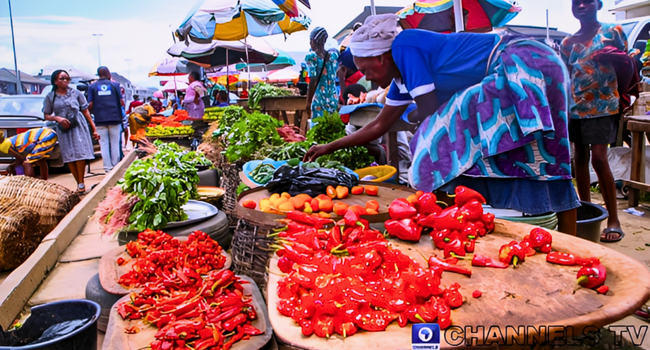
For years, conversations about food security in Nigeria have revolved around increasing agricultural production. Government at all levels have launched programmes to distribute improved seedlings; fertilisers, tractors and credit facilities to farmers. While these interventions are important, they address only one side of the food security equation. Producing more food is not enough if the country lacks the capacity to preserve what it harvests. Nigeria’s food crisis is no longer just a production problem. It is increasingly a storage problem.
The first question is whether Nigeria has storage facilities. The answer is yes. The country has a number of federal silo complexes, public warehouses, grain reserves and privately owned cold rooms.
However, these are grossly inadequate for a nation of more than 230 million people with millions of hectares under cultivation. Many government silos are poorly maintained, incomplete, underutilised or located far away from farming communities that need them most. In several rural areas where most food is produced; proper storage facilities are practically non-existent.
The consequence is evident in every harvest season. Farmers record bumper harvests only to watch a significant portion of their produce perish before reaching to consumers. Tomatoes rot in baskets: fresh peppers spoil within days; fish begins to decay shortly after harvest because there are no silos nearby; meat deteriorates without refrigeration and fruits are left to waste because transportation and preservation systems are inadequate. Even grains, which ordinarily have longer shelf lives, suffer from mould, insects and moisture damages due to poor drying and storage practices.
According to estimates by agricultural experts and development agencies, Nigeria loses between 30 and 50 per cent of several agricultural commodities after harvest. These losses represent billions of naira annually. They also represent wasted labour, investments, reduced farmer incomes and fewer food supplies in markets across the country.
Ironically, food scarcity often follows periods of abundant harvest. This contradiction exists because Nigeria lacks sufficient facilities to preserve surplus produce for future consumption. Farmers are forced to sell immediately after harvest when prices are lowest because they have nowhere to keep their produce. A few months later, supplies decline sharply, prices soar, and consumers bear the burden of food inflation.
This cycle has persisted for decades. It is, therefore, misleading to assume that food insecurity can be solved simply by expanding cultivation. Unless Nigeria develops adequate storage infrastructure alongside increased production, the country will continue to lose enormous quantities of food while millions struggle to afford basic meals.
Who then should provide these storage facilities, is a question whose answers remain silent. However, the responsibility cannot rest solely on farmers, because most Nigerian farmers are smallholders cultivating only a few hectares of land. Many already struggle with rising costs of fertilisers, improved seeds, mechanisation, transportation, access to credit and insecurity. Expecting such farmers to individually build silos, warehouses, cold rooms or drying centres is unrealistic.
Storage infrastructure should be treated as essential public infrastructure, just like roads, bridges, hospitals, schools and water projects. It serves a public purpose by reducing food losses, stabilising prices, improving nutrition and strengthening national food security.
This, therefore, places the primary responsibility on governments. The Federal Government should focus on developing strategic grain reserves, modern silo complexes, national food reserve systems and policies that encourage private investment in agricultural logistics. Strategic food reserves are vital not only during emergencies but also in stabilising food prices during periods of scarcity, war, crisis or natural disasters.
State governments should establish commodity aggregation centres, regional warehouses, processing clusters and modern cold chain facilities in major agricultural belts while also providing adequate security for farming communities and agricultural infrastructure. Every state has comparative advantages in agricultural production and should develop storage systems tailored to its dominant crops and livestock.
Local governments, however, may have the most immediate role to play because they are closest to rural farming communities. Every Local Government Area should identify its major agricultural products and establish community storage centres accordingly. Grain-producing communities should have modest but efficient silos and warehouses for maize, rice, sorghum, millet, beans and groundnuts. Fishing communities should have solar-powered cold rooms and fish preservation centres. Livestock-producing areas should have meat preservation facilities. Communities known for tomatoes, peppers, okra and fruits should have solar or electric dryers and cold storage units that can extend shelf life while preserving nutritional value.
These facilities need not be extravagant. Well-designed community-based storage systems managed in partnership with farmers’ cooperatives can dramatically reduce post-harvest losses at relatively modest cost. Such projects would not only preserve food but also create employment opportunities in storage management, processing, transportation and marketing.
Nigeria does not have to reinvent the wheel. Several countries have demonstrated that investment in storage infrastructure significantly improves food availability and reduces waste.
India, through its extensive network of grain warehouses and public storage managed by government agencies, has strengthened food distribution and maintained strategic reserves capable of supporting millions during shortages and emergencies.
Brazil has invested heavily in agricultural logistics, storage facilities and processing centres that enable farmers to preserve harvests, reduce losses and access markets throughout the year. These investments have contributed to the country’s emergence as one of the world’s leading agricultural exporters.
The Netherlands, despite its relatively small landmass, has built sophisticated cold-chain systems, refrigerated transport and modern food logistics that allow fresh vegetables, dairy products, flowers and fruits to remain available in excellent condition for domestic consumption and export.
Even neighbouring countries are increasingly investing in solar-powered cold rooms and community storage systems to reduce losses among smallholder farmers, especially in areas where electricity supply is unreliable.
The lesson is unmistakable. Countries that store food efficiently waste less, enjoy more stable prices, improve farmers’ incomes and strengthen national food security.
Nigeria must embrace the same philosophy. The current emphasis on increasing food production without corresponding investment in preservation is economically unsustainable. Every bag of maize destroyed by pests, every basket of tomatoes left to rot and every kilogramme of fish spoilt after harvest represents not only food lost but income destroyed and hunger prolonged.
Government budgets should, therefore, recognise storage infrastructure as an agricultural priority rather than an afterthought. Public Private Partnerships should be encouraged to expand cold-chain facilities, warehouses and drying centres across the country. Financial institutions should also provide affordable financing for cooperatives willing to manage community storage facilities.
Beyond physical structures, however, governments should invest in training farmers on modern post-harvest handling techniques, moisture control, grading, packaging and quality preservation. Better knowledge, combined with better infrastructure, will significantly reduce avoidable losses.
Food security begins not only on the farm but also in the warehouse, the silo, the cold room and the drying centre.
Nigeria cannot continue celebrating bumper harvests while enormous quantities of food disappear before reaching consumers. The nation must stop treating post-harvest losses as an unavoidable consequence of agriculture. They are largely preventable through deliberate investments in storage infrastructure.
The call, therefore, is clear. The Federal Government should expand strategic grain reserves and national silos. State governments should build commodity hubs, warehouses and cold-chain infrastructure. Local government chairmen should establish community-based silos, solar-powered cold rooms and electric or solar dryers across rural communities to preserve grains, fruits, vegetables, fish, meat and other perishables.
Nigeria does not only need more farms. It urgently needs more places to safely keep what those farms produce. Until the country stores better, it will continue to lose food, farmers’ incomes and precious opportunities to achieve lasting food security.



