

By Victoria Yakubu
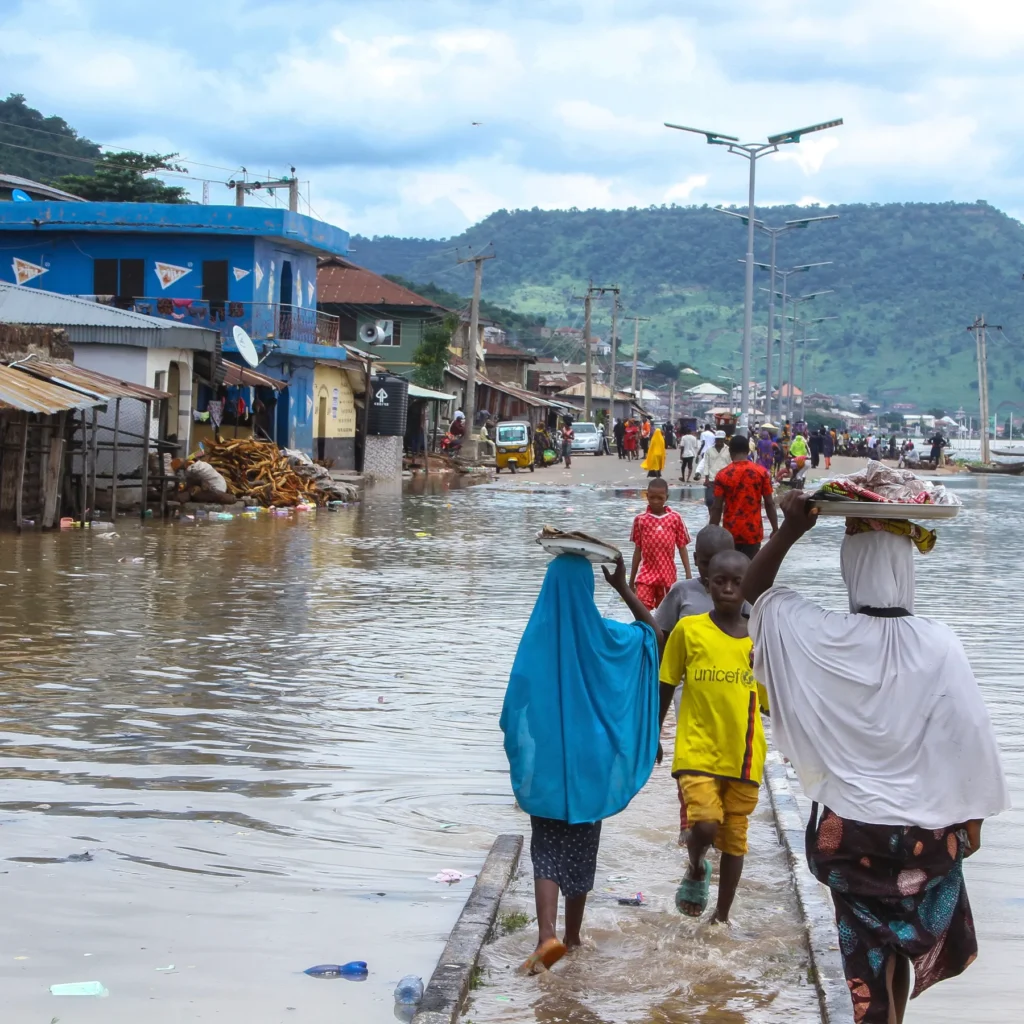
Residents of Ayinke Street in the Shogunle area of Oshodi, Lagos State, have blamed the devastating flooding that took place on June 27, 2026, on the collapse of a section of the Nigerian Air Force Base perimeter fence and blocked drainage channels, saying the disaster destroyed homes, damaged vehicles, disrupted businesses and left many families counting millions of naira in losses.
A telephone interview with an eyewitness, Ahmed Olarinwaju, on Wednesday revealed that residents were still struggling to recover from the flood. According to him, soaked mattresses, sofas, clothing, television sets and other household items were spread outside homes to dry, while piles of mud, bricks and refuse littered the streets.
Olarinwaju said sections of the Nigerian Air Force Base perimeter fence had collapsed, leaving debris scattered across the road. One vehicle had its windscreen shattered by falling rubble, while another remained trapped amid refuse deposited by the floodwaters.
He maintained that although the rainfall was heavy, the scale of destruction was worsened because blocked drainage channels prevented floodwaters from flowing through existing routes.
A landlord, identified simply as Moses, recalled that residents were still outdoors despite the rain before the situation deteriorated in the early hours of Sunday.
“At about 2 a.m., while it was raining, people were still outside. Some were even taking out refuse, and cars were still moving,” he recalled.
According to him, environmental sanitation activities around the Air Force perimeter fence shortly before the incident may have contributed to the disaster. “When the water level rose, it had nowhere to go. The pressure caused the fence to collapse, and the floodwater rushed straight into our homes. Every single house here was affected.”
Another resident, Mr. Dan Taiwo, said families lost property worth millions of naira, while several vehicles were badly damaged.
“This is one of my cars, a concrete pole fell on it, and I have another damaged vehicle over there. People’s electronics, furniture and personal belongings were destroyed. It wasn’t that the fence collapsed on its own. If the drainage openings had been properly cleared, this wouldn’t have happened. People are angry because they have lost so much,” said Taiwo.
He added that no household escaped the disaster. “The woman living upstairs also lost many of her belongings. This disaster spared nobody.”
Shop owner Mrs. Bukola Fagbenro said the flood arrived with little warning, destroying both her home and business. “The rain started like a joke, but before we knew it, floodwater had entered every house. It destroyed so many things. One of my vehicles was damaged, while others have already been taken to mechanics’ workshops for repairs.”
She said some vehicles were swept into a nearby canal. “The flood even carried some vehicles into the canal. It was only after the water went down that people managed to recover them.”
Fagbenro said her livelihood was also wiped out. “I sell garri, and I usually keep my stock on the floor inside my room. The flood washed everything away. Many of us are still trying to come to terms with what happened that morning.”
Describing the incident as unprecedented, she said, “This has never happened before. The fence collapsed into the canal during the downpour, making the situation much worse. Dirt and refuse from other areas blocked the canal completely. Before now, whenever it rained, the water flowed away within five minutes. You wouldn’t even know it had rained. This was completely different.”
Another resident, identified simply as Chioma, said the rainfall became disastrous only after the Air Force fence gave way.
“The rain started normally. There was nothing unusual about it, the floodwater coming from the Air Force Base was already much, but everything got out of hand when the wall collapsed,” she said.
For Josephine, the disaster unfolded while she was away in Alakuko.
“I wasn’t around when the rain started. Someone called me to say it was raining heavily in our area. I told them there was no rain where I was. But before I got home, I had already lost everything inside my house,” she said.
She said rebuilding would be difficult without external assistance.
The flooding also affected residents of Fakorede Street in Shomolu, where prolonged rainfall submerged homes, disrupted businesses and prevented many children from attending school.
Food vendor Mrs. Sajudeen said the rain began on Saturday night and continued into Sunday morning.
“The rain started on Saturday night and continued throughout Sunday. By early morning, everywhere was flooded. Water entered people’s compounds and eventually their homes. There was practically nothing anyone could do to save their belongings,” she said.
She recalled watching floodwater carry away her children’s school books.
“My children’s books were floating on the water. All we could do was use buckets to scoop water out of the house while praying for the rain to stop. I couldn’t open my food business, and my children couldn’t go to school because we couldn’t even leave the house,” she said
She blamed blocked drains and indiscriminate refuse disposal for worsening the flooding: “I think the gutters are blocked, and the canal is filled with dirt. I heard that some people throw refuse inside the gutters, making it impossible for water to flow.”
Appealing for urgent government intervention, she said. “The government should help us by making sure the gutters are properly cleared. They should also monitor neighbourhoods after sanitation exercises and sanction people who refuse to comply.”
Findings by the New National Star indicate that while the prolonged rainfall triggered Sunday’s flooding, residents believe blocked drainage channels, accumulated refuse and the collapse of the Nigerian Air Force Base perimeter fence significantly worsened the disaster by preventing floodwaters from flowing through existing drainage routes.
Environmental experts have long warned that blocked drains, poor waste management, continued urbanisation and inadequate drainage infrastructure continue to heighten flood risks across Lagos during the rainy season, while urban planners also said that indiscriminate dumping of refuse into drainage channels reduces their carrying capacity, causing floodwaters to overflow into residential communities during prolonged rainfall.
Residents appealed to the Lagos State Government and other relevant authorities to provide emergency relief for affected families, improve drainage infrastructure, enforce environmental sanitation laws and carry out regular desilting of canals before heavy rains.
With the rainy season entering its peak, many affected families now face the daunting task of replacing damaged property, rebuilding their businesses and recovering from unexpected financial losses, while hoping improved drainage infrastructure and stronger environmental sanitation enforcement will prevent a recurrence of the disaster.



