Soldier • Peacekeeper • Diplomat • Statesman
Lieutenant General Chikadibia Isaac Obiakor was a distinguished Nigerian military officer, international peacekeeper, diplomat and strategic leader whose remarkable career spanned almost four decades and took him from the ranks of the Nigerian Army to one of the most senior military positions within the United Nations system.
Born on 18 February 1951 in Zaria, Kaduna State, Nigeria, General Obiakor hailed from Awka South Local Government Area of Anambra State. He received his early education in Zaria and subsequently attended the Nigerian Military School before gaining admission into the Nigerian Defence Academy (NDA) as a member of the 10th Regular Course in 1971. He was commissioned into the Nigerian Army in 1973.
From the beginning of his military career, General Obiakor distinguished himself through professionalism, discipline, intellectual ability and a deep commitment to duty. He served in a number of command, staff and strategic appointments within the Nigerian Army, rising steadily through the ranks to become a Lieutenant General.
Among his most important national appointments was his service as General Officer Commanding (GOC), 2 Division of the Nigerian Army, one of the Army’s major operational formations. He subsequently served as Chief of Administration at Army Headquarters, where he was responsible for matters relating to the welfare, discipline and medical services of Nigerian military personnel.
A Distinguished Peacekeeper in Liberia
General Obiakor’s military career was closely associated with international peacekeeping, particularly the search for peace and stability in Liberia.
During the Liberian civil conflict, he served as Commander of the ECOMOG Artillery Brigade in Liberia from 1996 to 1997. He subsequently served as ECOMOG Chief Coordinator for the Liberian elections in July 1997, contributing to the regional effort to support the country’s transition from conflict towards democratic governance. Contemporary UN records describe him as an experienced officer who had already developed extensive knowledge of Liberia and the West African peacekeeping environment.
His experience in Liberia would later become one of the defining chapters of his international career.
In 2005, United Nations Secretary-General Kofi Annan nominated General Obiakor to serve as Force Commander of the United Nations Mission in Liberia (UNMIL). The United Nations Security Council took note of the appointment, and he assumed the position on 1 January 2006.
As UNMIL Force Commander, General Obiakor commanded the military component of one of the United Nations’ most important peacekeeping operations in Africa. His tenure coincided with a critical period in Liberia’s post-war reconstruction and consolidation of peace.
His work extended beyond military operations. Among the challenges confronting the mission was the security of Liberia’s borders and the prevention of instability spreading across neighbouring countries. His tenure included efforts involving regional cooperation and joint border patrol arrangements with neighbouring states.
First African United Nations Military Adviser for Peacekeeping Operations
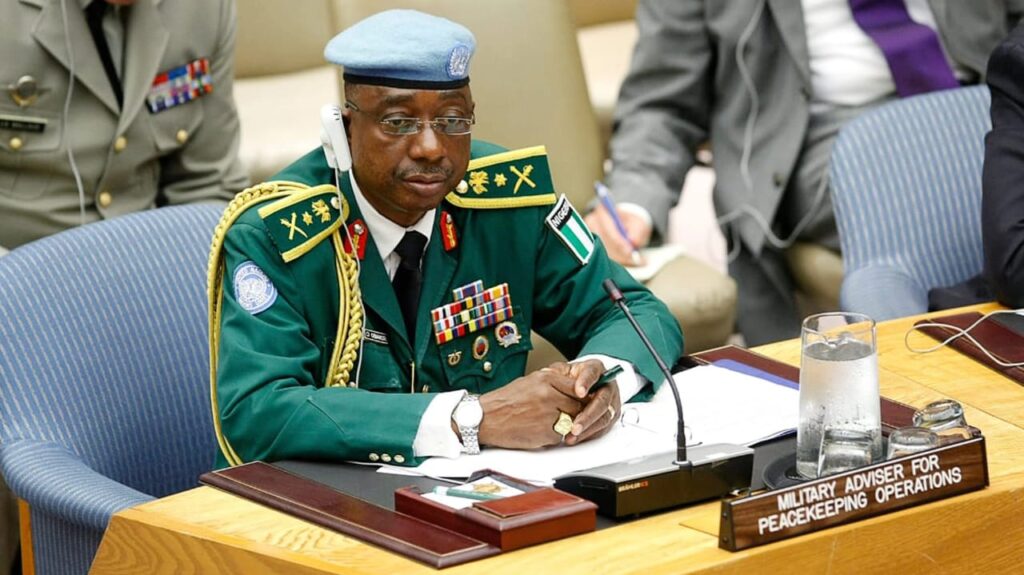
In 2008, General Obiakor reached the highest level of international military responsibility when United Nations Secretary-General Ban Ki-moon appointed him Military Adviser for Peacekeeping Operations at United Nations Headquarters in New York.
The appointment placed him at the centre of global United Nations peacekeeping policy and operations. He advised the UN on military matters relating to peacekeeping missions around the world and served with the Office of Military Affairs within the Department of Peacekeeping Operations.
He was the first African to occupy the position of United Nations Military Adviser for Peacekeeping Operations, and he simultaneously held the rank of Assistant Secretary-General of the United Nations. His appointment represented a significant milestone not only in his personal career but also in Africa’s contribution to international peace and security.
He served in that position until 2010. The United Nations subsequently continued to call upon his experience for sensitive international assignments. In 2018, for example, he was appointed to lead a special investigation into the September 2017 incident in Kamanyola, South Kivu, Democratic Republic of the Congo, examining challenges facing the UN peacekeeping mission and making recommendations concerning the protection of civilians and troop performance.
Education and Professional Development
General Obiakor was a graduate of the National War College in Abuja and obtained a Master of Science degree in Strategic Studies from the University of Ibadan. Throughout his military career, he undertook numerous professional military courses and international programmes in Nigeria and abroad, broadening his understanding of military strategy, conflict management, leadership and international security.
His career demonstrated a rare combination of battlefield experience, operational command, strategic planning and international diplomacy.
A Life of Service
General Obiakor retired from the Nigerian Army in 2011 after nearly four decades of military service. Retirement, however, did not mark the end of his contribution to peace and international security.
He continued to participate in international assignments and was called upon for his expertise in conflict resolution, peacekeeping and military affairs. His experience and reputation made him a respected figure within the Nigerian military, the United Nations system and the broader international peacekeeping community.
In 2019/2020, he led the UN investigation into the hospital bombings in Syria. He was also Director Higher Military Organisation at the National War College. He was also the Acting Military Administrator of Niger State and the Grand Patron of the Nigerian Psychological Association.
The Nigerian government later honoured him with the Officer of the Order of the Federal Republic (OFR) for his contributions to national and international service.
A Legacy of Peace
Lieutenant General Chikadibia Isaac Obiakor’s life was defined by service — to Nigeria, to Africa and to the cause of international peace.
His career reflected the changing role of the modern military officer: from commander in the field to strategist, peacekeeper, diplomat and international adviser. His contributions in Liberia were particularly significant, having served the country at different stages through both ECOMOG and the United Nations.
For Liberia, his name remains associated with a generation of Nigerian and West African military officers who played important roles in helping the country emerge from years of conflict and move towards peace.
For Nigeria, he represented the professionalism and capacity of its armed forces on the international stage.
For Africa, his appointment as the first African United Nations Military Adviser for Peacekeeping Operations was a historic achievement.
Lieutenant General Chikadibia Isaac Obiakor died on 27 May 2026, at the age of 75, after a brief illness. His death was mourned by the Nigerian government, military community, diplomats and leaders who recognised his decades of service to Nigeria and the international community.
He leaves behind a legacy of discipline, courage, strategic leadership, peacekeeping and service to humanity.
His story is ultimately the story of a soldier who rose beyond the battlefield to become an ambassador for peace carrying the Nigerian flag into some of the world’s most challenging theatres of conflict and helping demonstrate Africa’s capacity to contribute meaningfully to global peace and security.
May the soul of Lieutenant General Chikadibia Isaac Obiakor rest in perfect peace.