
By Oyeyemi Abolade
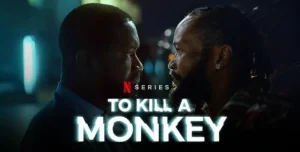
Kemi Adetiba’s lens doesn’t flinch. The director who gave us King of Boys returns with another cinematic banger — “To Kill a Monkey”, an unfiltered, unforgettable, and brutally necessary story that digs into the depths of human struggle, choices, Cyber fraud and consequence.
In this eight-part Netflix series, Adetiba trades glamor for grit, crafting a morally jagged narrative that interrogates poverty, betrayal, loyalty, and the high price of survival in a failing society. From the dark alleys of cyber fraud to the emotional wreckage inside Nigerian homes, To Kill a Monkey is both personal and political — a mirror many will find uncomfortable.
Set in a world where dignity is a luxury, the series follows Efemini (William Benson), a once-principled man worn down by hardship. After losing one of his newborn triplets due to poverty and unpaid hospital bills, and weighed down by family demands and humiliation, he’s pushed into the underworld of cybercrime. His transformation from reluctant recruit to strategic fraud architect is gradual — and deeply human — shaped by economic hardship, betrayal, and a society that turns its back on the vulnerable.
At the center of the fraud ring is Oboz (Bucci Franklin), a street-smart dropout whose charm masks toxicity, impulsiveness, and quiet cruelty. His portrayal is already drawing wide praise. As one viewer put it: “He didn’t act the role — he lived it.”
Efe’s moral line blurs even further when he crosses paths with Teacher (Chidi Mokeme), a veteran scammer clinging to control through extortion and fear. The tension builds steadily as rivalries deepen and personal lives unravel. When Efe’s daughter is kidnapped and frozen on her birthday, the cost of his choices becomes tragically clear.
Another emotional arc comes through Mo Ogunlesi (Bimbo Akintola), a former high-ranking officer at the Cybersecurity Commission. After losing her family in a fatal accident, she returns to work four years later, demoted and emotionally fragile. Facing ridicule from junior colleagues and denied the chance to lead an investigation into the syndicate known as “Monkey,” Mo’s story reflects how institutions often fail even their most loyal servants — especially women.
Back home, Efe’s wife Nosa (Stella Damasus) struggles with the transition from poverty to sudden wealth. Her emotional unraveling — marked by alcohol abuse, avoidance, and double standards — adds another layer to the narrative. Though less openly destructive, her complicity raises difficult questions. As one reviewer noted: “She wore her guilt like perfume — sweet to the nose, poisonous to the soul.”
Audience reactions have been intense and nuanced. Some see Efe not as a villain, but a victim of circumstance — a broken man shaped by betrayal, desperation, and institutional failure. Others hail Oboz as the show’s most compelling character: unpredictable, charming, and ultimately, dangerous.
The title itself — To Kill a Monkey — is layered. In cybercrime slang, “monkey” refers to the victims of fraud. But Adetiba pushes the metaphor further. Each character is trying to kill something — shame, hunger, helplessness — and in doing so, they lose something else: peace, loyalty, or even their own humanity.
Though dark and disturbing in parts, the series has ignited important conversations around survival, masculinity, family, power, and the moral cost of poverty in Nigeria today. Whether or not a second season is coming, one thing is certain: Kemi Adetiba has once again forced society to look at itself — and not everyone will like what they see.