

…As SERAP urges NASS to withdraw ‘Social Media Shutdown Bill’
By Ogana Cyril and Theodora Obayojie
The National Broadcasting Commission (NBC) has announced plans to establish an independent tribunal to adjudicate cases of broadcast violations, comprising retired judges and other impartial officials.
The commission also stated that it will appeal the court judgment on its powers to impose financial sanctions on erring broadcast stations.
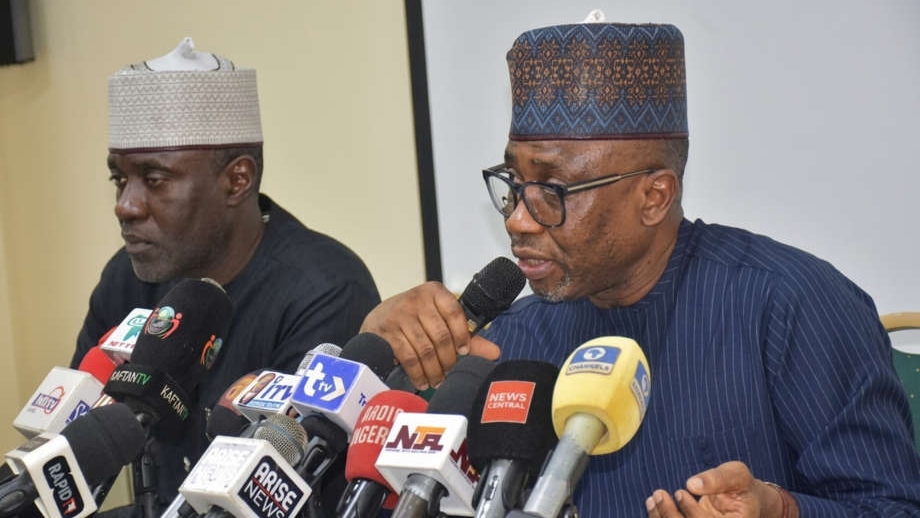
The Director-General of NBC, Dr Charles Ebuebu, made these known in an interview with the News Agency of Nigeria on Sunday in Abuja.
Ebuebu clarified that the court did not prohibit the commission from imposing sanctions on erring broadcasters.
The move comes after Nigerian courts ruled that the commission cannot unilaterally impose financial penalties on broadcast stations without an independent adjudicatory process.
The regulatory shift directly follows a series of legal defeats where Nigerian courts permanently restrained the commission from acting as a “judge and jury” by unilaterally imposing financial fines on radio and television stations.
He explained that the judgment specifically addressed financial sanctions, which the court viewed as akin to criminal penalties imposed without an independent adjudicatory process.
The tribunal, when established, will be designed as an independent body within the regulatory framework but entirely separate from the internal management of the NBC.
According to the NBC Boss, “It will be composed of retired judges and independent officials to guarantee fairness, transparency, and a proper adjudicatory process.”
The special tribunal will specifically address the constitutional conflict highlighted by courts, which ruled that administrative agencies cannot exercise judicial powers or award criminal-like penalties without independent trials
He said the NBC disagrees with the interpretation, insisting administrative fines differ from criminal fines, hence its decision to challenge the ruling on appeal. “There’s a difference between a criminal fine and an administrative fine. That is why we have appealed the court’s decisions.”
The NBC boss warned that removing sanctioning powers would weaken broadcast regulation, as some operators ignore warning letters until penalties are imposed.
“We don’t want to go from warning letters to withdrawing a licence. That’s arbitrary. There must be a process, and we are going back to court to appeal those decisions” he said.
Recalled that in May 2023, the Federal High Court in Abuja and Lagos ruled that the NBC Code violates Section 6 of the Nigerian Constitution, which vests judicial powers strictly in courts of law and, therefore, lacked the power to unilaterally impose financial sanctions on broadcast stations without judicial intervention.
The court held that imposing monetary fines without an independent adjudicatory process breached the principles of fair hearing, and consequently nullified fines earlier imposed on affected broadcasters.
The NBC appealed the decisions of the high court in the case instituted against the commission by the Incorporated Trustees of Media Rights Agenda.
In mid-2026, the Court of Appeal in Abuja had repeatedly dismissed the NBC’s bids to overturn these restrictions, and affirmed the Federal High Court’s judgment, holding that the commission’s appeal lacked merit.
The appellate court upheld the nullification of the fines imposed on affected broadcasters, reinforcing that the NBC cannot unilaterally impose financial penalties under the existing legal framework.
The commission has continuously maintained that administrative fines differ from criminal penalties and plans to continue challenging the judgments in higher courts, arguing that removing immediate sanctioning powers could embolden recalcitrant broadcasters.
While the tribunal is being developed, the NBC notes that the National Broadcasting Code remains active. However, the commission must adhere to a strict process of sending formal warning letters and inviting stations for discussions rather than issuing immediate monetary fines.
Meanwhile, the Socio-Economic Rights and Accountability Project (SERAP) has asked the National Assembly to immediately withdraw the proposed Nigeria Data Protection (Amendment) Bill, 2026, describing it as a backdoor attempt to regulate social media and expand government control over online expression.
SERAP warned that it would institute legal action if the bill is passed in its current or substantially similar form.
The bill, sponsored by Sen. Ned Nwoko (APC, Delta North), seeks to compel social media platforms, data controllers and data processors operating in Nigeria to establish physical offices in the country.
It also empowers the Nigeria Data Protection Commission to shut down or prohibit the operations of any entity that fails to comply within 30 days.
In a letter dated July 18, 2026, and addressed to Senate President Godswill Akpabio and Speaker of the House of Representatives Tajudeen Abbas, SERAP said the proposed amendment posed a threat to constitutionally guaranteed rights.
The letter, signed by SERAP Deputy Director Kolawole Oluwadare and issued on Sunday, read in part, “Requirements compelling technology companies to establish local offices would increase government leverage over platforms, facilitate political pressure, make censorship demands easier and expose local employees to retaliation.
“The Bill would create sweeping powers capable of shutting down or excluding social media platforms from the Nigerian market and expose millions of Nigerians to serious violations of their constitutionally and internationally guaranteed human rights.”
SERAP argued that the bill revives previous attempts to regulate social media that attracted widespread public opposition.
“The current Bill revives substantially similar proposals previously introduced by Senator Nwoko, raising renewed concerns that localisation requirements are being used as a vehicle for expanding governmental control over digital platforms and online expression,” it said.
The organisation warned that it would challenge the legislation in court if enacted.
“Should the Bill be enacted into law in its current or substantially similar form, SERAP shall promptly take all appropriate legal actions to challenge its legality in the public interest and to ensure that Nigerians’ fundamental rights are fully protected,” the letter stated.
According to SERAP, the proposed legislation would give the Nigeria Data Protection Commission excessive powers to block digital platforms without adequate procedural safeguards.
“The Bill constitutes a backdoor attempt to regulate social media and increase governmental control over online expression through corporate localisation requirements rather than through transparent and constitutionally permissible regulation,” it said.
The group argued that the bill lacks provisions for prior judicial authorisation, meaningful opportunities for compliance beyond the proposed 30-day period, and safeguards to protect the rights of millions of Nigerians who rely on digital platforms.
SERAP also cited the judgment of the ECOWAS Court of Justice on Nigeria’s suspension of Twitter, arguing that the proposed amendment could produce similar consequences by indirectly excluding social media platforms from operating in the country.
“The Bill also risks recreating the very dangers previously condemned by the ECOWAS Court of Justice. In SERAP and Others v. Federal Republic of Nigeria, the Court held that the suspension of Twitter violated the rights to freedom of expression, access to information and media freedom protected under the African Charter.
“Although the present Bill differs from the Twitter suspension in form, it creates the possibility of achieving the same result indirectly by empowering regulators to prohibit digital platforms from operating in Nigeria.
“The National Assembly should not enact legislation capable of producing, through indirect regulatory means, the very restrictions on fundamental rights that regional human rights law prohibits,” the organisation said.
It maintained that while governments have a legitimate interest in regulating digital platforms, such measures must comply with constitutional guarantees and international human rights standards.
The organisation further warned that mandatory localisation requirements would increase compliance costs for technology companies, startups, educational institutions and artificial intelligence developers.
“The proposed amendment conflicts directly with the objectives of the Nigeria Startup Act 2022 and the National Digital Economy Policy and Strategy.
“Mandatory localisation requirements substantially increase compliance costs, particularly for startups, open-source projects, educational institutions, research organisations, AI developers and smaller technology companies, while reducing Nigeria’s attractiveness as a destination for innovation and investment.
“No major democratic jurisdiction requires every social media platform to establish a physical office as a blanket precondition for providing services,” SERAP stated.
It added, “The National Assembly should immediately reject and withdraw the Bill, as it is manifestly incompatible with the Nigerian Constitution and Nigeria’s obligations under the African Charter on Human and Peoples’ Rights and the International Covenant on Civil and Political Rights.”



