

By Joy Onu
The National Blood Service Agency (NBSA) has renewed calls for increased voluntary blood donation across Nigeria, urging citizens to embrace the culture of saving lives through safe and regular blood donation as it marked the 2026 World Blood Donor Day.
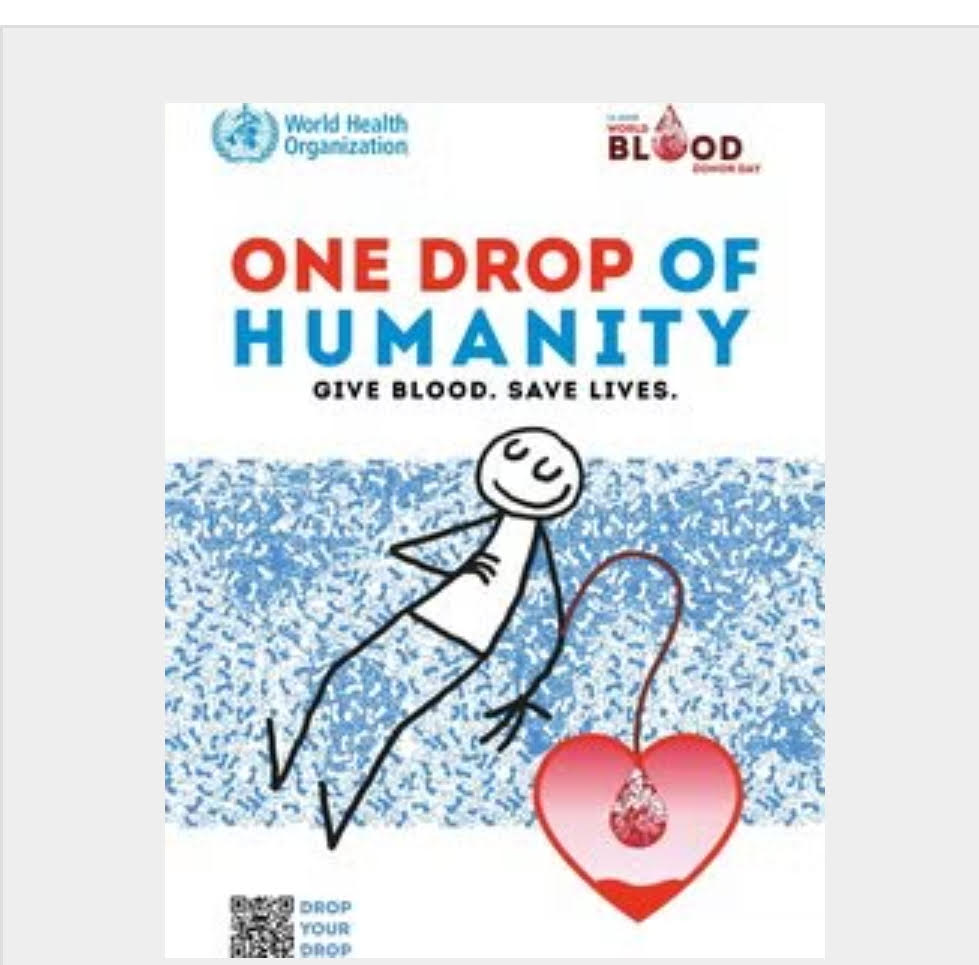
The event, themed “One Drop for Humanity: Give Blood, Save Lives,” brought together government representatives, international partners, health organisations, civil society groups, donors, media professionals, and volunteers on Monday, June 15, in Abuja to strengthen advocacy for safe blood systems in Nigeria.
The commemoration kicked off with a road walk involving donors, partners, media practitioners, and volunteers, who marched through designated routes in Wuse, Abuja, sensitising members of the public on the importance of voluntary blood donation.
The procession featured placards, chants, and public engagement messages aimed at raising awareness on the urgent need for safe and readily available blood supply in hospitals. Organisers at NBSA described the road walk as a symbolic demonstration of solidarity with patients whose lives depend on timely blood transfusion.
Speaking at the event on behalf of the Director-General of the National Blood Service Agency, Prof. Saleh Yuguda, who was represented by Dr. Abubakar Sani Bako, the agency welcomed participants and donors, describing them as the backbone of Nigeria’s blood supply system.
Prof. Yuguda noted that the day was dedicated to voluntary donors, whom he described as “altruistic heroes who give without expecting anything in return,” adding that their sacrifices continue to sustain emergency healthcare delivery across the country.
The DG expressed appreciation to development partners, particularly the World Health Organization, for their technical support, guidance, and collaboration in strengthening Nigeria’s blood safety framework.
In his goodwill message, WHO representative Dr. Charan Laxmikant, a medical professional and public health advocate, reaffirmed that safe blood is a cornerstone of a resilient health system. He noted that thousands of patients including pregnant women with complications, children suffering from severe malaria and anaemia, accident victims, surgical cases, and people living with chronic illnesses depend daily on blood transfusion services.
He stressed that safe blood is essential for achieving universal health coverage and global health security. He also commended Nigeria for progress made in increasing voluntary blood donation in recent years, while calling for sustained public education and stronger youth involvement.
Dr. Laxmikant urged Nigerians to dispel myths surrounding blood donation and to embrace voluntary, unpaid donation as a civic responsibility, noting that “one drop of humanity can save a life.”
Representing APIN Public Health Initiatives, Dr. Bunmi Amoo highlighted the organisation’s long-standing partnership with NBSA, recalling its early involvement in blood safety programmes even before the agency attained full institutional status.
She emphasised the importance of sustained investment in safe blood systems and praised ongoing reforms, particularly digital innovations aimed at improving coordination and traceability across the blood value chain.
Dr. Amoo also highlighted APIN’s secondary school blood safety clubs across Abuja, designed to educate young people on voluntary donation and promote responsible lifestyle choices. According to her, early sensitisation helps reduce risky behaviours while building a generation of informed citizens who understand the value of humanitarian service.
Other partner organisations expressed support for NBSA’s digital transformation agenda, describing it as critical to improving efficiency, transparency, and accessibility in blood services nationwide.
The Community Aid Relief Education Foundation (CARE) reaffirmed its commitment to supporting safe blood initiatives and community mobilisation, while the Shalom Health Foundation called for stronger awareness campaigns, noting that many lives are still lost due to blood shortages in hospitals.
A major highlight of the event was the recognition of outstanding female donor, Amina Giwa, who was celebrated for donating blood over 40 times. She was honoured as a symbol of consistency and humanitarian service, reflecting a shift toward greater recognition of female donors in Nigeria’s blood donation system.
In her remarks, Giwa attributed her donation journey to faith and awareness, stating that her consistency over the years was driven by a desire to save lives. She encouraged Nigerians to embrace voluntary donation, describing it as both a humanitarian and moral responsibility.
Dr. Mohammed Lawal of the National Blood Service Agency, who personally donated blood during the programme to demonstrate confidence in the safety of the process, noted that Nigeria still falls short of required blood donation levels and called for intensified advocacy to expand the national register of voluntary donors.
He further clarified eligibility requirements, noting that age, health status, pregnancy, and certain clinical conditions determine suitability for donation, and stressed that all donations undergo strict screening to ensure safety for both donors and recipients.
The event ended with a collective call for sustained public engagement and shared responsibility in strengthening Nigeria’s blood supply system. Stakeholders however agreed that voluntary donation remains the most reliable pathway to reducing preventable deaths caused by blood shortages.
As the 2026 celebration drew to a close, participants reaffirmed the campaign message that defined the event: one drop of humanity can save a life.
The NBSA urged Nigerians to see blood donation not only as a medical act but also as a civic duty capable of transforming public health outcomes across the country.



