

By Simeon Ogoegbulem
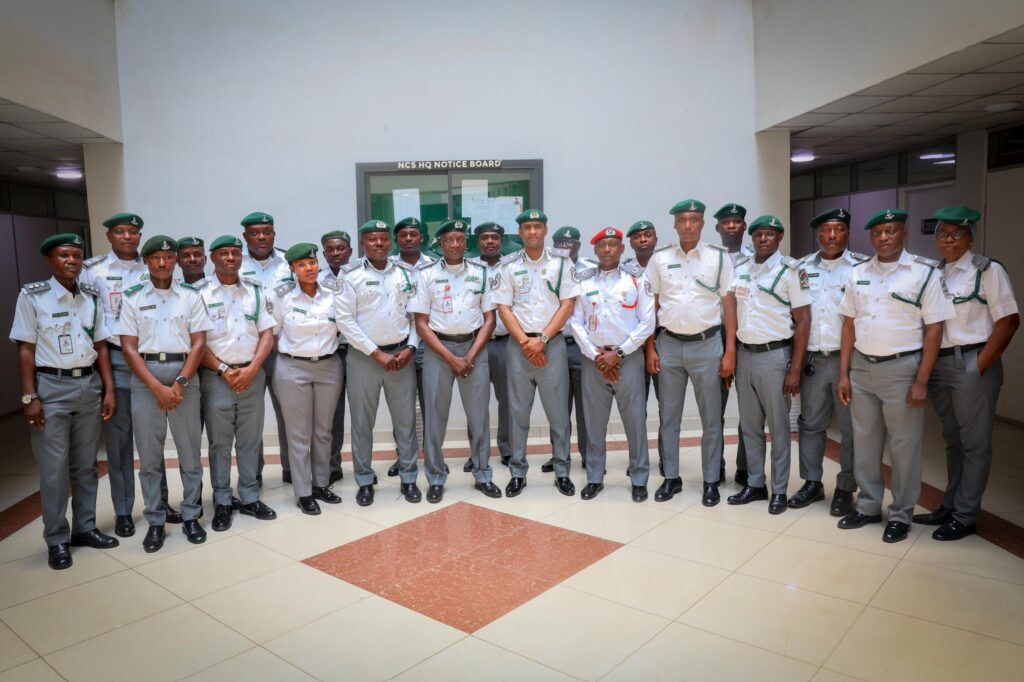
The Nigeria Customs Service (NCS) has reinforced its commitment to combating illicit financial flows and terrorism financing. This came via a sensitization programme on Anti-Money Laundering and Combatting Financing of Terrorism (AML/CFT), held at its Headquarters in Maitama, Abuja Monday 4th May 2026.
The development formed part of the Service’s first-quarter operational review meeting and training for officers of the AML/CFT Unit which focussed on enhancing capacity, promoting ethical standards and strengthening inter-agency collaboration.
Speaking during the session, the Assistant Comptroller-General in charge of Headquarters, ACG Muhammad Shuaibu, said the initiative reflects the growing importance of AML/CFT operations within the Service and Nigeria’s broader financial and security framework. Shuaibu noted that the impact of the Unit extends beyond seaports, airports and border stations, adding that its achievements over the past years have positioned it as a critical component in safeguarding the nation’s financial system.
The ACG highlighted improvements in Nigeria’s financial ecosystem, noting that Nigerian-issued bank cards are now globally functional, enabling seamless international transactions with automatic currency conversion.
His words: “This is a major milestone. Nigerians can now travel and use their cards anywhere in the world, with transactions reflecting the local currency. This is a significant achievement for the nation.”
He further emphasized that postings to the AML/CFT Unit should be seen as opportunities for career growth and capacity development, rather than punitive, and referenced ongoing collaboration with the World Customs Organization (WCO) to align operations with global best practices.
Also speaking, the Ag. Provost Marshal, Deputy Comptroller of Customs, Saulawa Sunusi, stressed the importance of integrity, professionalism and discipline in the discharge of duties.
According to him, “Officers must remain disciplined, professional, and committed to ethical conduct. Integrity remains the foundation of everything we do.” He urged officers to continually build their capacity through training and to demonstrate leadership by example, while maintaining high standards of punctuality, fairness and professionalism. Sunusi also highlighted the need for effective collaboration and conflict resolution within the Service, noting that strong internal synergy is essential for operational success.
Participants were advised to remain vigilant, maintain high morale and carry out their duties without bias. They were also cautioned against the unauthorised sharing of sensitive information and urged to adhere strictly to established communication protocols.
The session featured a lecture by Deputy Comptroller of Customs, Faisal Abubakar on service correspondence where officers were guided on its importance and application in official communication.
In his remarks, National Coordinator of AML/CFT, Assistant Comptroller of Customs, Mas’ud Salihu, highlighted the evolving nature of financial crimes, noting that illicit activities are increasingly shifting into digital and virtual spaces. He explained that ongoing efforts are focused on strengthening enforcement mechanisms, identifying operational gaps and improving communication between field officers and management.
Salihu emphasised that sensitisation remains a key strategy in tackling financial crimes, urging officers to remain proactive in identifying and blocking emerging threats. He commended participants for their engagement and appreciated the management of the Service for its continued support in strengthening the AML/CFT framework.



