

BY SAM OTUONYE
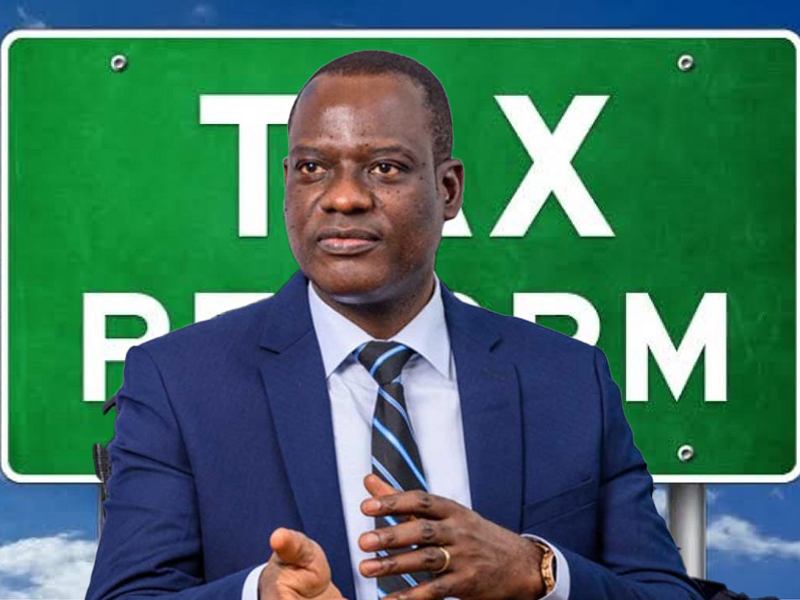
The Chairman, Presidential Committee on Fiscal Policy and Tax Reforms, Taiwo Oyedele, has expressed concerns over the newly signed tax laws stating that the tax reforms remain incomplete without strategic adjustments, including reducing corporate tax rates and addressing regulatory recklessness.
Oyedele, at his 50th birthday lecture posted on X at the weekend, titled, ‘Designing Tomorrow: Policy Blueprint and Lessons for the Future’, advocated for the corporate tax cut to boost investment.
The development emerged about 10 days after President Bola Tinubu signed four new tax laws – the Nigeria Tax Law, the Nigeria Tax Administration Law, the Nigeria Revenue Service (Establishment) Law, and the Joint Revenue Board (Establishment) Law.
Oyedele also advocated for further reforms to solidify the tax framework, attract investments, stimulate expansion, and stabilise the naira.
“The reforms are not done; we still have unfinished business. We need to lower corporate tax rates on businesses to attract more investments and stimulate expansion. With high inflation, a high tax rate will invariably be taxing capital, not profit.
“We must address regulatory overreach, embrace digitalisation, refine our tariffs system to reduce the rates on raw materials and intermediate products, which are currently twice the average for sub-Saharan Africa.
“Addressing our tariffs and regulatory hurdles is the equivalent of granting waivers from all income and consumption taxes. We also need fiscal reforms to complement a strong and stable Naira such as allowing payments of all taxes in Naira, and limiting discretionary forex demands.
“Despite having a comparable trade balance over the past 10 years as Kenya and South Africa, the Nigerian Naira has lost 6 times more value than either the South African Rand or the Kenyan Shillings.
“This means Nigeria would have been a one trillion-dollar economy today, with much less poverty, expansive middle class, higher purchasing power, and moderate price increases (fuel, electricity, etc).”
Oyedele also cautioned policymakers to avoid crowd-pleasing analyses because “after the applause, the pain will remain.”
“The government should be intentional regarding non-inflationary spending, priority and quality of spending.
“The government should focus on doing only what the private sector will not do, and collect the least amount of tax in doing so without compromising the required minimum quality standards.
“The people must seek first to understand – ignorance compounds vulnerability, and steals opportunities. We must think independently, ask questions, engage and criticise constructively with the sole aim to build, not tear apart our country.”



