

BY JENNIFER EZIMAKOR
Nigeria has reaffirmed its commitment to advancing women’s rights and inclusion, describing women’s empowerment as a critical investment in peace, productivity, and shared prosperity.
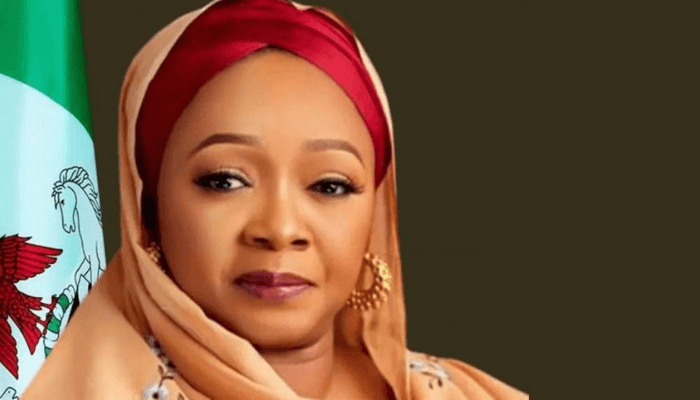
The Minister of Women Affairs and Social Development, Imaan Sulaiman-Ibrahim, stated this in Beijing, China, on Monday, while delivering Nigeria’s national statement at the Global Leaders’ Meeting on Women. The event, themed ‘One shared future: New and accelerated process for women’s all-round development,’ brought together world leaders to review progress on gender equality and renew global commitments.
Speaking on behalf of President Bola Ahmed Tinubu, Sulaiman-Ibrahim expressed appreciation to the Government of China and UN Women for hosting the forum, which she described as timely and visionary.
“This year holds profound significance — marking 80 years of the United Nations, 30 years of the Beijing Declaration and Platform for Action, 25 years of UN Security Council Resolution 1325 on Women, Peace and Security, and 30 years of the Global Social Development Agenda. These milestones remind us that the advancement of women is central to peace, prosperity, and sustainable development,” she said.
The minister recalled that Nigeria’s participation in the 1995 Beijing Conference led to the creation of the Federal Ministry of Women Affairs and Social Development, the national institutional mechanism for gender equality and social inclusion. The ministry, she noted, remains pivotal in coordinating national action and protecting women, children, and vulnerable groups.
Sulaiman-Ibrahim said that while progress has been made, challenges persist. Guided by President Tinubu’s Renewed Hope Agenda, Nigeria is implementing transformative reforms that place women, children, and families at the heart of national renewal.
She highlighted several key frameworks driving this agenda, including the National Gender Policy (2021–2026), the National Women’s Economic Empowerment Policy (2023), the National Policy on Ending Child Marriage, and the Third National Action Plan on Women, Peace and Security (2025–2030).
“To translate these frameworks into measurable outcomes, Nigeria is implementing the Renewed Hope Social Impact Interventions–774. This national delivery platform operates across all 774 local government areas and integrates nine mutually reinforcing pillars that drive women-centred, child-protected, and family-focused transformation,” she said.
The minister noted that these initiatives are already reshaping local economies and driving inclusion. She also pointed to efforts to increase women’s representation in politics, citing the Special Reserved Seats Bill currently before the National Assembly.
To sustain these reforms, Sulaiman-Ibrahim said Nigeria aims to close a $1.2 billion financing gap over the next five years through blended financing, private-sector partnerships, and impact investment instruments.
“As we gather once again in Beijing — the birthplace of the global women’s movement — Nigeria reaffirms that empowering women is not an act of charity, but an investment in productivity, peace, and shared prosperity.
“Under the Renewed Hope Agenda, we have moved from commitment to action, from promise to measurable progress, determined to ensure that no woman is unseen, no girl unheard, no child forgotten, and no family left behind,” she said.
She urged global leaders and partners to use the platform to accelerate women’s development worldwide. “May the conversations of today and the relationships forged here drive new momentum for women’s all-round development,” she concluded.
The high-level meeting is slated to take place from 13 to 14 October, 2025 and was attended by the Chinese President Xi Jinping who convened the gathering with an opening address.



