

BY JENNIFER EZIMAKOR
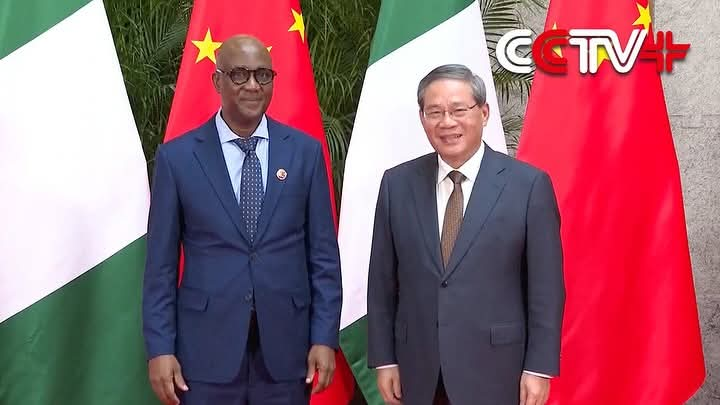
The Speaker of the House of Representatives, Tajudeen Abbas, has called on China to support Nigeria’s campaign for a permanent seat on the United Nations Security Council, describing it as a step toward shared prosperity and global balance.
Abbas made the appeal during a meeting with China’s Premier, Li Qiang, on the sidelines of the China International Import Expo (CIIE) 2025, where he is attending on the invitation of the Chinese Government.
“Considering Nigeria’s relevance in African and global affairs, the bid, if successful, will not only benefit Nigeria and China but also the entire world,” he said.
According to a statement from his media office, the speaker noted that the Nigerian parliament is pursuing reforms to strengthen public finance laws, revise trade and tax codes, and promote innovation-friendly regulation, all of which support the country’s broader international vision.
He also proposed the creation of a Nigeria-China Legislative Cooperation Framework to formalise dialogue between the two parliaments on governance, transparency, and innovation.
Abbas identified three key areas for future partnership between the two nations: technological sovereignty, green industrialisation, and human capital exchange.
“The next decade will belong to those who control their data, innovate responsibly, and protect their citizens in the digital space. We seek cooperation in artificial intelligence, digital trade, and cybersecurity,” he said, adding that China’s experience offers both knowledge and caution in these fields.
On green industrialisation, Abbas said Nigeria seeks collaboration in renewable energy, sustainable mining, and low-carbon transport, citing the Zungeru Hydropower Project as a model of achievable green growth.
He also emphasised people-driven cooperation, proposing expanded programmes for legislative staff exchange, technical training, and joint research initiatives. “We want to move from ‘Made in China for Nigeria’ to ‘Created in Nigeria with China,’” he added.
Abbas further revealed that talks are nearing completion between the Nigerian government and a leading Chinese state-owned enterprise for technical and financial collaboration to revive the Ajaokuta Steel Company. He assured that when concluded, it will be “the largest steel company and the biggest Nigeria-China collaboration.”
The speaker stressed that the House of Representatives is committed to ensuring that such partnerships are grounded in law, transparency, and accountability, to guarantee investor confidence and policy stability.
In his remarks, Qiang said China values its long-standing ties with Nigeria, which he described as being on a “fast track” of development. He expressed readiness to deepen cooperation aligned with both countries’ development strategies and to expand collaboration in trade, agriculture, mining, infrastructure, and people’s welfare.
Qiang said China would continue to work with Nigeria under the ‘Ten Partnership Actions’ for China-Africa cooperation and promote high-quality Belt and Road projects. He also mentioned plans to implement zero-tariff measures in Nigeria through a joint economic partnership agreement.
The premier noted that both countries share vast populations and complementary economic strengths, assuring Beijing’s support for Nigeria to play a greater role in international and regional affairs.
Nigeria’s push for a permanent security council seat is rooted in decades of diplomatic engagement, peacekeeping missions, and advocacy for reform within the United Nations system. The country argues that expanding the council to include Africa’s largest economy and most populous nation would strengthen global representation and legitimacy.
Since independence, Nigeria has been one of Africa’s leading voices in multilateral diplomacy, contributing to peacekeeping missions in Liberia, Sierra Leone, Darfur, and the Congo. Abuja continues to lobby major powers—including China, the United States, France, and Russia—for support as part of its long-term bid to secure Africa a permanent place at the UN’s highest decision-making table.



