

By Joy Onu
Nigeria has called for stronger international partnerships and a whole-of-society approach to tackling its multidimensional security challenges and the wider threats confronting the Sahel region.
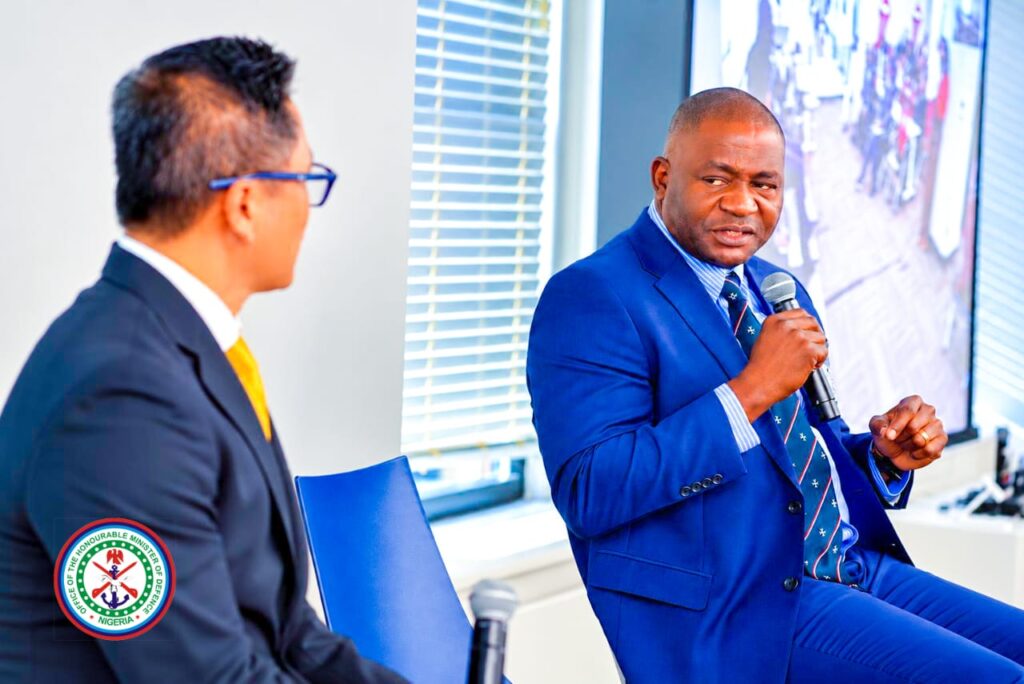
In a statement issued on Thursday by the Special Adviser (Media) to the Minister of Defence, Leah Katung-Babatunde, Musa made the call in New York during a high-level side event held on the margins of the 81st United Nations General Assembly (UNGA 81) High-Level Week.
The event, titled “Confronting Nigeria’s Multidimensional Security Challenges: A Whole-of-Society and Partnership-Based Approach,” brought together diplomats, security practitioners and representatives of the United Nations, African Union (AU) and Economic Community of West African States (ECOWAS).
Musa said Nigeria’s security challenges had national, regional and global implications, stressing that their complexity required collective action rather than isolated national responses.
“Our recognition that we cannot address these challenges alone is not a statement of dependence; rather, it is an acknowledgement of the multidimensional character of modern security threats and the importance of collective action,” he said.
According to him, sustainable security requires resilient communities, effective institutions, inclusive development and good governance.
The minister outlined measures being pursued under the administration of President Bola Ahmed Tinubu, including the recruitment of an additional 22,000 personnel into the Armed Forces and the expansion and reorganisation of the Nigerian Army’s divisional structure.
He also cited ongoing efforts towards establishing state police and dedicated forest guard arrangements to improve security in rural and border communities.
Musa said presidential approval had also been secured for a unified intelligence and reconnaissance programme aimed at eliminating operational silos, improving situational awareness and strengthening interoperability among Ministries, Departments and Agencies (MDAs).
He further highlighted efforts to strengthen domestic defence production through support for the Defence Industries Corporation of Nigeria (DICON), with the aim of building greater self-reliance and reducing dependence on external sources of arms.
The minister said advanced technologies, including drones for real-time surveillance and Improvised Explosive Device (IED) detection, were being integrated into the country’s security architecture, alongside the rollout of a comprehensive national criminal database.
The discussions also covered intelligence coordination, border security, terrorism financing, economic recovery and cybersecurity.
Speaking on homeland security and early warning, the Special Adviser on Homeland Security, Major General Adeyinka T. Famadewa (rtd), called for intelligence fusion, integrated response capabilities and systems to protect citizens who provide security information.
Former Force Commander of the Multinational Joint Task Force (MNJTF), Major General A.K. Ibrahim (rtd), advocated community-based solutions to border security, implementation of the Office of the National Security Adviser’s Border Management Strategy and revitalisation of the MNJTF.
He also called for intensified efforts to target terrorist taxation and financial networks.
On economic security, former Deputy Governor of the Central Bank of Nigeria (CBN), Dr Kingsley Obiora, said economic stability was a core component of national security.
He proposed designated economic zones, drawing from Colombia’s experience, to promote business recovery in conflict-affected areas.
Professor Mvemba Phezo Dizolele of Johns Hopkins University urged African countries to develop solutions based on their own circumstances rather than adopting external security templates.
He said African solutions should be designed by and for local populations and reflect their specific realities.
Cybersecurity expert, Omosigho Ozo-Eson, warned against excessive reliance on foreign artificial intelligence systems and stressed the need to protect Critical National Infrastructure while developing indigenous cyber-defence capabilities.
The panel was moderated by Professor Ibrahim Gambari, former Chief of Staff to the President and former Minister of External Affairs, who recalled Nigeria’s concentric-circles foreign policy and urged Africa to become a more active contributor to global frameworks, particularly in artificial intelligence.
In his closing remarks, Musa reaffirmed Nigeria’s commitment to tackling terrorism and banditry while acknowledging defence cooperation with international partners, including the United States.
He said although regional mechanisms such as the MNJTF had benefited from support from foreign partners, including the European Union, African member states needed to increasingly finance and sustain their own security frameworks to strengthen regional ownership.
The minister also highlighted government efforts to improve legal frameworks, protect vulnerable health workers operating in high-risk areas and create a stable business environment capable of attracting investment.
“Our objective should be straightforward,” Musa said. “We should not merely reaffirm our understanding of the challenges; we should seek to identify concrete areas of cooperation, clear responsibilities, and practical next steps.”
Earlier, the Director Overseeing the Office of the Permanent Secretary, Mrs Bosede Olaniyi, welcomed participants and called for robust engagement capable of producing meaningful outcomes for national development.



