

BY GLORIA AKUDORO
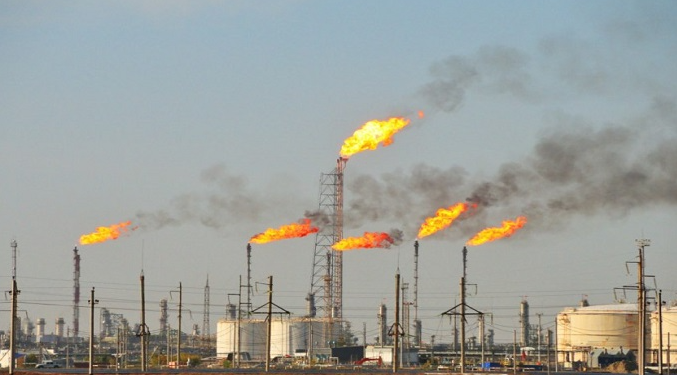
The World Bank’s Global Gas Flaring Tracker report has identified Nigeria as one of the five leading countries in terms of gas flaring volumes in 2024.
The report highlighted Nigeria, along with Russia, Iran, the United States, and Iraq, as the nation’s responsible for the most significant increases in gas flaring in the year under review.
Collectively, these countries contributed an additional 4.6 billion cubic meters (bcm) of flared gas, pushing global flaring levels to their highest point in almost twenty years.
Globally, gas flaring increased by 2 percent, totaling 151 bcm in 2024, which marks the second year in a row of rising flaring activities. The nine countries leading in gas flaring—Nigeria, Russia, Iran, Iraq, the USA, Venezuela, Algeria, Libya, and Mexico—were responsible for more than 75 percent of the total flared gas, despite producing less than half of the global oil output. This inefficiency has led to an estimated loss of US$63 billion in energy resources.
The World Bank pointed out that this upsurge in gas flaring is indicative of insufficient investment in technologies aimed at capturing and utilizing flared gas, underscoring a need for improved infrastructure and sustainable practices to reduce wastage and environmental impact.
Algeria and Libya reduced flaring due to lower oil production, while Iran’s flaring increased significantly due to higher oil output and underinvestment in gas recovery infrastructure.
Global flaring intensity has remained high for 15 years despite commitments, with only a few countries like the USA and Iraq reducing it since 2012; the USA achieved nearly a 50 percent decline.
The latest released report further showed that countries endorsing the World Bank’s Zero Routine Flaring by 2030 initiative achieved a 12 percent reduction in flaring intensity since 2012, while non-endorsers saw a 25 percent increase.
Brazil, Colombia, Egypt, Indonesia, and Kazakhstan were also noted for their progress in reducing flaring.
The World Bank’s Global Flaring and Methane Reduction Partnership supports flaring and methane abatement through grants, technical assistance, policy reform, and institutional support.
In Uzbekistan, the GFMR provided US$11 million to address methane leaks in the gas transport system, reducing emissions by 9,000 tonnes annually, with potential reductions up to 100,000 tonnes per year.
According to the Manager of the GFMR Partnership, Zubin Bamji, the solutions exist – with effective policies, governments and operators can prioritise flaring reduction and turn wasted gas into an engine for economic growth.



