

BY GLORIA AKUDORO
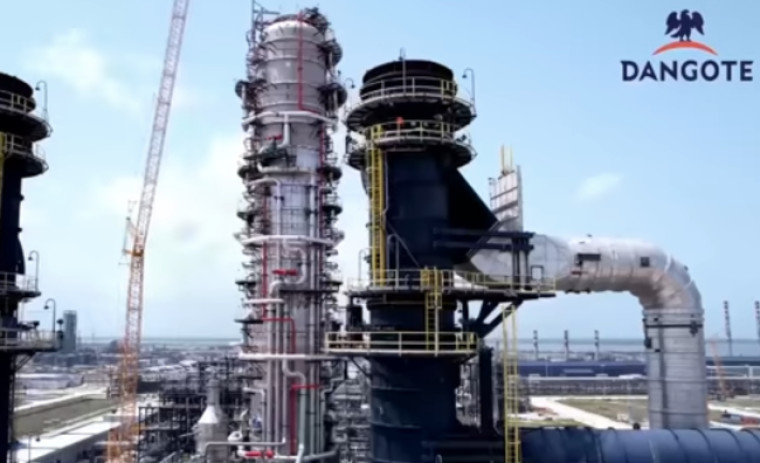
The Depot and Petroleum Products Marketers Association of Nigeria (DAPPMAN) has strongly dismissed the claim put out to the public domain that Nigeria’s downstream sector’s stability is dependent solely on Dangote refinery.
The industry stakeholder described the claim as ‘misleading’, warning that if left unchecked, it could diminish the collective contributions of other players that have ensured national fuel availability for decades.
DAPMMAN, in a statement issued by its Executive Secretary, Mr. Olufemi Adewole, on Saturday 13 September, 2025, clarified that the downstream sector is powered by a broader ecosystem with Dangote’s refinery contribution peaking at 30 to 35 percent of national demand.
“As responsible and long-standing stakeholders in Nigeria’s downstream sector, we feel compelled to provide clarity on several inaccurate or misleading claims made in the public space — claims which, if left unchecked, could mislead the public and diminish the collective contributions of other players that have ensured national fuel availability for decades.
“The assertion that Nigeria’s downstream stability rests solely on one refinery is misleading and dismissive of the broader ecosystem. While we welcome the Dangote Refinery as a major infrastructure project, its contribution has peaked at only 30 to 35 percent of national demand. The balance continues to be supplied by responsible petroleum product marketers, including DAPPMAN members, who import and distribute under strict regulatory oversight by the Nigerian Midstream and Downstream Petroleum Regulatory Authority (NMDPRA).
“For decades, DAPPMAN marketers have ensured uninterrupted fuel access across the country, investing in depots, trucking fleets, retail networks, and logistics and doing so even through periods of forex pressure, subsidy transitions, insecurity, and economic downturns. These contributions deserve recognition, not erasure.
“The Dangote Refinery is a valuable contributor, but it is not a messiah. Nigeria’s downstream sector is not driven by one facility alone. It is powered by an ecosystem of refiners, depots, marketers, transporters, and regulators, working in tandem to ensure nationwide access to fuel under often difficult circumstances,” it stated.
Dangote refinery had earlier asserted that its operations have revitalized the sector by significantly reducing diesel and petrol prices by 30 percent, as well as stabilizing fuel supply, contributing to foreign exchange stability and fostering competition in the past year.
This is even as the company announced that it will commence direct supply of premium motor spirit (PMS) with free delivery to 11 states effective on Monday 15 September, 2025. New gantry price stood at N820, while retail pump price for each state varies – Lagos N841, Ogun N841, Oyo N841, Ondo N841, Osun N841, Ekiti N841, Abuja N851, Delta N851, Rivers N851, Edo N851 and Kwara N851.
However, DAPMMAN countered Dangote’s refinery claims of patriotic fuel price reductions that overlook their strategic timing and market impact, adding that the pricing strategy burdens domestic businesses operating under tight margins.
“Claims that repeated fuel price reductions by the Dangote Refinery are patriotic gestures ignore their timing and market impact. These reductions were often strategically timed when other importers had active cargoes at sea or in tank, creating price shocks that undermined competition and imposed financial strain on fellow market participants, including the refinery’s own domestic customers. Even more concerning is the refinery’s pattern of offering lower prices to international buyers while quoting higher rates to local off takers. This contradicts public-facing claims of prioritizing Nigerians and places unnecessary burden on domestic businesses already operating under tight margins.
“The claim that the refinery offers “free delivery” is also misleading. In reality, marketers are required to lift at least 25 percent of their allocations directly from the refinery gantry and must do so using only Dangote-owned trucks, paying commercial rates based on their destination. This arrangement imposes additional logistical and financial burdens on marketers, limits operational flexibility, and undermines the narrative of cost relief being provided to the local market.,” they said.
The association also rejected any insinuation that its members deal in “substandard” petroleum products, clarifying that all imports are subject to independent, regulator-accredited laboratory testing in accordance with NMDPRA protocols and global quality standards.
It said, “Ironically, the same refinery alleging superiority has on multiple occasions sought waivers to distribute products with sulphur levels above approved thresholds, a fact that calls into question its consistency and credibility on product quality. Nigeria’s downstream petroleum market is highly regulated, transparent, and aligned with international best practices. Attempts to cast doubt on the integrity of other compliant players are unfair and inaccurate.”
The industry stakeholders, while clarifying the role of market players in the sector, expressed dismay at the unfolding tensions between the Dangote Refinery and the National Union of Petroleum and Natural Gas Workers (NUPENG), lamenting the potential impact not just on reputational risks to various market participants and Nigerians , but also on the downstream environment that’s still stabilizing post-deregulation.
DAPPMAN cautioned against narratives that monopolize credit, shift blame, or undermine the confidence of investors, partners, and the public, and reaffirmed its commitment to the principles of competition, transparency, and collaboration in Nigeria’s downstream petroleum industry.
It also called on all parties, including the Dangote Refinery, to engage constructively and communicate responsibly, avoiding one-sided accounts that can destabilize market confidence, noting that the future of Nigeria’s energy sector lies not in divisive narratives, but in cooperation, regulatory compliance, and mutual respect.



