

By Joy Onu
Nigeria continues to battle a heavy and persistent burden of foodborne diseases that claim tens of thousands of lives annually, overwhelm hospitals, and disproportionately affect children under five, even as new government data suggest improvements in national food safety surveillance systems.
According to the Federal Ministry of Health and Social Welfare, Nigeria now holds a Level 3 State Party Annual Report (SPAR) score for 2025, placing the country ahead of the World Health Organization (WHO) benchmark for food safety capacity among low- and middle-income countries. The Ministry says this reflects strengthened systems for detecting, reporting, and responding to foodborne disease outbreaks.
The Minister of State for Health and Social Welfare, Dr Iziaq Adekunle Salako, said through the National Food Safety Management Committee and the 2023 National Integrated Guidelines for Foodborne Disease Surveillance and Response, Nigeria now operates a more coordinated system covering outbreak detection, laboratory confirmation, traceback investigations, food recalls, and risk communication.
He described food safety as a national development priority, not merely a technical issue, warning that unsafe food continues to affect health outcomes, productivity, and national well-being despite institutional progress. He further disclosed that Nigeria records nearly 50 million cases of foodborne illnesses annually, resulting in more than 53,000 deaths each year, with children under five accounting for over 80 per cent of the total burden.
Globally, he noted, unsafe food is responsible for about 866 million illnesses and 1.5 million deaths annually, with Africa carrying the highest per-capita burden.
Despite these reported gains in surveillance and coordination, hospitals across Nigeria continue to face overwhelming caseloads linked to contaminated food and water.
Children remain the most affected group, with infections such as Salmonella, Escherichia coli (E. coli), Campylobacter, Shigella and Rotavirus driving most hospital admissions. Health officials say over 40 million diarrhoeal illnesses annually in Nigeria are linked to these pathogens.
At paediatric wards in federal and state hospitals, medical workers describe a constant influx of severely dehydrated children, many arriving late after initial home treatment fails.
A paediatric nurse at a federal hospital in Abuja, who asked not to be named, said most cases are preventable.
“Many of the children we see come in weak and dehydrated. It is usually linked to contaminated food or water. Some arrive too late, and that is when complications become severe.”
For families, the impact is both emotional and financial, with repeated hospital visits becoming a cycle of debt and distress.
In Gwagwalada, Abuja, Aisha Bello, a mother of three, said her youngest child has been hospitalised twice in six months. “I don’t even know what caused it. One time it was food, another time water. Each time we spend money we don’t have, It keeps happening and we just keep going back to the hospital.”
In Kaduna, commercial motorcyclist Ibrahim Musa said frequent illness among his children has forced him to become more cautious, though uncertainty remains. “Even when you are careful, you are not sure. Hospitals are expensive, and when sickness comes, everything stops,” he said.
A food vendor in Abuja, Veronica Dave, said many traders operate without formal training in hygiene or food safety standards. “We just do what we see others doing. Nobody really teaches us how to handle food properly,” she said.
While official estimates place annual deaths at 53,000, other studies suggest significantly higher figures, ranging from 33,000 to as many as 200,000 deaths per year, depending on methodology and surveillance coverage.
Some public health analyses also estimate up to 173 million cases of foodborne illnesses annually in Nigeria, underscoring the scale of underreporting and diagnostic gaps in the system.
Health experts say the differences in figures reflect weak surveillance structures, fragmented reporting systems, and limited diagnostic capacity at primary and secondary healthcare levels.
However, across all estimates, the burden remains severe. Africa continues to carry the highest per-capita burden of foodborne diseases globally, with Nigeria among the most affected due to population size, widespread reliance on informal food markets, and weak enforcement of hygiene standards.
Hospital systems are already stretched. In the first quarter of 2025 alone, cholera outbreaks claimed 378 lives, while Lassa fever infected over 3,500 Nigerians, with many cases linked to environmental contamination and poor food handling practices.
At a general hospital in Lagos, a senior medical officer said emergency units regularly receive patients with severe diarrhoea, vomiting and dehydration. “Children are the worst hit. When they come in late, management becomes very difficult,” he said.
Beyond the health burden, foodborne diseases cost Nigeria an estimated $3.6 billion annually, through lost productivity, healthcare expenses and reduced economic output.
Public health experts warn that repeated infections in children contribute to long-term consequences, including malnutrition, stunted growth, weakened immunity and developmental delays.
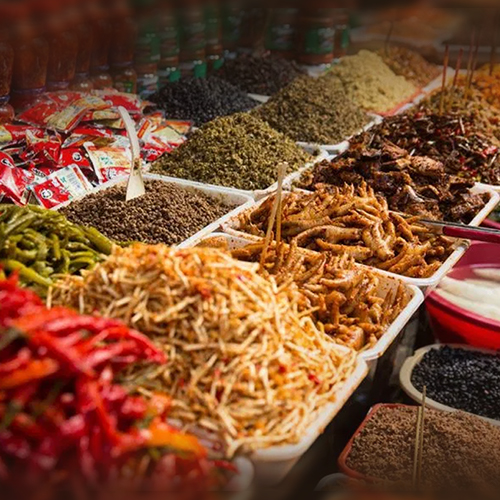
Emerging concerns are also shifting beyond microbial contamination to chemical hazards, including lead exposure in grains, spices and water sources, as well as unsafe practices in fruit ripening and food preservation.
The World Health Organization (WHO) estimates that over 600 million people globally fall ill from unsafe food annually, resulting in about 420,000 deaths, with children under five accounting for more than 30 per cent of cases.
WHO maintains that most foodborne diseases are preventable through improved hygiene, stronger regulation, safer agricultural practices and public awareness.
It also stresses that safe food is a fundamental human right and calls for stronger coordination across government agencies, regulators and communities.
Despite Nigeria’s reported progress in surveillance systems and its improved SPAR rating, experts say the gap between policy and everyday reality remains wide.
In markets, homes and hospitals, unsafe food continues to silently fuel a preventable health crisis.
As Nigeria marks World Food Safety Day 2026, the figures underline a stark reality: behind every statistic is a family struggling with illness, repeated hospital visits and rising medical bills in a system still working to make safe food a consistent reality rather than an aspiration.


