
…NFF submits petition to FIFA over Wan-Bissaka, others’ dual nationalities
BY TONY UDOKA
Nigeria’s long, bruising road to the 2026 FIFA World Cup may not be over after all. Just weeks after the Super Eagles’ painful elimination by the Democratic Republic of Congo in the African play-off series, a fresh twist has injected cautious optimism into Nigerian football circles.
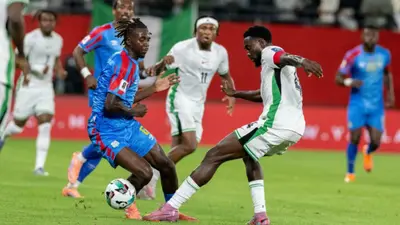
The Super Eagles bowed out in November in agonising fashion, losing 4–3 on penalties to DR Congo in Morocco after a fiercely contested tie. That defeat appeared to slam the door shut on Nigeria’s World Cup hopes, condemning the three-time African champions to the prospect of missing a second consecutive Mundial following their absence from Qatar 2022.
However, in recent days, Nigeria’s chances of returning to the global stage have reportedly been revived following claims that DR Congo may have fielded ineligible players during the qualifiers. The Nigeria Football Federation (NFF) has now formally taken up the matter, submitting petitions and supporting documents to FIFA in what could become one of the most consequential administrative battles in the Super Eagles’ modern history.
At the heart of the dispute is the eligibility of several DR Congo players who switched national allegiance prior to the play-offs. Reports indicate that between six and nine players may not have fully complied with Congolese domestic laws governing nationality before donning the Leopards’ colours. While FIFA cleared the players based on their possession of valid DR Congo passports, the NFF argues that this approval may have been secured under false pretences.
Unlike FIFA statutes, which focus primarily on sporting eligibility and documentation, DR Congo’s constitution reportedly does not permit dual citizenship. The crux of Nigeria’s argument is that the affected players, many of whom hold European passports like French, Dutch or British, failed to formally renounce their previous nationalities, rendering their representation of DR Congo legally questionable under the country’s own laws.
Confirming the development to New National Star, NFF Director of Media and Communications, Dr Ademola Olajire, acknowledged that the federation is actively pursuing the case.
“It is true, my brother” Olajire said. “The NFF is following this up with all intent to secure qualification for the Super Eagles because the issues are real. DR Congo’s constitution does not allow dual citizenship, and about six to nine players had that status during the play-off. That is the loophole we are looking at. Our lawyers are on the matter and the relevant documents have been forwarded to FIFA as well.”
NFF General Secretary, Dr Mohammed Sanusi, was even more direct, stressing that Nigeria’s grievance is not with FIFA’s regulations per se, but with what it believes was a misrepresentation of facts.
“The Congolese rules say you cannot have dual citizenship,” Sanusi said. “Wan-Bissaka has a European passport; some of them have French passports, others Dutch passports. The rules are very clear, and we have submitted our petition.
“FIFA rules say once you have a passport of your country, you’re eligible, and that is why they were cleared. But our concern is that FIFA was deceived into clearing them. It is not FIFA’s responsibility to enforce Congo’s domestic regulations; FIFA acts based on what is submitted to it. What we are saying is that the process was fraudulent.”
Should FIFA uphold Nigeria’s petition, the implications would be seismic. DR Congo, who edged Nigeria out and have since been handed a bye into the final of the intercontinental play-off, where they are due to face the winner of New Caledonia versus Jamaica, could face sanctions, including possible disqualification. Such an outcome would dramatically reopen Nigeria’s path to the 2026 World Cup in the United States, Canada and Mexico.
For Nigerian football, battered by years of administrative missteps and on-field frustration, the development feels like a second whistle after full time, unexpected, controversial, but potentially redemptive.
Significantly, this renewed hope comes at a time when the Super Eagles are already regrouping for the future. Preparations for the forthcoming Africa Cup of Nations are underway, with over 15 players already reported in camp. The mood around the team, while cautious, is forward-looking. Lessons from the DR Congo defeat are being digested, and attention is shifting towards rebuilding confidence, cohesion and competitive edge.
The Eagles’ AFCON preparations are not just about continental glory; they are also about restoring belief. A strong showing at the tournament could steady a squad that has endured heartbreak too often in recent years. It would also send a clear message that Nigeria remains a heavyweight force in African football on the pitch, not just in petitions.
DR Congo, for their part, have only appeared once at the FIFA World Cup in 1974, when they competed as Zaire. Nigeria, by contrast, carries a far richer World Cup pedigree, and the idea of missing two consecutive tournaments has been a bitter pill for players and fans alike.
As FIFA reviews the submissions, Nigeria waits cautiously, patiently, defiantly. Whether this path leads back onto the World Cup road or ends in another hard lesson, remains to be seen. But for now, the Super Eagles’ story is not finished. The door, once thought firmly shut in Morocco, may yet creak open.