

By Theodora Obayojie
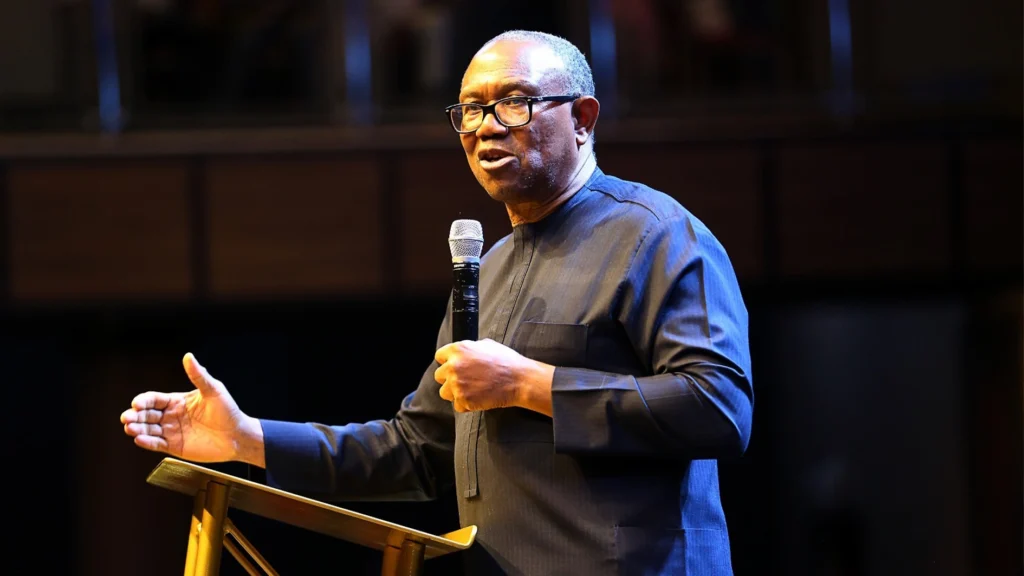
The presidential candidate of the Nigerian Democratic Congress, (NDC), Mr. Peter Obi, has called for the resignation of President Bola Ahmed Tinubu, citing worsening economic hardship, insecurity, and what he described as unmet campaign commitments.
Obi issued the statement on Monday after referencing recent political developments in the United Kingdom, where the Prime Minister has announced a planned resignation amid public dissatisfaction. He argued that leadership accountability should be consistent across democracies, including Nigeria.
He highlighted persistent inflationary pressures, unstable electricity supply, rising insecurity, and deepening poverty as indicators of governance strain, while recalling past instances where Nigerian political leaders had demanded resignations of sitting administrations over similar national challenges.
Obi also referenced campaign promises made ahead of the 2023 general election, particularly commitments on power stability, anti-corruption, job creation, and improved living standards, arguing that current outcomes reflect further deterioration across key sectors.
“I, therefore, join Nigerians of Goodwill in calling for the resignation of the President over monumental failure in governance. Such a gesture would help enthrone a political culture rooted in accountability and responsibility,” he stated.
Nigeria has faced sustained economic pressure since the removal of fuel subsidies in 2023, a policy shift that contributed to sharp increases in transport and food prices. The naira has also experienced continued volatility despite monetary policy interventions aimed at stabilisation.
Security concerns remain elevated in parts of the North-West, North-East, and North-Central regions, with recurring incidents of mass kidnappings, armed attacks, and communal clashes reported over the past year. These challenges have continued to shape public debate on the effectiveness of federal security strategy.
According to him, the power sector has also remained a central issue in national discourse, with recurring grid collapses and inconsistent electricity supply reinforcing long-standing concerns about infrastructure reliability and industrial productivity.
Obi’s call has intensified broader political debate over governance performance, accountability standards, and opposition responsibility in a pre-election cycle atmosphere.
Supporters of Obi argue that his position reflects growing public frustration over economic hardship and governance outcomes. Critics, however, contend that resignation calls are politically motivated and do not reflect institutional mechanisms for electoral accountability.
The federal government has consistently maintained that ongoing reforms, particularly in the foreign exchange market, subsidy adjustments, and security restructuring, are long-term measures aimed at stabilising the economy and improving national conditions.
As political tensions continue to rise, analysts say such exchanges are likely to shape narratives ahead of the next electoral cycle, with governance performance, cost-of-living pressures, and security outcomes expected to remain dominant national issues.



