

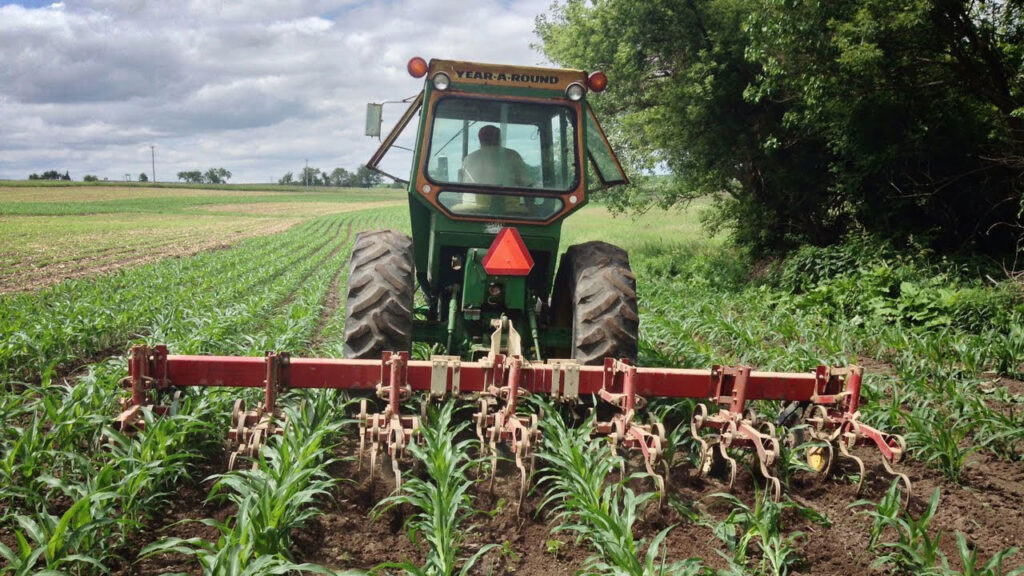
All Farmers Association of Nigeria (AFAN), Lagos State Chapter, says only
about 30 per cent of farmers in Nigeria currently use mechanised tools, while
the majority still operate at subsistence level.
The Deputy Chairman of the association, Mr Shakin Agbayewa, disclosed this
in a chat with reporters on Tuesday in Lagos.
Agbayewa said low adoption of mechanisation was largely due to poor access to
land, finance and modern farm equipment.
According to him, most farmers still rely on crude implements and manual
labour, limiting productivity and preventing expansion into commercial
farming.
“Most farmers in Nigeria today are still subsistence farmers. We are not yet
operating fully on a commercial basis.
“If you are talking about the percentage of farmers using mechanised tools, it is
still very low.
“Only about 30 per cent can be said to have access to mechanisation,” he said.
Agbayewa said many smallholder farmers cultivated limited land areas and
could not afford tractors, planters, harvesters and other modern equipment.
He noted that the cost of hiring tractors and paying operators had become a
major burden for many rural farmers.
In spite of the challenges, he said mechanised farming offered higher
productivity and stronger returns on investment over time.
“Mechanisation may be expensive in the short term, but in the long term, it is
profit upon profit,” he said.
Agbayewa said farmers who embraced mechanisation were able to cultivate
larger areas, save time and reduce post-harvest losses.
He said they also recorded better yields because land preparation and planting
were carried out more efficiently.
According to him, many Nigerian farmers are unable to enjoy these benefits
because of high equipment costs, foreign exchange pressures and rising fuel
prices.
Agbayewa said improved mechanisation would boost food production, reduce
labour stress and make farming more attractive to young Nigerians.
He urged the federal and state governments to establish tractor hiring centres,
farm service clusters, affordable equipment leasing schemes and low-interest
financing for farmers.
He also called for local manufacturing of farm equipment and improved access
to spare parts to reduce dependence on imports.
According to him, wider access to mechanisation is critical to achieving food
security, reducing food imports and transforming farming into a profitable
enterprise.
He added that increased mechanisation would enhance the competitiveness of
Nigerian agriculture and attract more young entrepreneurs to the sector



