

By SIMEON OGOEGBULEM
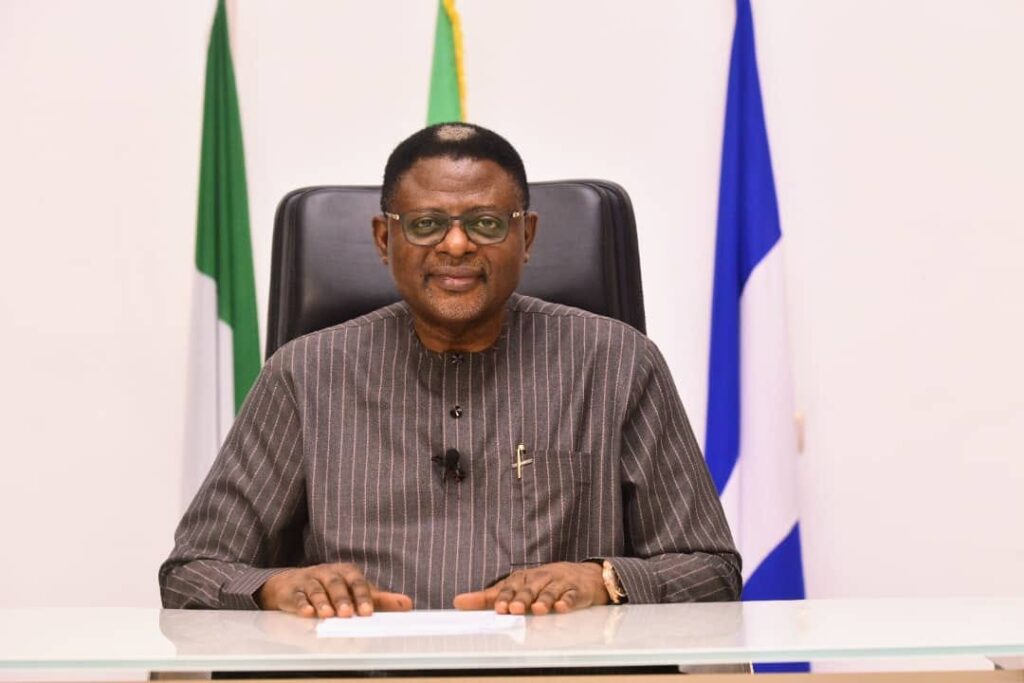
Governor Bassey Otu of Cross River has called on private-sector investors to invest in the state, assuring them of incentives, improved business environment, and government support to stimulate economic growth. Otu gave the assurance at the 2026 Governor’s Ball, held on Monday at Peregrino Hall, Government House, Calabar.
Otu told captains of industry, business leaders, investors, and other distinguished personalities that the state was committed to creating a conducive environment for businesses to thrive, adding that his administration would continue to support investors to drive economic growth and development.
The Governor stressed that private-sector participation was critical to economic development, saying no government could achieve meaningful progress without investors, declaring that “no government can move without the private sector,” even as he assured the investors that they would not encounter unnecessary delays in accessing government support.
Otu highlighted investment opportunities in maritime infrastructure, logistics, agriculture, hospitality, commerce, and the blue economy. He disclosed that his administration had put structures and strategies in place to reposition the state’s economy and attract local and international investments.
He expressed optimism that ongoing efforts would transform Cross River into a major investment destination, citing rising property values as evidence of renewed economic confidence. He said land previously sold for about N9 million per plot could now attract as much as N45 million.
Otu also highlighted opportunities in the technology and outsourcing sector, disclosing that more than 700 people had been trained, with over 600 already earning regular salaries denominated in foreign currencies. He encouraged the youth to develop their talents, remain resilient, and take advantage of emerging opportunities, stressing that determination was essential to achieving success.
Earlier, the Chairman of the Cross River State Internal Revenue Service, Mr Edwin Okon, disclosed that about 46 companies previously considered inactive in the state’s business records had indicated interest in resuming operations.
Okon said several other companies had also approached the service in 2026 to register as taxpayers, describing the development as evidence of renewed confidence in the state’s business environment. He urged investors to take advantage of available tax incentives, waivers, and reliefs, disclosing that about 16 companies benefited from various tax waivers in October.
According to him, the state has harmonised several taxes and levies to reduce the burden on businesses and eliminate multiple payment demands by government ministries. He said the policy was already benefiting companies, including Wilmar, while the service was expanding automation to improve revenue administration and transparency.
Also speaking, the Managing Director of Tenaris Global Services, Mrs Rosario Osabose, said investment decisions were driven more by confidence than the natural resources or potential available in a location. Osabose commended the state government for its efforts to attract investors, particularly through its hosting of the Sixth African Sub-Sovereign Governments Network Investment Conference.
She identified infrastructure, particularly the proposed Bakassi Deep Sea Port, as a strategic project capable of transforming the state’s economic prospects through improved logistics, industrialisation, and job creation. The business executive also urged the state to explore opportunities across the energy sector’s value chain, including skills development, manufacturing, logistics, and industrial services.
She disclosed that her company had invested about 10 million dollars in a thermal insulation coating facility, described as the only plant of its kind in sub-Saharan Africa. Osabose stressed the need to develop local talent and create opportunities for women and young people, saying inclusive participation was critical to sustainable economic growth.
She called for stronger collaboration between government and private investors to build an economy that would enable young people to realise their ambitions without leaving the state.



