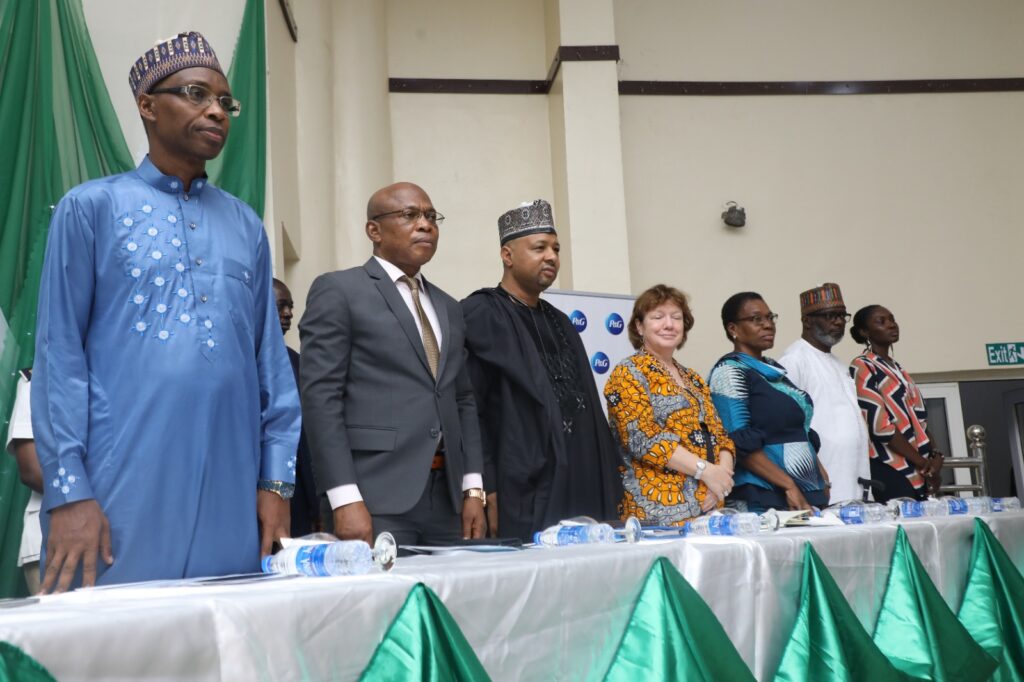
The Dean, Faculty of Medical and Health Science, NewGate University in Minna, Niger State, Prof. Henry Sawyerr, has revealed that 1 in 4 Nigerians representing 24.4 per cent defecate in the open while 1 in 2 persons in the North Central defecate in the open, and out of 47 million Nigerians that practice open defecation, 16 million live in the North Central.
Prof. Sawyerr gave the indication, during his presentation at this year commemoration of National Environment Sanitation Day (NESD) with the theme, “Promoting Sustainable Waste Management for a Health Environment: Stop Open Dumping” on Thursday in Abuja.
Giving the percentage of population practicing open defecation across the geopolitical zones, he said North-central rank highest with 53.9 per cent, followed by South-West with 28.0 per cent, South-East 22.4 per cent, North-East 21.8 per cent, South-South 17.9 per cent and North-West 10.3 per cent, the least in the chart.
Prof. Sawyerr however called on the Federal Ministry of Environment in establishing an integrated national environmental health surveillance system at all levels of government in order to address open dumping and defecation in Nigeria”.
This is even as he called on the Federal Ministry of Health to intensify its responsibility on the inspection, monitoring and enforcement of government regulations for environmental quality.
Prof. Sawyerr who also doubled as the Guess Lecturer, defined open dumping as a land disposal site at which solid waste are disposed of in a manner that does not protect the environment, are susceptible to open burning and and are exposed to the elements, vectors and scavenger, while open defecation is the human practice of defecating outside such as bushes, field, street, canals among others rather than into a toilet.
On the effects, he disclosed that environmental pollution due to illegal dumping leads to short-term and long-term health issues which include; asthma, congenital, respiratory infections, cancer, kidney, liver, cardiovascular diseases among others.
On sustainable waste management, Prof. Sawyerr said, “As a goal of environmental policy, environmental sustainability must adhere to the philosophical viewpoint that a strong , just and wealthy society can be consistent with a clean environment, healthy ecosystem, and a beautiful planet”.
He however revealed that the Federal Government has been committed in environmental issues concerns through various policy initiatives since 2000 to date which include:
National Environmental Sanitation Policy (2005), Policy Guidelines on Pest and Vector Control (2005), Policy Guidelines on Excreta and Sewage Management (2005), National Guidelines on Sanitary Inspection of Premises (2005), Policy Guidelines on School Sanitation (2005), Policy Guidelines on Market and Abattoir Sanitation (2005), National School Health Policy (2006), National Environmental (Sanitation and Waste Control) Regulations (2009), National Healthcare Waste Management Policy, National Policy on Solid Waste Management (2018), National Policy on Food Safety and Its Implementation Strategy (2019).
He further said that this indicates that Nigeria never lack policies but rather lacks effective communication and teamship spirit between ministries, department and inter-agencies.
Prof. Sawyerr however enjoined international donors agencies such as World Health Organization (WHO), United Nations Children’s Fund (UNICEF), United Nations Development Programme (UNDP), Breakthrough Action, Action Against Hunger amongst others actively collaborate with relevant agencies of government towards propagating and igniting sanitation behavioural change among community members.
Also speaking, the World Health Organisation (WHO) Country Representative, Dr Alexander Chimbaru who described waste management as a global issue that poses a threat to public health and development with increasing population, affirmed the Organization’s continued commitment towards supporting the government in ensuring sustainability.
Dr. Chimbaru posited that this agenda will make a significant impact, mobilise communities to enable health facilities, schools and service providers to find funding and financing mechanisms to build resilient, sustainable waste management services and make better use of limited resources.