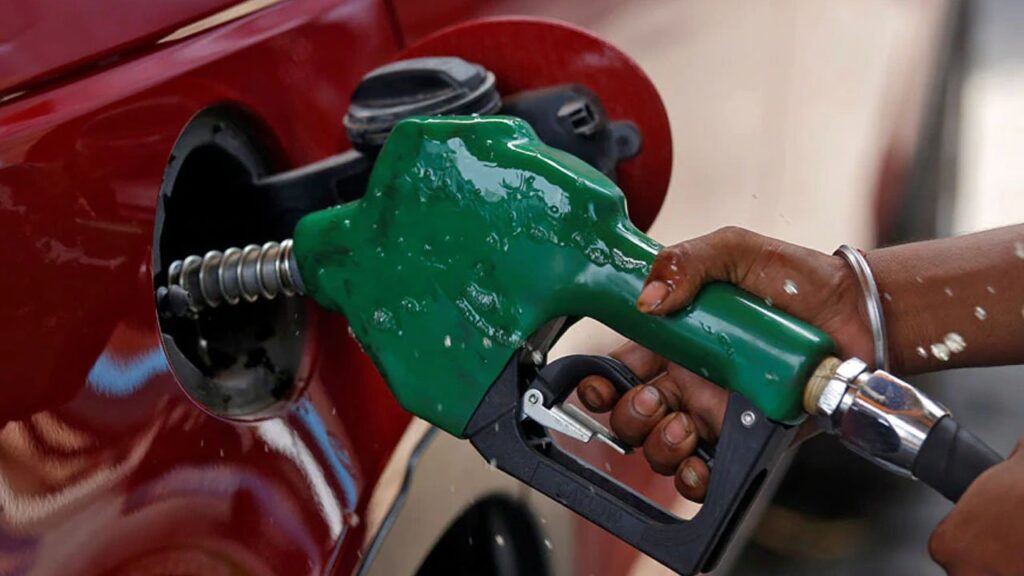
The Federal Government’s recent 30-day petrol discount, which reduced prices by about ₦50-60 per litre at the Nigerian National Petroleum Company Limited (NNPCL) retail outlets through October 31, 2026, has ignited a fierce national debate regarding policy inconsistency and its structural impacts on the common people.
While the administration frames this intervention as a temporary commercial sacrifice rather than a return to the fiscal subsidy regime, critics view it as a reactive measure that fails to solve the broader economic crisis.
Critics have questioned if the 30-day discount is to serve as a cushioning effort on the hardship that trailed the abrupt removal of petrol subsidy since 2023 or a mere tokenism.
Announced by the Finance Minister, Taiwo Oyedele, the policy targets public transport operators to curb spiraling transport fares. Alongside a proposed ₦1,350 per litre landing-cost ceiling, the temporary relief relies on NNPCL completely forgoing its retail profit margins.
However, public and political reactions have highlighted major flaws. For instance, Peter Obi, the Nigeria Democratic Congress (NDC) presidential candidate, pointed out that the discount covers less than 4 per cent of filling stations nationwide, leaving the vast majority of Nigerians buying at full market rates.
It also raises the question of deferred payments, with critics from the African Democratic Congress (ADC) arguing that the price cap operates on deferred costs, meaning suppliers will recover today’s absorbed margins from consumers later.
There is also the issue of the “Day 31” dilemma for which prominent figures, including former Vice President Atiku Abubakar, have openly questioned the sustainability of the plan, asking what happens once the 30 days expire and global oil shocks persist.
The move by the Tinubu administration obviously left out the obvious public perception that it reveals a seeming policy inconsistency against the backdrop of market distortions and volatility.
The New National Star believes that the discount exposes deep structural contradictions within Nigeria’s broader economic deregulation policy. After fiercely defending the total removal of the fuel subsidy in 2023 to rescue public finances, the sudden pivot toward artificial caps and margin sacrifices signals policy instability.
It should be understood that the policy component the initial reform targeted is being sacrificed on the altar of the 2026 intervention reality as market deregulation fully eliminates price controls to allow true market pricing.
The move also seems to fail to accommodate the perspective that fiscal freedom stops state-backed financial interventions in downstream oil, thereby forcing state-owned NNPC to absorb multi-billion-naira commercial losses.
There is also the perception that a long-term cushioning would rapidly pivot to Compressed Natural Gas (CNG) alternatives by reverting to temporary petrol palliatives due to slow infrastructure rollout.
In all these, it becomes clear that it is the hapless Nigerian people who bear the brunt.
When economic policies fluctuate, the poorest households absorb the shocks directly. The cascading effect of fuel instability deepens structural poverty in several distinct ways.
It increases hyper-inflation on daily household essentials, because logistics and farming rely entirely on petrol; sharp price fluctuations instantly inflate the costs of food, school fees, and basic consumer goods, whereas a temporary 30-day discount would not prompt traders to lower food prices, as they anticipate costs will surge again on day 31.
The economic reality of wages dissolving against real costs is still an issue to consider, even with a newly adjusted national minimum wage, the purchasing power of the average worker is completely erased when fuel prices hover around $1 per litre, an unsustainable ratio compared to average monthly incomes.
One of the consequences of such policy interruption is business closures, which are directly linked to job losses. Small and medium enterprises (SMEs) that rely on small petrol-powered generators for daily operations face unpredictable overhead costs, forcing mass closures and spiking unemployment.
Many citizens and opposition groups view the temporary relief measure as an inadequate response that serves primarily as a 2027 election campaign strategy.
Critics and political commentators argue that introducing a brief, 30-day intervention three years after the removal of the fuel subsidy is an attempt by President Bola Tinubu’s administration to improve electoral prospects ahead of the 2027 general elections.
Oyedele denied these claims during an interview on Channels Television’s Politics Today. He asserted that the government “is not that dumb” to think a one-month discount would decide an election, stating the gesture is strictly a temporary margin discount meant to cushion global price shocks.
However, public skepticism remains high, with many questioning what happens on “Day 31” once the temporary relief expires and prices inevitably fluctuate again.
Requiring digital applications or strict verification mechanisms further alienates everyday commercial transporters and vulnerable households who may lack smartphones, stable internet, or digital literacy. Economic analysts point out that a minor price modulation at select pumps is insufficient to lower overall transit fares or food costs. Transporters are expected to pocket the marginal savings rather than passing the discounts down to ordinary commuters.
The fuel subsidy debate has already become the central battleground for the upcoming elections.
Opposition figures are leveraging the widespread economic hardship to build their platforms. Atiku has formally integrated the restoration of the petrol subsidy into his 2027 campaign strategy, Obi has publicly criticised the administration’s execution, stating that while subsidy removal was necessary, it required a disciplined, phased plan to prevent plunging the populace into extreme poverty.
While the government frames the move as an “at-cost” structural modulation rather than a return to a full subsidy, the restrictive nature of its rollout has left the majority of Nigerians feeling left behind.
Ultimately, short-term commercial discounts act as a brief band-aid on a systemic wound. Without structural transparency, a reliable domestic refining capacity, and permanent safety nets, temporary price interventions leave the common citizen trapped in an unpredictable cycle of economic survival.