

By Joy Onu
Nigeria is facing a growing prostate cancer burden that health experts warn could become a major public health challenge unless awareness improves, more men embrace early detection and access to timely diagnosis and treatment expands.
Although advances in screening, diagnosis and treatment have reduced prostate cancer deaths in many developed countries, Nigerian hospitals continue to receive large numbers of men whose cancers have already spread beyond by the time they seek medical attention, leaving doctors with fewer opportunities for curative treatment.
For Professor Kingsley Ekwueme, Founder of The Prostate Clinic, late presentation remains one of the biggest obstacles in reducing prostate cancer deaths in Nigeria.
“We have a situation where more than 80 per cent of men in Nigeria present with advanced and incurable prostate cancer,” Ekwueme said during an awareness programme organised by The Prostate Clinic in May 2026. “Compare that with the United Kingdom, where only about 12.5 per cent present with incurable disease because of awareness, organised screening and timely treatment.”
According to him, many Nigerian patients who could have benefited from treatments such as surgery or radiotherapy eventually require therapies aimed mainly at controlling the disease and easing symptoms because they arrive at hospitals too late.
His warning comes as global data continue to show a rising prostate cancer burden.
According to the International Agency for Research on Cancer (IARC), about 1.47 million men were diagnosed with prostate cancer worldwide in 2022, making it the fourth most commonly diagnosed cancer globally. The disease claimed about 397,000 lives during the same year, ranking as the eighth leading cause of cancer deaths.
While countries with organised screening programmes and stronger health systems continue to record improved survival outcomes, many low- and middle-income countries, particularly in sub-Saharan Africa, continue to experience high mortality because men are often diagnosed at advanced stages.
A recent systematic review and meta-analysis published in 2026 reaffirmed that prostate cancer remains the most commonly diagnosed cancer among Nigerian men and a growing public health challenge.
The review analysed findings from 32 Nigerian studies involving more than 19,000 participants and found that most patients continue to present with advanced disease, reducing their chances of receiving potentially curative treatment.
The researchers reported a pooled hospital-based prevalence of about 16.4 per cent and a population-based prevalence of about 14 per cent. Advancing age, family history and dietary factors were identified among commonly reported risk factors, while delayed diagnosis, inadequate screening opportunities and limited access to specialist cancer care were highlighted as major contributors to poor outcomes.
The study also found that hormonal therapy remains one of the most frequently used treatment options in Nigeria, reflecting the reality that many patients are diagnosed too late for interventions such as surgery and radiotherapy.
For retired Major General John Enenche, the reality of prostate cancer became personal when a routine medical examination revealed an elevated Prostate-Specific Antigen (PSA) level that led to his diagnosis.
According to Enenche, his PSA test showed a level of 14.2, leading to further investigations that confirmed prostate cancer. He later underwent robotic surgery and has since become an advocate for regular screening.
Speaking about his experience, Enenche said he initially decided to undergo medical evaluation after what he described as a divine prompting.
“I heard clearly, ‘Go and check yourself, check your prostate, check your kidneys,’” he recalled. “When the tests were done, my PSA came back at 14.2. If I had ignored it, the story might have been different.”
Today, he encourages Nigerian men not to wait until symptoms appear before seeking medical attention.
Another survivor, Ben Alozie, said his diagnosis changed his understanding of men’s health and convinced him that prostate screening should become part of routine healthcare.
“Please don’t wait until you begin to experience serious symptoms,” Alozie urged. “Go for screening. Early detection gives you a fighting chance.”
For Innocent Ihebuzor, the diagnosis came as a surprise because he never imagined he could have cancer despite feeling healthy. Since completing treatment, he has joined awareness efforts encouraging men to overcome fear and ignorance surrounding prostate cancer.
Their experiences reinforce what doctors have repeatedly warned — prostate cancer often develops silently.
Dr Sefiu Eniola, a consultant urologist, said the absence of early warning signs is one of the reasons many Nigerian patients arrive at hospitals when the disease has already progressed.
“Most early prostate cancers are silent. By the time many men begin experiencing urinary symptoms, the cancer may already have progressed. That is why we encourage men, especially those at higher risk, not to wait until they have symptoms before discussing screening with their doctors,” Eniola explained.
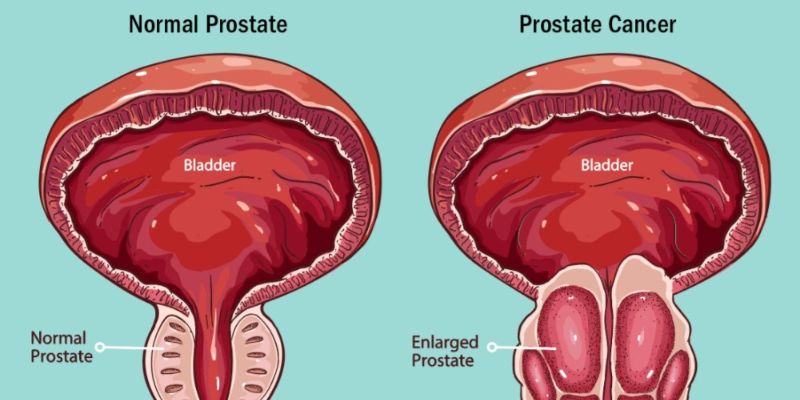
Prostate cancer develops from abnormal growth of cells in the prostate gland, a small organ below the bladder that helps produce semen. While some forms grow slowly, others, particularly among men of African ancestry, can behave aggressively and spread if not detected early.
Researchers say there is no single cause of prostate cancer. Instead, a combination of genetic, biological and lifestyle factors influence who develops the disease and how aggressively it progresses.
Age remains the strongest known risk factor, with the likelihood increasing significantly after 50 years. Family history also plays an important role, as men with a father or brother diagnosed with prostate cancer face a higher risk.
Men of African descent are recognised as a higher-risk group, with studies showing they often develop prostate cancer at younger ages and experience more aggressive disease.
However, experts caution that biology alone does not explain Africa’s poor outcomes.
Researchers say African ancestry interacts with delayed diagnosis, poor awareness, low screening uptake, treatment delays and weak health systems, producing worse outcomes across many African countries, including Nigeria.
Lifestyle factors also contribute to prostate health. Doctors recommend diets rich in fruits, vegetables, whole grains and fish, reduced intake of processed and red meat, regular physical activity and maintaining a healthy weight.
They also advise avoiding tobacco use and moderating alcohol consumption to improve overall health outcomes.
Beyond prevention, specialists say early detection remains the most effective way of improving survival because prostate cancer can often be treated successfully when discovered before it spreads.
The challenge, however, is that many men do not seek medical attention until they begin experiencing troubling symptoms.
When symptoms appear, they may include difficulty starting urination, weak or interrupted urine flow, frequent urination especially at night, urgency and the feeling that the bladder has not emptied completely.
Some men may also experience blood in the urine or semen, painful ejaculation, or difficulty achieving and maintaining an erection.
In advanced cases, where the cancer has spread beyond the prostate, patients may experience persistent pain in the lower back, hips, pelvis or upper thighs, unexplained weight loss, fatigue and weakness.
Doctors stress that these symptoms do not automatically mean a man has prostate cancer because similar signs may occur in conditions such as benign prostatic enlargement and urinary tract infections.
However, they warn that changes in urinary habits should not be ignored.
They encourage men, especially those aged 45 years and above or those with a family history of prostate cancer, to discuss prostate health checks with healthcare providers.
For Professor Ekwueme, changing public attitudes remains central to reducing prostate cancer deaths in Nigeria.
He believes awareness must move beyond hospitals into communities, workplaces, churches, mosques and traditional institutions so that men begin to see prostate checks as part of routine healthcare rather than something to fear.
For patients diagnosed with prostate cancer, survival depends not only on early detection but also on access to quality treatment.
Doctors say treatment options depend on the stage of the disease, age of the patient, overall health and risk category.
Men with low-risk, localised prostate cancer may be placed under active surveillance, while others may require surgery, radiotherapy or a combination of treatments.
For advanced cases, androgen deprivation therapy, chemotherapy and newer targeted medicines have improved survival in many parts of the world.
In Nigeria, however, access to advanced imaging, pathology services, radiotherapy facilities and newer cancer medicines remains uneven, leaving many patients dependent mainly on hormonal therapy and palliative care after late presentation.
Professor Ekwueme said early diagnosis remains the biggest opportunity to change Nigeria’s prostate cancer outcomes.
“When prostate cancer is detected early, many men can be cured and go on to live normal lives. Our challenge in Nigeria is that most patients still present far too late,” he said.
Recognising the growing cancer burden, the Federal Government has introduced policy measures aimed at improving cancer prevention, diagnosis, treatment and survivorship.
Speaking during a ministerial press briefing to commemorate World Cancer Day on February 4, 2026, where the Federal Government unveiled the National Cancer Control Plan (2026–2030) and the National Nuclear Medicine Policy and Strategic Plan, the Minister of State for Health and Social Welfare, Dr Iziaq Adekunle Salako, said the framework provides a roadmap for strengthening cancer prevention, risk assessment, early detection, diagnosis, treatment, survivorship and palliative care across Nigeria.
According to Salako, the government has established preventive oncology clinics in eight federal tertiary hospitals to improve access to cancer screening and ensure more cancers are detected before reaching advanced stages.
“Prevention remains our most effective weapon against cancer. Detecting cancer early saves lives, reduces the cost of treatment and improves outcomes for patients,” the minister said.
He explained that the National Cancer Control Plan prioritises stronger cancer registries, workforce development, research, sustainable financing, digital innovation and expanded access to quality cancer services.
Government interventions have also included the Cancer Health Fund, which supports indigent cancer patients receiving treatment in selected federal tertiary hospitals, and the Cancer Access Partnership, which has improved access to essential cancer medicines, including some therapies used in prostate cancer treatment.


