

By Victoria Yakubu
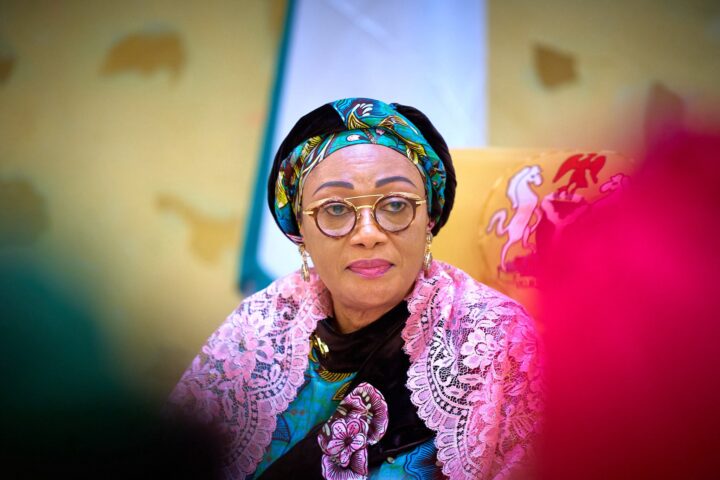
Comments by First Lady Oluremi Tinubu encouraging Nigerians to explore small-scale businesses such as selling akara (bean cake), roasted corn and kuli-kuli (peanut cake) have reignited public debate over grassroots entrepreneurship and revived discussions about decades of government-backed empowerment initiatives aimed at tackling poverty and unemployment.
Mrs Tinubu made the remarks on June 24 after the second-quarter meeting of the Renewed Hope Initiative with the wives of state governors at the State House, Abuja. Speaking with journalists, she said the initiative had provided grants, not loans, to vulnerable Nigerians to help them establish small businesses and improve their livelihoods.
“We’re trying to give hope, and to start akara business doesn’t take a lot of money. To start roasting corn, or kuli-kuli doesn’t take much. We didn’t give them a loan; we gave it to them as a grant. So, we have encouraged Nigerians as best as we could. What is within our hands, I have given, and I keep giving,” she said.
The First Lady added that the Renewed Hope Initiative has continued to support vulnerable Nigerians through programmes in healthcare, education, agriculture and other social investment interventions.
Her comments gained widespread attention on social media last Friday, generating sharply divided reactions. While some Nigerians described the remarks as being out of touch with the country’s prevailing economic realities, others argued that there is dignity in honest labour and that small businesses have long provided a dependable source of income for millions of households.
Beyond the online exchanges, the debate has once again drawn attention to Nigeria’s long-standing reliance on grassroots enterprise as a key tool for poverty reduction and economic empowerment.
Over the years, successive administrations have introduced programmes designed to encourage self-employment, vocational skills and small business development.
One of the earliest examples was the Better Life for Rural Women Programme, launched in 1987 by former First Lady Maryam Babangida. The initiative sought to improve the economic wellbeing of rural women through cooperative societies, skills acquisition, cottage industries and other income-generating ventures requiring relatively modest start-up capital.
The Family Support Programme and the Family Economic Advancement Programme, championed by former First Lady Maryam Abacha, later expanded similar efforts by promoting vocational training, community development and micro-enterprise schemes.
During the administration of former President Goodluck Jonathan, the Youth Enterprise with Innovation in Nigeria (YouWiN) programme provided grants, training and mentorship to young entrepreneurs seeking to establish and expand their businesses.
Former President Muhammadu Buhari’s administration also introduced the Government Enterprise and Empowerment Programme, which included TraderMoni, MarketMoni and FarmerMoni. The schemes were designed to provide microcredit to petty traders, artisans, farmers and other small-scale entrepreneurs.
According to analysts, although these initiatives differed in structure and implementation, they shared a common objective of expanding economic opportunities through grassroots enterprise.
Development economist, Dr. Amina Yusuf, said promoting entrepreneurship has remained a consistent feature of Nigeria’s economic policy.
“Governments have consistently promoted small businesses as a means of reducing poverty and unemployment. What changes is the economic context in which those messages are delivered and how the public receives them,” she said.
She said that micro and small enterprises have historically helped many families, particularly women and low-income earners, supplement household incomes and build economic resilience.
Political analyst, Dr. Tunde Akinola, said the strong reactions to the First Lady’s remarks reflected the difficult economic conditions confronting many Nigerians.
“When people are dealing with inflation and rising living costs, they often expect broader economic solutions. That is why comments encouraging small-scale businesses can generate both support and criticism,” he said.
The remarks have continued to attract mixed reactions from Nigerians as Mrs. Akunyili Uzochukwu, an Enugu resident, said the First Lady’s comments were taken out of context.
“People just want to talk. I know things are not okay right now, but I think she meant well,” she said.
Abiola Olotu, from Lagos also shared a similar view. “It’s purely a misunderstanding. Those who don’t like President Bola Tinubu will never see anything good in whatever they do, period.”
However, Obasi Daniel disagreed, arguing that the remarks reflected the administration’s mindset. “They want Nigerians to be selling akara and kuli-kuli. Is it akara and kuli-kuli they sold to become who they are today? It is well.”
Despite the differing opinions, small businesses remain an economic lifeline for countless Nigerians. Across communities nationwide, thousands of households depend on the sale of local snacks, food items and petty trading to meet daily expenses, pay school fees and support their families.
Observers say the controversy extends beyond akara, roasted corn or kuli-kuli. Instead, it has reopened a broader national conversation about entrepreneurship, self-reliance and whether grassroots empowerment programmes, while valuable, can adequately address the country’s deepening economic challenges.
As the debate continues, Mrs Tinubu’s remarks have once again highlighted the enduring role of grassroots enterprise in Nigeria’s development strategy while prompting renewed scrutiny of the effectiveness of empowerment initiatives introduced by successive governments.



