

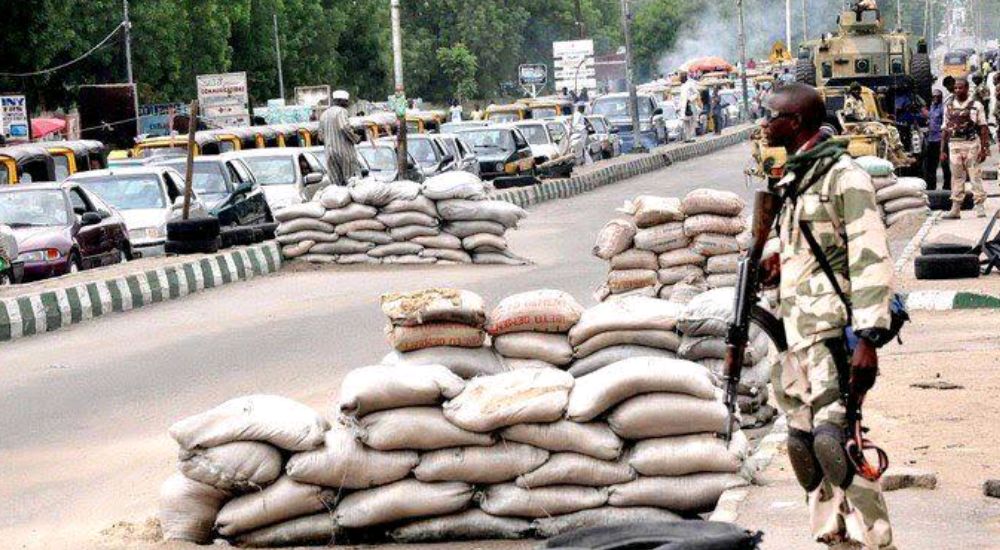
On Thursday, the House of Representatives voiced serious concerns over the extortion of commercial drivers using the Onitsha-Enugu Expressway and the overabundance of security checkpoints along the road.
The House expressed concern over the trend and urged all security agencies to minimize roadblocks and make sure that security personnel follow the law and don’t harass or take advantage of residents.
After a motion presented by Hon. Amobi Oga, who requested the House’s involvement, was adopted, the resolution was passed.
The current strategy of erecting an excessive number of security checkpoints, according to lawmakers, is ineffective and jeopardizes the region’s economic stability.
During his lead discussion, Hon. Ogah stated: “The House is fully aware that the Nigeria Army, Nigeria Police Force, and the Federal Roads Safety Corps (FRSC) are the security agencies in Nigeria that are primarily involved in mounting security checkpoints on our major roads.” It is also noted that there are only about 105 kilometers between Onitsha and Enugu.
The fact that there are roughly 28 security checkpoints over a 105-kilometer journey—an average of 3.7 kilometers each—is unsettling. For instance, to name a few, Awkuzu Junction, Amawbia Junction, Ugwuoba Boundary, Oji River Junction, and Onyeama Hill. In addition to other annoyances, these expose travelers to ongoing harassment, delays, and various forms of extortion.
Section 41 of the 1999 Constitution of the Federal Republic of Nigeria (as amended) guarantees Nigerian people the right to free movement, which is violated by the installation of many checkpoints along the expressway, the House observes.
Additionally, it directly violates people’s dignity, especially in the South-East, where militarism is more prevalent.
Noting that regular people, particularly commercial vehicles, are frequently compelled to pay bribes at the checkpoints in order to avoid delays or harassment, it is concerning that these security checkpoints seem to be more of a tool for harassment than a sincere attempt to ensure security.
“This is negatively impacting the socio-economic well-being of the area by creating delays, frequent disruptions, and rising transportation, goods, and service costs, all of which deter investment and economic activity.”
“As much as security is important, the current approach of mounting excessive security checkpoints is counterproductive and undermines the economic stability of the region,” Hon. Ogah stated while demanding for redress.
“We support the implementation of contemporary, more effective security measures that do not inflict undue hardship or infringe upon the fundamental rights guaranteed by the constitution.”
In order to do this, the House directed the joint Committees on Army, Police Affairs, and Defense to consult with the Inspector General of Police and the Service Chiefs in order to investigate alternate security strategies that will not subject people to undue hardship.
In order to control the number of its checkpoints on the Onitsha-Enugu Expressway, the House also ordered its Committee on Road Safety to consult with the FRSC Corp Marshal.
Similar to this, the House directed its Committee on National Security to work with the appropriate Agencies and promote community-based security programs and enhanced intelligence collection that would successfully handle regional security issues aside from the overuse of security checkpoints on the freeway.
In order to make sure that security personnel follow the law and don’t abuse their positions to harass or take advantage of citizens, the House ordered the combined Committees of Defense, Police Affairs, and National Security to step up their stringent oversight.



