

… As Auditor General’s 2021-23 reports finger Mahmood Yakubu, Mele Kyari
By Ameh George
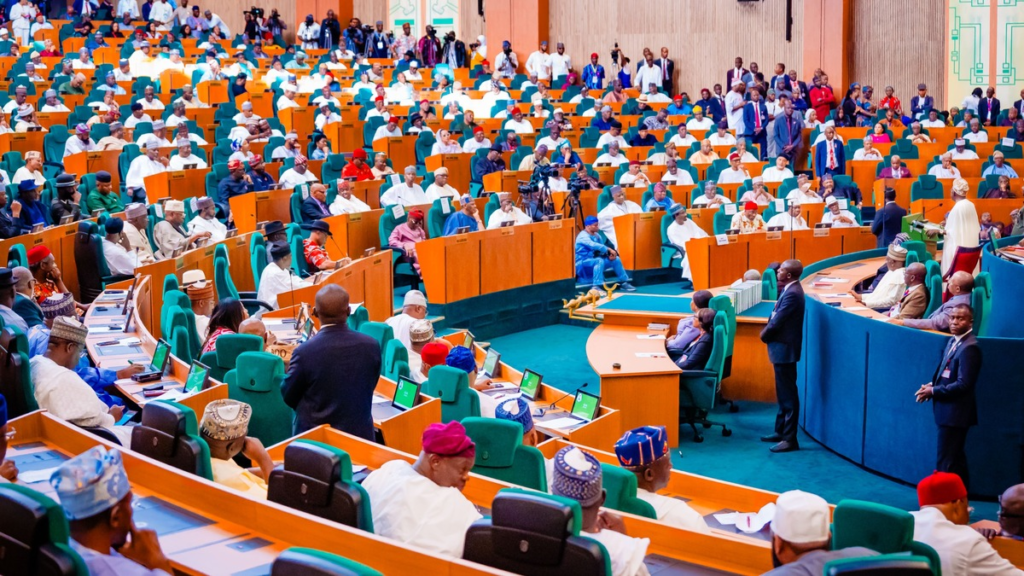
The House of Representatives’ Public Accounts Committee yesterday commenced the probing of the Nigerian National Petroleum Company Limited (NNPCL) and the Independent National Electoral Commission (INEC) among other agencies over alleged financial breaches to the tune of over N802.19 billion.
The probe of the two agencies followed queries contained in the Auditor-General for the Federation (AuGF) reports covering the 2021, 2022 and 2023 financial years which highlighted alleged irregularities in procurement, revenue management, payments and compliance with extant financial regulations.
The committee, chaired by Bamidele Salam, who represents Ede North/Ede South/Ejigbo/Egbedore Federal Constituency of Osun State, is empowered by Sections 85, 88 and 89 of the 1999 Constitution, as amended, to examine public accounts and investigate alleged revenue losses, non-remittance of statutory funds and breaches of financial regulations.
A member of the committee, who spoke anonymously because he was not authorised to speak on its behalf, said officials of several agencies would appear before the committee which began sitting yesterday. He said the NNPC and INEC would appear before the committee on Tuesday to respond to queries raised by the Auditor-General.
“On Tuesday at the National Assembly Complex, the House of Representatives Public Accounts Committee will be questioning several agencies.
“As a matter of fact, we are starting on Monday, October 5, with some agencies including the Code of Conduct Tribunal, Federal Capital Territory Judicial Service Commission, Federal Colleges of Education, Okene and Gombe and the University Teaching Hospital, Ilorin. There are others I have not mentioned,” he said.
The lawmaker added, “Tuesday is special because we hope to have in the House the accounting officers and subject matter experts from the NNPCL and INEC.”
According to him, the Auditor-General’s 2021 report raised queries involving about N514 billion against the NNPCL, while INEC would be asked to clarify alleged financial breaches amounting to N288.19 billion contained in the 2022 audit report.
The NNPCL queries reportedly include alleged irregular deductions of N343.64 billion from domestic crude oil sales.
The Auditor-General also reportedly flagged N83.66 billion allegedly warehoused from miscellaneous revenue in a sinking fund account, alongside N82.95 billion in alleged unauthorised deductions from Federation revenue. Another N3.75 billion was reportedly queried as a shortfall arising from the sale of petroleum products.
The committee is expected to demand supporting documents and explanations from the NNPCL on the transactions and responses to the audit queries.
On INEC, the lawmaker said the electoral commission had questions to answer over procurement processes, payments to contractors and alleged failure to remit statutory deductions.
“There are several audit queries concerning procurement procedures, payments made to contractors as well as failure to remit statutory deductions by the commission during the administration of the former INEC Chairman, Prof Mahmood Yakubu, who is now an ambassador,” he said.
He declined to provide details of all the alleged infractions but said the committee would examine expenditure dating back to the 2019 general election.
“There are questions to be asked on money spent starting from the 2019 general election,” he said.
The Auditor-General’s 2022 report had, among other issues, queried the payment of more than N5.31billion for the supply of smart card readers for the 2019 general election without prior approval from the Bureau of Public Procurement (BPP).
The smart card readers were deployed by INEC during the 2019 elections before the commission introduced the Bimodal Voter Accreditation System (BVAS) for the 2023 general elections.
Other agencies scheduled to appear before the committee on Tuesday include the National Mathematical Centre, National Power Training Centre, National Research Institute for Chemical Technology and the National Biotechnology Research and Development Agency.
The Code of Conduct Tribunal, Federal Capital Territory Judicial Service Commission, Federal Colleges of Education in Okene and Gombe and the University Teaching Hospital, Ilorin, are also among the institutions scheduled for questioning.
The New National Star reports that the House of Representatives had resolved last October to investigate the non-functionality of Nigeria’s state-owned refineries in Port Harcourt, Warri, and Kaduna, despite spending more than $18 billion on their rehabilitation over the past two decades.
During its plenary session, the resolution followed a motion of urgent public importance moved by Mr Sesi Whingan (APC, Lagos).
Presenting the motion, Whingan expressed concern over the persistent failure of the refineries to operate, despite repeated promises, budgetary allocations, and numerous Turnaround Maintenance (TAM) projects spanning successive administrations.
He noted that despite over 20 years of rehabilitation efforts and huge public investments, the three refineries remain non-functional, raising serious questions about accountability and fiscal responsibility within the petroleum sector.
The lawmaker cited recent public remarks by Aliko Dangote, Africa’s richest industrialist, and former President Olusegun Obasanjo, both of whom expressed doubts about the viability of these refineries and described the multi-billion-dollar investments as futile.
Their views sparked widespread public concern and outrage over potential mismanagement,
Whingan recalled that 2007 during Obasanjo’s administration, the refineries were privatised and acquired by Blue Star Consortium, promoted by Dangote and a group of private investors.
However, the succeeding government led by President Musa Yar’Adua reversed the transaction, opting instead for continued public funding of the refineries, an approach that has since yielded the desired result.
The lawmaker also referenced an interview granted by the Group Chief Executive Officer of the Nigerian National Petroleum Company Limited (NNPCL), Bayo Ojulari, published on 10 July, 2026 where the NNPC boss confirmed the refineries’ continued non-performance.
Ojulari said the facilities remain moribund despite substantial public investments and suggested that the Federal government considered selling them. His comments have further raised public concern about the long-term fate of Nigeria’s refining assets.
Whingan described the situation as “a gross misuse of public funds and a violation of public trust,” noting that billions continue to be appropriated annually for refinery rehabilitation with no verifiable outcomes.
He stressed that Nigeria’s economic stability and energy security are heavily dependent on functional refineries, especially following the removal of petrol subsidy by the current administration, which has led to rising costs of fuel and widespread hardship.
The lawmaker expressed concern that the continued failure of the refineries undermines Nigeria’s industrial capacity, job creation prospects, and foreign exchange stability, while increasing the nation’s dependence on imported petroleum products.
“A comprehensive, transparent, and time-bound investigation is essential to ascertain the current operational and structural status of Port Harcourt, Wari, and Kaduna refineries, examine the utilisation of all allocated funds and the effectiveness of rehabilitation efforts, identify any infractions, mismanagement, or corrupt practices in the management of these assets and propose actionable reforms to safeguard future public investments and ensure the sustainability of Nigeria’s oil and gas infrastructure,” he stated.
Earlier in July, the House Committee on Petroleum Resources (Downstream) inaugurated technical sub-committees to examine investments made into the Maintenance of Nigeria’s refineries and to determine why years of such rehabilitation efforts have yielded no meaningful results.
The committees were tasked with reviewing contracts awarded for TAM, auditing disbursements, and assessing the current operational condition of the refineries.
Despite extensive hearings, document requests, and public testimonies from officials of NNPC, Ministry of Petroleum Resources, and Bureau of Public Procurement, the probe, like others before it, did not produce any conclusive report or lead to accountability for the huge sums spent.
The new probe, if effectively pursued, could therefore become a crucial test of the legislature’s resolve to enforce accountability in the downstream petroleum sector.
In the latest probe, the committee’s proceedings are part of its constitutional responsibility to examine the Auditor-General’s findings and compel public institutions to account for their expenditure and address outstanding audit queries.
However, an audit query does not by itself establish wrongdoing, as the affected agencies are entitled to respond and provide relevant documents or explanations before the committee reaches any conclusion.
Efforts to obtain comments from the committee chairman were unsuccessful, as calls to Salam were not answered, while he also did not respond to messages sent to him through social media platforms.



