

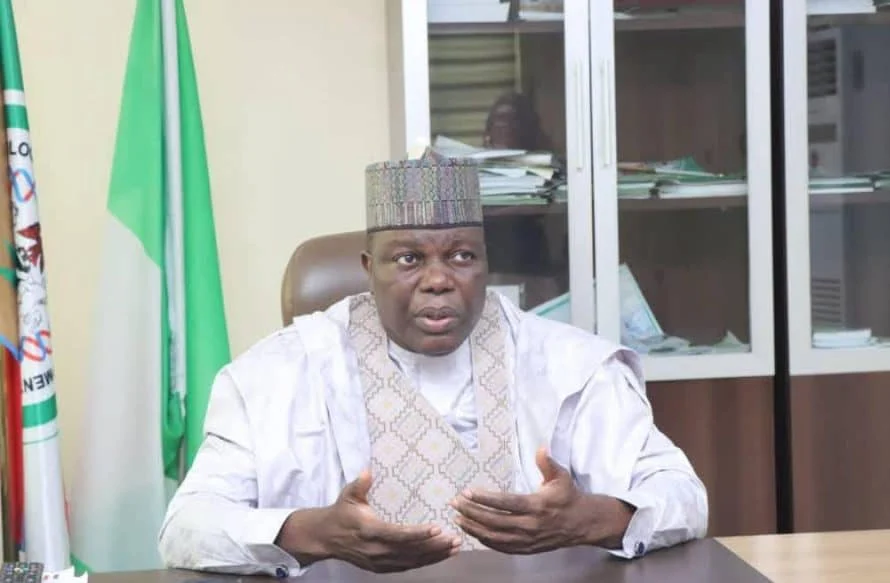
Prof. Abdullahi Mustapha, Director-General, National Biotechnology Research and
Development Agency (NBRDA), says the revised National Biotechnology Policy will strengthen Nigeria’s health and food security.
He said that the previous policy, crafted in 2001, when biotechnology was not well understood, could no longer meet present realities.
“Since that time, between 2001 and 2026, a lot has happened in the arena of biotechnology, making it difficult to use the policy enacted in 2001,” he said.
He said the four technical departments created under the original policy, remained relevant, but new developments demanded an updated framework.
Mustapha said such policies should ideally be reviewed every five to 10 years, noting that a 25-year gap was too long.
He explained that advances in agriculture, environment, medicine, genomics, food and industry required a shift from earlier knowledge to advanced approaches, such as precision agriculture.
According to him, the policy will also guide research, towards the actual needs of Nigerians, so that locally developed products deliver real value to the people.
He recalled that the COVID-19, taught the country lessons on disease preparedness, pointing to the mRNA vaccine breakthrough, during the pandemic.
“We need to find our own feet in terms of developing vaccines, in terms of developing our food,” he said.
On genomics, he explained that Nigeria and Africans needed to play a vital role, as the country was yet to determine its human genome.
“Without analysing and compiling our human genome, we cannot practise personalised medicine,” he said.
He said that while advanced countries could trace family trees through the human genome, Nigeria still struggled to determine the genetic make-up of its population.
He said imported drugs were based on studies of western populations, adding that Nigeria also had peculiar diseases such as Lassa fever, requiring local solutions.
Mustapha said that many pharmaceutical firms were keen on human genome analysis, and called for a national data bank covering humans, microorganisms and plants.
“If we do not do it, nobody will come from outside the country and do it for us,” he said.
He said Nigeria, as the giant of Africa, should lead by example, by making such data available for research, medicine and environmental investigations.
The D-G also said Nigeria lacked coordinated data on biotechnology research, imports and exports.
He said this places enormous responsibility on NBRDA, with many public and private institutions conducting research.
According to him, without coordination, researchers would work in isolation and Nigerians would not benefit fully from the research.
Mustapha assured that the policy would also help safeguard the country on biotechnology products and pathogens, entering and leaving Nigeria.
He stressed that the implementation of the revised policy would be gradual, with each step carefully taken to deliver the mandate of the policy.
He commended President Bola Tinubu, for assenting to the policy, which the Federal Executive Council recently approved.
“We are looking forward to implementing the National Biotechnology Policy in total but it has to be done bit by bit,” he said.



