By Joy Onu
Human rights advocates have called for a legally binding international treaty to protect older persons from discrimination, social exclusion, poverty and barriers to healthcare, arguing that existing human rights frameworks do not adequately address their needs.
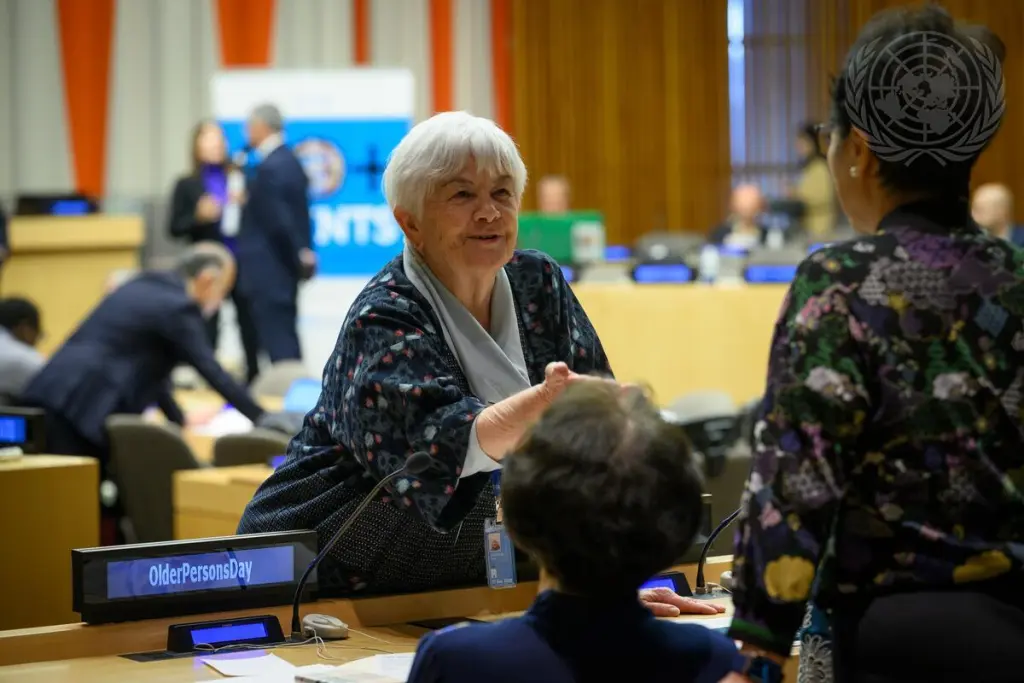
The call was made at a SHE & Rights session organised ahead of the United Nations Inter-Governmental Working Group (IGWG) on the human rights of older persons, where participants stressed the need for stronger legal safeguards and accountability mechanisms.
The session was organised by the Global Center for Health Diplomacy and Inclusion (CeHDI) and Citizen News Service (CNS), in collaboration with the Global Alliance for the Rights of Older People (GAROP) and other international civil society organisations.
Khaled Hassine, Secretary of the Inter-Governmental Working Group at the Office of the United Nations High Commissioner for Human Rights, said older persons remained inadequately represented in official statistics and human rights accountability mechanisms.
He explained that ageism, including stereotypes, prejudice and exclusion based on age, continued to undermine their rights and wellbeing.
Hassine said a dedicated international treaty would establish a coherent framework for protecting older persons and clarifying governments’ obligations. He added that policies must reflect the diverse experiences and needs shaped by individuals’ social, economic and personal circumstances throughout life.
Executive Director of CNS and SHE & Rights coordinator, Shobha Shukla, highlighted the limited attention given to older persons in international human rights monitoring.
She said only 681 of more than 124,539 recommendations issued under the United Nations Human Rights Council’s Universal Periodic Review (UPR) since 2008 addressed older persons, representing approximately 0.5 per cent.
According to her, the exclusion was particularly evident among older women, persons with disabilities, people living with HIV, indigenous peoples and gender-diverse communities.
Shukla attributed the gaps to systemic barriers, prejudice and patriarchy that often leave vulnerable older persons outside policy discussions and protection frameworks.
Rachel Rieille, Data Manager at CeHDI, said only 144 of approximately 29,000 health-related UPR recommendations specifically addressed the health of older persons.
She presented the Health and Rights Observatory, a free, public and interactive platform linking human rights recommendations with health indicators, as a tool for tracking government commitments and identifying gaps in service delivery.
GAROP Co-Chair Rose Gahire said a binding treaty would clarify government responsibilities, strengthen accountability and address discrimination affecting older persons’ independence, employment opportunities and participation in policymaking.
“Ageing is universal, but ageing with dignity, security and respect is not yet a universal reality,” she said.
Gahire urged negotiators to recognise the diverse experiences of older persons, particularly those affected by gender inequality, disability, poverty, migration and displacement. She also cited the African regional protocol on the rights of older persons, which entered into force in 2024, as a foundation for stronger global protections.
Feminist scholar Dr Pam Rajput called for active civil society participation in developing the proposed treaty, stressing that older persons must be recognised as rights holders rather than merely recipients of care.
She urged negotiators to incorporate intersectionality and build on existing international and regional human rights standards.
The advocates also raised concerns about older people living with HIV, citing stigma, breaches of confidentiality, fragmented healthcare, discrimination and inadequate social protection.
Nicoletta Police, co-founder and director of PRISMA, a European community-driven observatory on ageing and HIV, said longer life expectancy among people living with HIV must be accompanied by dignity, autonomy and equal access to services.
She called for community-led evidence to inform public policy and ensure that older people living with HIV participated in setting priorities and monitoring government commitments.