

By Joy Onu
In Abuja, Nigeria’s Federal Capital Territory, the cost of survival is rising sharply. From housing and transportation to food and electricity, many residents say living comfortably in the city now requires hundreds of thousands of naira monthly. Beyond these daily pressures, however, healthcare has emerged as another growing burden, quietly pushing families into debt and desperation.
Across the capital city, the contrast between luxury healthcare and survival medicine has become increasingly visible. While some residents can afford premium hospital suites, advanced diagnostic scans, and specialist consultations, many ordinary Nigerians say even basic treatment has become financially overwhelming.
Findings by the New National Star reveal that rising admission costs, expensive drugs, laboratory tests, and out-of-pocket medical bills are forcing many residents to delay treatment, abandon hospital care midway, or resort to herbal remedies and self-medication.
At some of Abuja’s premium private hospitals, consultation fees range from ₦50,000 to ₦100,000, while MRI scans can cost as much as ₦290,000 depending on the facility. VIP wards and private rooms in top hospitals also range between ₦100,000 and ₦250,000 per night, excluding medications, investigations, and treatment procedures.
Leading private healthcare facilities in the capital, including Nizamiye Hospital and Cedarcrest Hospitals, are known for specialized care, modern equipment, and premium services that many middle and low-income earners can barely afford.
For residents living in districts such as Maitama, Asokoro, and Wuse 2, access to such healthcare may be manageable. However, for many civil servants, traders, artisans, and residents of satellite communities like Kubwa, Karshi, Jikwoyi, Mararaba, Lugbe, Kuje and Masaka, healthcare expenses now compete directly with rent, school fees, feeding, and transportation.
A medical doctor at one of Abuja’s top private hospitals, who spoke anonymously to New National Star, defended the high cost of private healthcare, saying quality treatment requires significant investment in infrastructure, personnel, and patient safety. “My principle is that the room has to be conducive and cleaned several times daily to avoid infections,” the doctor said.
“There cannot be compromise. It has to be more practical and comfortable than a hotel room, while medical personnel remain on standby to attend to patients. According to the physician, hospitals also bear enormous operational costs beyond what patients physically see. “You are paying for upkeep. Doctors and nurses have to be retained. The number of experienced doctors available is reducing, and hospitals are forced to pay more to keep them,” the doctor added.
He argued that private hospitals often provide more value than many people acknowledge because healthcare involves continuous monitoring and emergency response. “When many staff are available to look after patients round the clock, you may discover that the hospital is even cheaper than a hotel when compared by service delivery,” he stated.
Despite these explanations, many Abuja residents interviewed say healthcare in the city has become increasingly unaffordable amid rising inflation and declining purchasing power.
Several residents interviewed by New National Star said they now avoid hospitals except during severe emergencies because of fears surrounding admission deposits, costly tests, and rising medication bills.
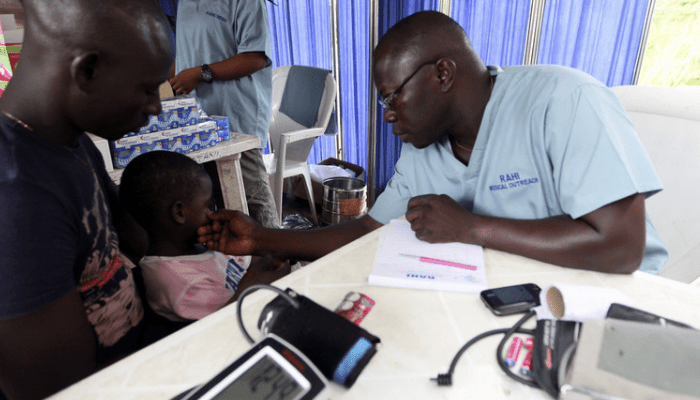
Although consultation fees in some government hospitals range between ₦2,000 and ₦5,000, many patients say the real financial burden begins after admission. Patients often spend additional money on medications, blood, syringes, laboratory investigations, consumables, scans, and bed spaces.
A resident of Kubwa told the New National Star that after being admitted for a minor medical condition, his family spent over ₦150,000 within days despite initially believing public hospitals were affordable.
Another resident said transportation costs alone discourage many patients from seeking regular medical care in Abuja due to the city’s heavy dependence on vehicles and expensive transport systems.
However, another doctor at a government hospital in Abuja, who also requested anonymity, insisted that public healthcare services in the Federal Capital Territory have improved considerably. “Things are much better in government hospitals in Abuja,” he said. “There are primary healthcare centres scattered across the city which are supposed to serve as the first point of call before referral to bigger hospitals.”
The physician acknowledged that public hospitals still face overcrowding and manpower shortages but maintained that many facilities continue to provide relatively affordable healthcare services to ordinary Nigerians.
As a result of these challenges, healthcare experts say Nigeria’s dependence on out-of-pocket spending remains one of the country’s biggest medical challenges, and many citizens are still not enrolled under the National Health Insurance Authority (NHIA), leaving families financially exposed during emergencies and long-term treatment.
As healthcare costs continue to rise, many residents say they have increasingly turned to herbal medicine and traditional healing practices, which they believe are cheaper and more accessible.
The Nigeria Natural Medicine Development Agency says traditional medicine remains the primary healthcare option for millions of Nigerians.
Speaking with the New National Star, the Director-General of the agency, Prof. Martins Emeje, argued that indigenous medicine sustained African societies long before colonial healthcare systems emerged.
“One of the shortcomings we have had with traditional medicine over the years is that it has always been transmitted from one generation to another by oral means,” he said. “As people die, they go away with information that was never documented.”
Prof. Emeje blamed colonial-era educational systems for excluding African traditional medicine from formal academic development.
“Our educational system is colonial education. What the colonial masters brought became documented, while our own traditional medical knowledge was neglected,” he said.
According to him, the agency has now begun digitally documenting traditional medicine practitioners, products, and services across the country to standardize and eventually integrate indigenous medicine into Nigeria’s healthcare framework. “We have started documenting practitioners, practices, and products digitally so that they can be properly regulated and integrated into the national healthcare system,” he explained.
The NNMDA boss maintained that traditional medicine remains accessible to millions of Nigerians who are unable to afford orthodox healthcare.
“Over 160 million Nigerians, that’s what they have access to,” he stated, and asserted, “Everybody can afford traditional medicine because the plants are already given by nature.”
However, medical experts continue to warn against unregulated herbal mixtures and self-medication, stressing that lack of proper diagnosis and misuse of remedies could worsen underlying health conditions.
For many Abuja residents, the debate is no longer simply about modern medicine versus traditional healing. Increasingly, it is about survival in an economy where illness itself has become a financial crisis.
And as inflation continues to erode household incomes, many Nigerians are left confronting a painful question: in a city like Abuja, how much is a human life truly worth?



