

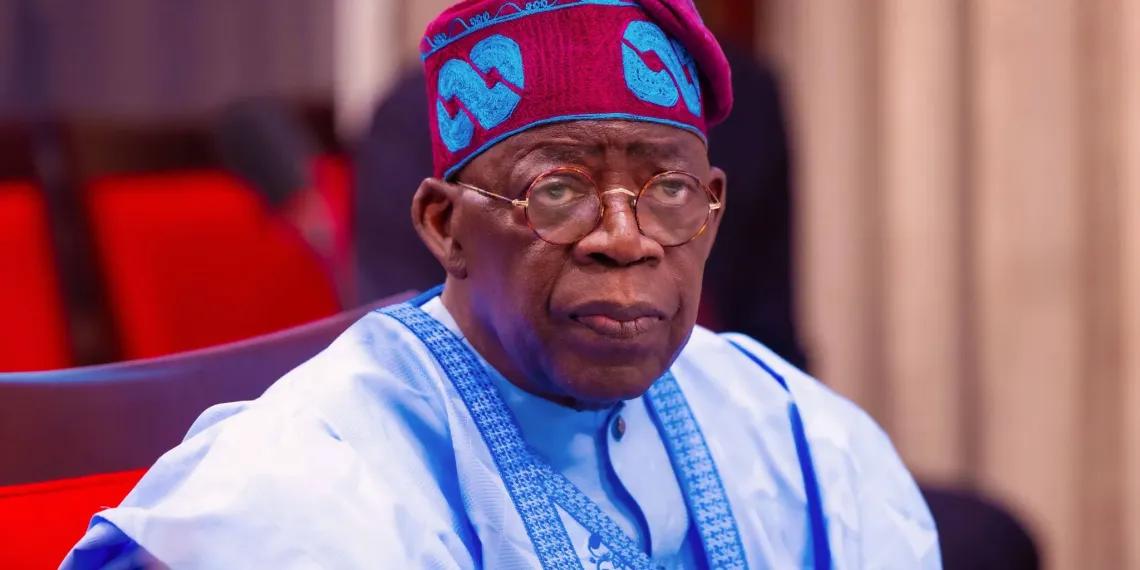
This year’s prerogative of mercy as exercised by President Bola Ahmed Tinubu October 11, 2025 has raised eyebrows across the land, and justifiably so.
Not a few Nigerians were bewildered by the pardon granted to 175 persons including Maryam Sanda, the woman convicted for killing her husband, Bilyaminu Bello, after spending barely six years in prison.
Sanda was convicted for stabbing her husband, Bilyaminu Bello, son of former People’s Democratic Party (PDP) National Chairman, Haliru Bello, to death during a heated argument at their home in Maitama, Abuja, on Sunday, November 19, 2017. The case drew national attention as images of the couple circulated online.
In January 2020, Justice Yusuf Halilu of the Federal Capital Territory High Court sentenced Sanda to death by hanging after finding her guilty of premeditated murder. She was later transferred to the Suleja Medium Security Custodial Centre, where she remained until her recent release.
President Tinubu granted her clemency as part of a list of 175 inmates who received presidential pardon or sentence reduction. According to the Presidency, the decision followed recommendations from the Presidential Advisory Committee on the Prerogative of Mercy, which cited Sanda’s good conduct, remorse, and her responsibility as a mother of two young children as reasons for her inclusion.
However, the decision has stirred mixed reactions across social media. Many Nigerians have expressed outrage and disbelief.
Yet, the presidency justified the pardon. According to a statement released by the Special Adviser to the President on Information and Strategy, Bayo Onanuga, on Saturday, the Presidential Advisory Committee on the Prerogative of Mercy, chaired by Attorney-General and Justice Minister, Prince Lateef Olasunkanmi Fagbemi, recommended the pardons after careful consideration.
The Presidency disclosed that President Tinubu granted clemency to most beneficiaries based on reports showing that they had demonstrated remorse and good conduct during their incarceration.
Other factors considered included old age and health conditions, acquisition of new vocational skills while in prison, enrolment in the National Open University of Nigeria (NOUN), time already served, and family circumstances, particularly involving dependent children.
The comprehensive list of beneficiaries includes two inmates granted full pardon, 15 former convicts pardoned (11 of whom have died, receiving posthumous pardons), 82 inmates granted clemency, 65 inmates whose sentences were commuted, and seven inmates on death row whose sentences were commuted to life imprisonment.
Among those pardoned were notable individuals, including Nweke Francis Chibueze, 44, who was serving a life sentence for cocaine, and Dr. Nwogu Peters, 67, who was serving a 17-year jail term for fraud since being sentenced in 2013.
Also pardoned was Hon. Farouk M. Lawan, 62, who had served a five-year sentence for corrupt practices imposed in 2021.
Other beneficiaries of full pardon include Mrs Anastasia Daniel Nwaoba, 63, who had already served a sentence for fraud, Barr. Hussaini Alhaji Umar, 58, who was sentenced in 2023 to pay a fine of N150 million in an ICPC case, and Ayinla Saadu Alanamu, 63, who was sentenced to seven years for bribery in 2019 and had served the sentence.
President Tinubu also addressed historical wrongs by granting posthumous pardons to Sir Herbert Macaulay, one of Nigeria’s foremost nationalists who was banned from public office and sentenced in 1913 by British colonialists for alleged misappropriation of funds. Major-General Mamman Jiya Vatsa, who was 46 when he was sentenced in 1986 for treason related to an alleged coup plot, also received a posthumous pardon.
The Ogoni Nine, including Ken Saro-Wiwa, Saturday Dobee, Nordu Eawa, Daniel Gbooko, Paul Levera, Felix Nuate, Baribor Bera, Barinem Kiobel, and John Kpuine, all of whom were sentenced for murder, received posthumous pardons.
The Presidency also honoured the victims of the Ogoni Nine case: Chief Albert Badey, Chief Edward Kobaru, Chief Samuel Orage, and Chief Theophilus Orage.
A significant portion of those granted clemency were illegal miners, with 40 individuals sentenced in 2024 to three years for unlawful mining benefiting from the presidential mercy.
The beneficiaries include Babangida Saliu, 35, Adamu Sanni, 39, Abdulkarem Salisu, 30, and Abdulaziz Lawal, 18, among others. Senator Ikra Aliyu Bilbis signed an undertaking to be responsible for the rehabilitation and empowerment of all convicted illegal miners granted clemency.
The list also included numerous drug offenders who showed remorse and learned vocational skills while incarcerated. Among them are Aluagwu Lawrence, 47, sentenced for Indian hemp in 2015, Ben Friday, 60, who was sentenced to three years or a N1.3 million fine for marijuana in 2023, and Oroke Micheal Chibueze, 21, sentenced to five years for cannabis sativa in 2023.
Other drug offenders granted clemency include Kelvin Christopher Smith, 42, who was sentenced to four years for importing cocaine in 2023, Azubuike Jeremiah Emeka, 31, sentenced in 2021 to five years or a N3 million fine for importing cocaine, and Akinrinnade Akinwande Adebiyi, 47, sentenced in 2023 to three years for dealing in Tramadol.
The Presidency noted that Ahmed Adeyemo, 38, sentenced to 15 years for cannabis and who had already served nine years and five months at Kirikiri, received clemency, as did Adeniyi Jimoh, 31, and Seun Omirinde, 39, both sentenced to 15 years for drugs in 2015 and who had served nine years at Kirikiri.
White-collar criminals also benefited from the presidential mercy. These include Daniel Bodunwa, 43, who was sentenced in 2018 to 10 years for fraudulent intent to forge a land receipt and had served six years in jail, and Rabiu Alhassan Dawaki, 52, sentenced in 2020 to seven years for criminal breach of trust.
However, one particular case was that of Maryam Sanda, 37, who was sentenced to death in 2020 for culpable homicide and had spent six years and eight months at Suleja Medium Security Custodial Centre.
The Presidency explained that her family pleaded for her release, and that it was in the best interest of her two children. The plea was also anchored on her good conduct in jail, her remorse, and her embracement of a new lifestyle, demonstrating her commitment to being a model prisoner.
Nigerians have expressed dissatisfaction over her treatment. And we believe that they are justified. There are many persons languishing in prison who deserved pardon but the president or the committee did not look their way as there were no highly-placed citizens to plead for them.
We recommend that President Tinubu should extend clemency to them if not today but in the shortest possible time.
“There are many persons languishing in prison who deserved pardon but the president or the committee did not look their way as there were no highly-placed citizens to plead for them.”


