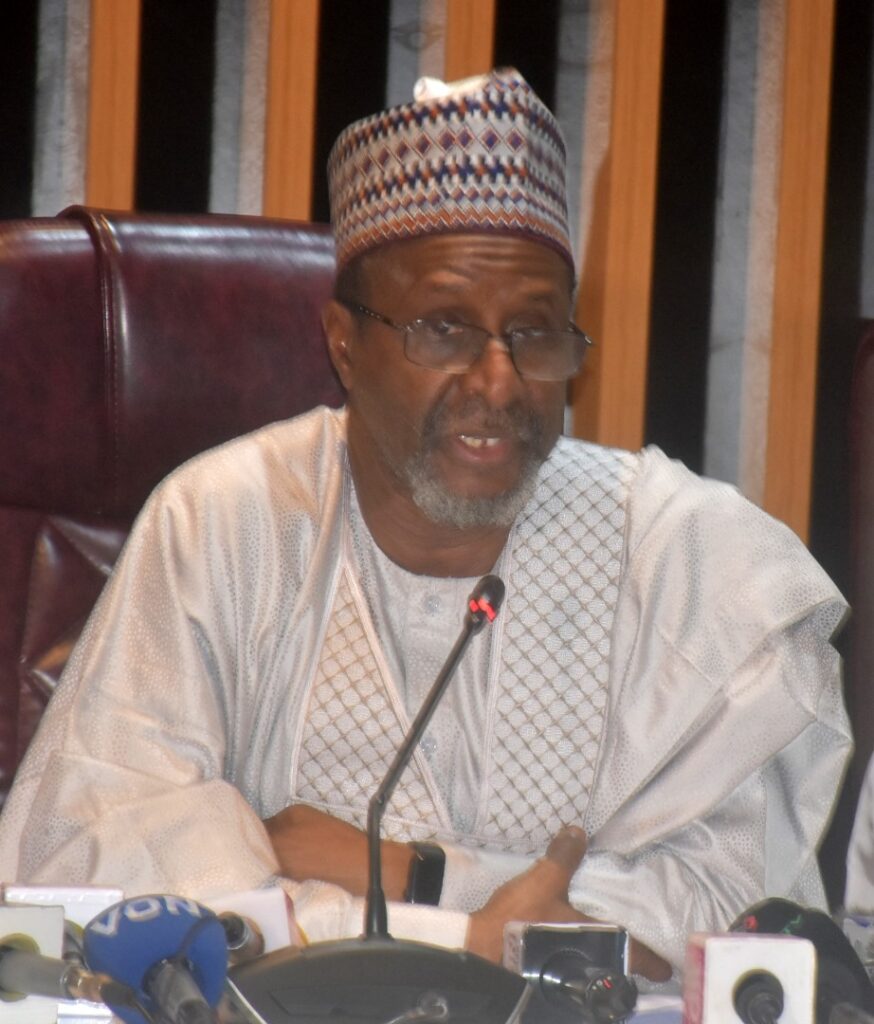
In a concerted effort towards ensuring that its citizenry adapts to improved sanitation system, the Federal Ministry of Environment on Thursday called for proactive action to accelerate progress on safe toilet in Nigeria to meet sanitation target of Sustainable Development Goal 6 by 2030.
The Minister of Environment, Mallam Balarabe Abbas Lawal made this call during the Ministerial Media Briefing in Commemoration of this year’s ‘World Toilet Day’ held at the Federal Ministry of Works and Housing in Abuja.
The briefing which was co-held with the Federal Ministry of Water Resources and Sanitation in collaboration with the sectors’ stakeholders had in attendance Engr. Joseph Terlumun-Utsev, Minister of Water Resources/Sanitation; Bello Goronyo, Minister of State for Water Resources/Sanitation; Omotayo Olusanya, Director Overseeing the Office of the Permanent Secretary (DOOPS), Ministry of Works and Housing; Dr. Yusuf Maina-Bukar, DG National Agency for Great Green Wall; Dr. Yakubu Baba, Registrar/CEO EHCON amongst other senior officials.
Lawal who spoke on this year’s theme: ‘Accelerating Change’ revealed that about 4.2 billion people in the world live without safe toilets while about 48 million Nigerians still practice open defecation, as many people still use the bush and water bodies as their regular means for excreta disposal.
According to him, “the theme is quite apt as it inspires every individual to take personal action to help improve toilets and sanitation systems and underscores the fact that every sector and every Nigerian has a role to play in tackling the sanitation crisis.
“This year’s World Toilet Day commemoration, therefore, presents an opportunity to bring to our consciousness that with just seven years left, the world has to work, on average, five times faster to meet the sanitation target of SDG 6 on time.
“This therefore should stimulate and spur the government and the citizenry to action to improve and change the narratives”.
The Minister emphasized further that toilets remains the foundation stone of public health and thus play key role in protecting the environment.
The Minister however attributed the alarming rate of open defecation and poor sanitation system in the country to lack of sanitary facilities by many institutions, public and private and where it does exist are neither functioning nor misused.
“Most urban areas do not have sewerage systems and safe collection of sewage. Therefore, disposal becomes a huge challenge as many of the water bodies including rivers and streams become a repository for sewage and wastewater”, he clarified.
Lawal therefore declared that issues of open defecation will no longer be business as usual as the ministry is set to deploy all its regulatory framework to ensure adequate enforcement of sanitation laws in the country.
Expressing further the Ministry’s committed to addressing the sanitation challenges, the Minister said the 2005 National Environmental Sanitation Policy which has been reviewed and validated by the Ministry and its stakeholders including policy guidelines on safe excreta and sewage disposal would soon be presented to the Federal Executive Council for approval.
He also urged all national, state and local government stakeholders in environmental sanitation to take practical steps and actions both individually and collectively as agents of change to ensure everyone has access to toilets in their domain, likewise commercial entities have been encouraged to launch functional toilet facilities.
In his address, the Minister of Water Resources and Sanitation, Engr. Joseph Terlumun Utsev highlighted some progress recorded in meeting the objectives of the safe toilet and sanitation campaign, adding that about 105 LGAs and over 40 thousand communities have achieved the Open Defecation Free (ODF) status.
He said despite this encouraging development, a lot more needs to be done in order to attain the 2025 target date of ending open defecation in Nigeria.
Utsev who disclosed that only 18 per cent of nation’s population have access to safely managed sanitation and 46 per cent enjoys basic access to sanitation, said with the renewed mandate for sanitation, the ministry is committed to creating an enabling environment through policy, regulations and frameworks to ensure that individual sanitation behaviour aligns with the broader efforts to scale up sanitation within our local system.