

BY PETER USMAN
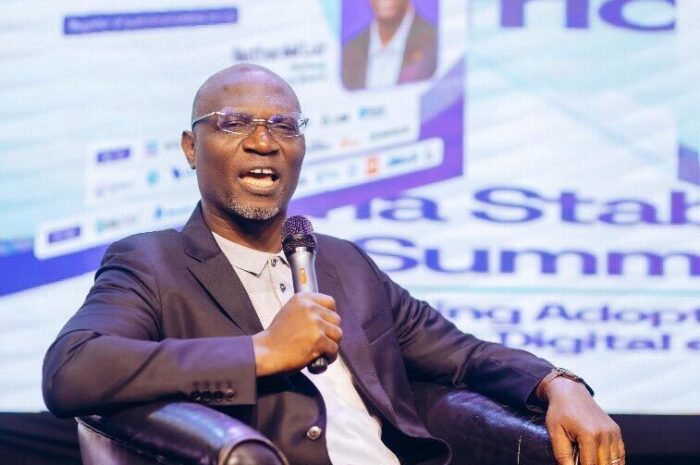
The Director-General of the Securities and Exchange Commission (SEC), Dr. Emomotimi Agama, has called on West African countries to fast-track the integration of their capital markets, warning that delay would undermine the region’s ability to mobilise the scale of investment required for sustainable growth.
Agama, while speaking in Abuja on Thursday, October 2, 2025, at the Experts Meeting on Validation of the West Africa Securities Regulators Association (WASRA) Charter, described the push for harmonised financial markets as a “watershed moment” in the region’s economic history.
He highlighted West Africa’s mounting development challenges, citing infrastructure deficits, climate adaptation, digital transformation, and job creation as urgent priorities.
Agama noted that Africa’s infrastructure financing gap exceeds $100 billion annually, with West Africa alone requiring tens of billions of dollars to modernise transport, energy, and digital systems.
“To meet these challenges, we require capital at scale, and the truth is simple: no single national market can provide it alone,” Agama said. “An integrated regional capital market is no longer a luxury; it is a necessity.”
Agama, who also serves as WASRA Chairman, cautioned that every year of delay translates into “lost opportunities” to fund critical projects that could accelerate economic transformation.
Drawing on lessons from other regions, Agama pointed to the European Union and ASEAN as proof that integrated markets can boost competitiveness.
The EU’s single market, he said, enabled firms to raise capital seamlessly across borders, while ASEAN’s harmonised rules deepened financial cooperation and strengthened resilience.
“West Africa, with over 400 million people and a combined GDP of about $800 billion, has even greater potential,” he stressed. “But potential means little without decisive action,” Agama said.
He outlined how capital market integration would extend beyond infrastructure, enabling investments in agriculture, agro-processing, and food security, while also fuelling digital transformation.
“In the digital economy, regional capital can support innovation hubs, fintech scale-ups, and broadband expansion, ensuring that West Africa fully participates in the Fourth Industrial Revolution,” he noted.
He added that harmonised regulations and pooled liquidity could drive youth empowerment and job creation, turning the region’s demographic dividend into an engine of growth.
Presenting WASRA’s objectives, Agama said the body was established to anchor capital market integration by harmonising regulatory frameworks, protecting investors, and fostering joint programmes across the region.
“Integration is not only about policy declarations; it is about practical collaboration and shared initiatives that deliver results,” he said.
Agama urged ECOWAS finance ministers and policymakers to back WASRA’s mandate, insisting that “the political will of our leaders is the single most important factor in moving from aspiration to reality.”
Also speaking, Nigeria’s Minister of Finance and Coordinating Minister of the Economy, Mr. Wale Edun—represented by Principal Economist Hassan Adamu Jibrin—described the validation of the WASRA Charter as a critical step toward a harmonised regulatory framework that enhances cross-border investments and financial stability.
On his part, Mr. Peter Oluonye, Acting Director for Private Sector at the ECOWAS Commission, emphasised that integration would help reduce dependence on external capital flows.
He called for harmonised standards in market information, trading systems, settlement, and governance to “break down barriers to capital movement within the region.”



