

BY JOHN DANJUMA
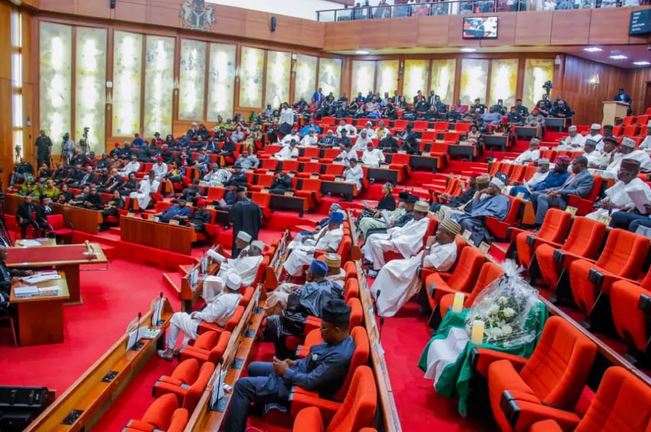
In a decisive move to boost industrialisation and diversify Nigeria’s economy, the Senate has passed two landmark bills mandating local processing of raw materials and establishing a legal framework for bitumen exploration.
The first bill, an amendment to the Raw Materials Research and Development Council Act, 2022, requires exporters to process at least 30% of all raw materials locally before exporting.
The legislation, passed following the presentation of a report by the Senate Committee on Science and Technology, aims to promote value addition, create jobs, and reduce the nation’s dependence on unprocessed raw exports.
Exporters who fail to comply risk a penalty of 15 percent of their export value, and repeated violations could result in the revocation of export licenses.
“This legislation marks a new dawn in Nigeria’s quest for industrial growth,” said Senate President Godswill Akpabio, adding that the Senate is also committed to protecting local contractors from being edged out by foreign firms, “even in menial contracts like street sweeping.”
In a related development, the Senate also passed a bill to establish the Bitumen Development Commission of Nigeria, setting the stage for the structured exploration and development of one of the country’s most underutilised resources.
The commission will be charged with regulating the sector, issuing licenses, and attracting investment to unlock the estimated 42 billion tonnes of Nigeria’s bitumen deposits—believed to be the second-largest reserve in the world.
Presenting the report of the Senate Committee on Solid Minerals Development, Senator Diket Plang (Plateau Central) said the absence of a regulatory framework had hampered Nigeria’s ability to harness its bitumen wealth, which is concentrated in states like Ondo, Ogun, and Edo.
“This bill will establish a commission with the legal and institutional capacity to turn bitumen into a major revenue source, both for domestic infrastructure and export,” Plang stated.
The sponsor of the bill, Senator Jimoh Ibrahim (APC, Ondo South), noted that bitumen could generate over $82 billion annually, with massive potential to create jobs, support infrastructure development, and reduce Nigeria’s dependency on oil.
Chief Whip Senator Tahir Monguno (Borno Central) added that the bill aligns with the Federal Government’s economic diversification agenda under the Renewed Hope mantra.
In his final remarks, Akpabio praised the initiative as “development-driven,” saying, “This is a significant step toward unlocking the vast potential of Nigeria’s mineral resources.”
With both bills passed, the Senate is positioning Nigeria for greater industrial competitiveness and resource-led economic transformation.



