

… Urges rescue of abducted victims, protection of vulnerable communities
… Extends 2025 budget implementation to December 31
… As Tinubu seeks approval for national research, development fund
By Simeon Ogoegbulem
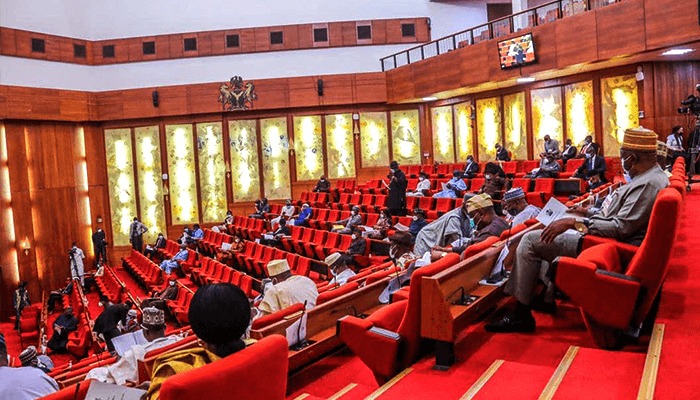
The Senate on Tuesday resumed plenary from its annual recess and placed a demand on the Federal, States and Local governments to urgently address the country’s worsening cost-of-living crisis and widespread flooding. The Senate also tasked the Federal government, security agencies to put an immediate end to the escalating insecurity across the country.
During the opening session, President of the Senate, Godswill Akpabio emphasised that while lawmakers were away on break since July 23, 2026, the hardships faced by the majority of Nigerian households did not abate.
This is even as he pledged that the red chamber would actively deploy legislation, budgetary appropriations, and rigorous oversight to address these pressing national challenges.
Expressing deep concern over the devastating impact of seasonal floods on communities, farmers, and families, the Senate urged all levels of government to step up disaster preparedness.
Akpabio called for early preventative warnings, stronger defense for vulnerable zones, and the prompt, unhindered delivery of relief items to victims.
He said, “A warning must lead to preparation, preparation must lead to protection, and relief must reach the people for whom it is intended,” Akpabio said.
He said the effects of flooding is beyond the immediate destruction of homes and farmlands, warning that the loss of agricultural produce could worsen food insecurity.
“When a farmer loses his harvest, our country loses food. When a family loses its home, the nation has a stake in helping that family rise again,” he stated.
The President of the Senate commended agencies and individuals involved in emergency response but urged governments at all levels to respond to disasters with greater speed and preparedness.
On the economy, Akpabio said the Senate must remain attentive to the realities confronting ordinary Nigerians as lawmakers consider economic reforms and policies.
“Many Nigerians continue to bear a very heavy cost of living,” he said, stressing that “policymakers must not lose sight of how economic conditions affect ordinary Nigerians.”
The lawmakers raise an alarm over the severe economic hardships plaguing citizens. Akpabio, therefore, urged leaders to ensure that ongoing economic reforms yield tangible, positive changes in the everyday lives, homes, and businesses of ordinary Nigerians.
He cited rising food costs and the difficulties faced by unemployed graduates as examples of the economic pressures confronting Nigerians.
Akpabio said the experiences of citizens outside the National Assembly should remain central to lawmakers’ deliberations as the Senate resumes its legislative activities.
The red chamber condemned recent mass abductions, specifically referencing kidnappings in Marisa and at the Dekera Mosque.
Meanwhile, the Senate also demanded for intensified operations to rescue Nigerians held in captivity by abductors and protect vulnerable communities facing security threats.
Akpabio said the Senate would scrutinise existing measures and consider additional legislative, budgetary and oversight interventions to address insecurity.
“So long as a single Nigerian languishes in captivity, a part of Nigeria is itself captive, and this chamber cannot call itself free of the burden,” he said.
He added that government institutions must not leave citizens exposed to security threats, stressing that the protection of lives remained a responsibility of the state.
“We cannot summon citizens to courage and then leave them to face danger alone. Their safety is a charge laid upon us and upon every institution of government, particularly this Nigerian Senate,” he said.
Continuing, Akpabio said the Senate could not return from recess and ignore the worsening challenges facing citizens, stressing that the suspension of plenary had not stopped the difficulties confronting the country.
“Our victories should be measured in safer communities, better livelihoods for all Nigerians, and a stronger country for those we serve and for generations unborn,” he said.
The Senate on Tuesday passed a bill extending the implementation of the capital component of the 2025 Appropriation Act, moving the deadline from September 30 to December 31, 2026
The extension provides an additional three-month administrative and legal window for Ministries, Departments, and Agencies (MDAs) to complete ongoing projects and utilise appropriated funds.
This ensures they can complete ongoing infrastructure projects and fully utilize already allocated funds without leaving them abandoned due to an expired budget cycle.
The extension followed the passage of a bill sponsored by the Senate Leader, Opeyemi Bamidele (APC, Ekiti Central), after clause-by-clause consideration by the lawmakers.
Moving a motion for the bill, Bamidele said the amendment was necessary because the implementation of capital projects under the 2025 Appropriation Act had not reached optimal levels despite the release of funds to MDAs.
In his presentation, Bamidele said he was forwarding “A Bill for an Act to Amend the Appropriations (Repeal & Enactment) Act 2025 to Extend the Implementation of the Capital Aspect of the Appropriations (Repeal & Enactment) Act 2025 from 30th September, 2026 to 31st December, 2026 and for other Related Matters, 2026 (SB. 1067).
“A Bill for an Act to Amend the Appropriations (Repeal & Enactment) Act 2025 to Extend the Implementation of the Capital Aspect of the Appropriations (Repeal & Enactment) Act 2025 from 30th September, 2026 to 31st December, 2026 (SB. 1067).”
The latest decision marks another extension of the lifespan of the 2025 capital budget.
The National Assembly had previously extended the implementation period from March 31 to June 30, 2026, and subsequently to September 30, 2026, to allow the government to complete ongoing capital projects and meet outstanding obligations.
The latest extension means that funds appropriated under the capital component of the 2025 budget will remain available for implementation until December 31, 2026, subject to the President’s assent.
The extension also comes against the backdrop of the Federal Government’s earlier pledge to end the practice of overlapping budgets.
While presenting the 2026 Appropriation Bill in December 2025, President Bola Tinubu said the government would move away from multiple overlapping budget cycles and operate within a single revenue cycle.
However, the government had previously justified extensions of the 2025 budget on the need to complete ongoing projects and ensure effective utilisation of appropriated funds.
In April, the Presidency said an earlier extension was intended to enable MDAs to consolidate ongoing works, improve project completion rates and maximise value for public expenditure.
The Senate’s approval of the latest extension came on the first day of its resumed plenary after an extended legislative recess.
Recall that the National Assembly had shifted its resumption from September 15 to September 29 to allow for the completion of rehabilitation works in the legislative chambers.
With the passage of the bill, the 2025 capital budget will now remain open for implementation for an additional three months beyond the September 30 deadline.
Meanwhile, President Bola Tinubu on Tuesday transmitted the National Research and Development Fund (Establishment) Bill, 2026, to the Senate for consideration and passage into law.
The proposed legislation seeks to consolidate fragmented research and development funding across Ministries, Departments and Agencies into a central fund through which research institutions and academic bodies can access financing.
The letter transmitting the Bill was read by the President of the Senate, Senator Godswill Akpabio during plenary.
Akpabio said the Senate would expedite consideration of the proposal to facilitate its passage.
In the letter, Tinubu said the proposed fund would improve research financing, promote collaboration among research agencies, academia and the private sector, and ensure that funding was directed towards strategic national priorities.
The President said the Bill was designed to “consolidate research financing, ensure more efficient utilisation of resources” and bring fragmented research and development funds across MDAs under one central mechanism.
The letter partly read, “The Bill is prepared in a bid to consolidate research financing, ensure more efficient utilisation of resources, and to consolidate the fragmented Research and Development Funds across Ministries, Departments and Agencies (MDAs) into the National Research and Development Fund to serve as a central mechanism through which research agencies and academic institutions can access funding.”
Furthermore, the Bill establishes the National Research and Development Fund as an Agency under the supervision of the Federal Ministry of Innovation, Science and Technology, with direct funding from the Nigerian Content Development Fund.



