

BY JOHN DANJUMA
Idoani, in Ose Local Government Area of Ondo State, took on a renewed outlook on Monday, as Senator Natasha Hadiza Akpoti-Uduaghan, returned to her alma mater and host community, delivering infrastructure projects that combined gratitude with lasting impact.
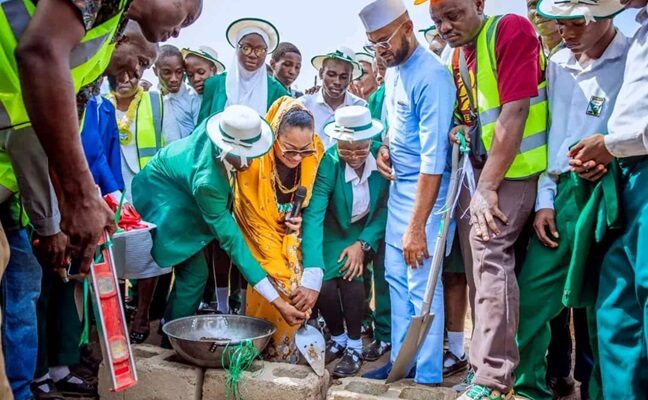
The senator, who represents Kogi Central, led the groundbreaking ceremony for a school auditorium and staff quarters at Federal Government College (FGC) Idoani, while also commissioning solar-powered streetlights installed across key locations in the town to enhance security and economic activity.
A former Head Girl of FGC Idoani (Class of 1997), Senator Akpoti-Uduaghan was warmly received by school administrators, traditional rulers, students, and community stakeholders, many of whom described the visit as a meaningful homecoming that went beyond ceremony to deliver tangible development.
The solar lighting project, facilitated through federal advocacy and partnerships, has transformed once-dark streets, improving night-time visibility and safety. Residents report increased confidence in evening movement, extended trading hours, and improved security around residential areas, markets, and school corridors.
Addressing the gathering, the senator said the interventions were driven by a deep sense of appreciation to the institution and community that shaped her early leadership journey.
“FGC Idoani helped mould my values of discipline, service, and leadership. Returning with projects that touch lives is my way of giving back to a place that gave me so much,” she said.
She noted that the planned auditorium and staff quarters would address long-standing infrastructural gaps at the college, providing functional spaces for academic, ceremonial, and staff accommodation needs. She also announced plans to facilitate motorised boreholes to tackle water challenges affecting parts of the community.
Community leaders and residents commended the projects, describing them as rare examples of leadership that transcends political and geographical boundaries. Many expressed surprise—and admiration—that a serving senator would initiate major interventions outside her state of representation.
An elder in the community described the gesture as “leadership anchored on gratitude and conscience,” adding that the projects would leave a lasting legacy for future generations.
Significantly, the interventions were executed through federal-level engagement and partnerships, not constituency funds, highlighting Senator Akpoti-Uduaghan’s capacity to mobilise national resources for local development wherever the need arises.
For Idoani, the visit was more than a reunion; it was the return of an alumna committed to service, impact, and inclusive development. Senator Akpoti-Uduaghan’s actions reaffirm a leadership philosophy defined not by borders, but by responsibility to people.



