

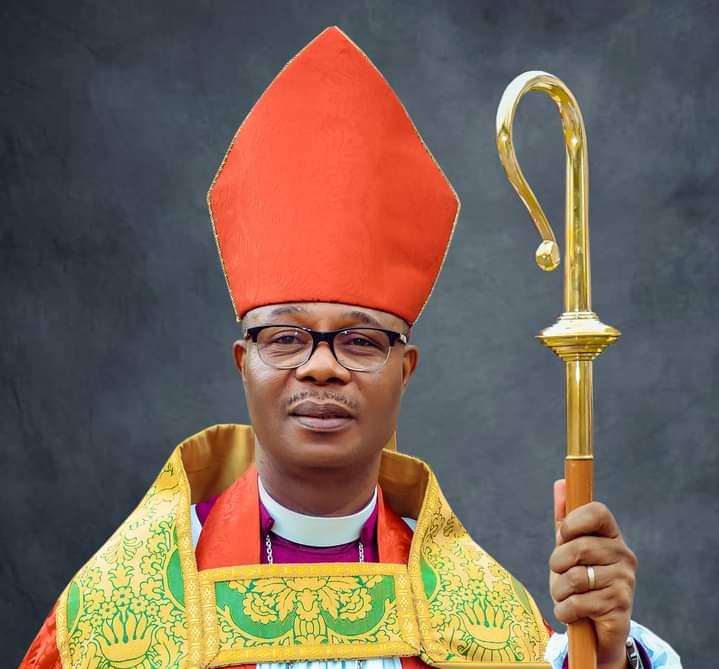
In the heart of Imo State lies a diocese that has witnessed growth against the odds, led by a shepherd whose conviction is rooted in tradition and spiritual duty. For the past 15 years, the Rt. Rev’d Chamberlain Chinedum Ogunedo, JP, has served as the Lord Bishop of the Anglican Communion, Diocese of Mbaise.
As he prepares for the 3rd Session of the 13th Synod, Bishop Ogunedo opens up on the strides, struggles, and vision guiding his episcopal leadership. In this interview, he speaks candidly about the challenges rural dioceses face, youth disillusionment with the church, and the pivotal role Mbaise Diocese plays in the birth of a new university. Excerpts:
Your Lordship, what inspired you to become an Anglican Priest?
My journey began with a deep sense of calling and purpose. I grew up in a Christian family and was steeped in the teachings of Christ from a young age. I was once a choir boy, marching proudly in the front row with my specially tailored robes. But it was in my teenage years that I felt a burning conviction to serve the Lord. That calling led me to study theology and, ultimately, to ordination. My faith journey has been shaped by prayer, mentorship, and the joy of serving others.
You have led the Diocese of Mbaise for 15 years. What would you say are your greatest challenges?
The main challenges have been spiritual apathy and financial constraints—issues common in rural dioceses. Infrastructure development has also posed difficulties. But through prayer, cooperation with clergy and laity, and strategic planning, we’ve been able to rise above many of these setbacks. By God’s grace, our Diocese has grown spiritually, numerically, and infrastructurally.
We also face the modern challenge of remaining biblically grounded in a rapidly changing world. While we embrace contemporary relevance, we reject lifestyles and ideologies that conflict with Christian doctrine. Our worship is a blend of timeless tradition and current relevance—a living faith that speaks to the now without losing the sacred past.
This week, your Diocese will hold the 3rd session of its 11th Synod. What is the significance of Synod in the Anglican Church?
Synod is the highest decision-making body in the Church. It includes the House of Bishops, House of Clergy, and House of Laity. The Anglican Church is Synodically governed and Episcopally led. Each Synod spans three years and is broken into sessions.
It’s a time of collaboration, unity, and shared governance. As we prepare for this session, I urge all delegates to engage fully and contribute meaningfully. It’s through collective discernment that the Church remains vibrant and responsive.
Many youths today seem to view the Church as irrelevant or hypocritical. What’s your response to this?
That perception is sadly not unfounded in some cases. But the Church must respond with sincerity, compassion, and action. Our clergy and laity must walk the talk—living out Christ’s example with integrity. We need to listen to young people, engage them meaningfully, teach them valuable life skills, and empower them to be faithful leaders in Church and society.
How would you describe the relationship between the Anglican Church and Pentecostal churches?
Here’s the truth: any church that believes in the power and work of the Holy Spirit is Pentecostal by nature. The Anglican Church is Pentecostal too. What people often confuse are New Generation churches, which focus more on dynamic worship and individual experiences.
We share some of those approaches, but our strength lies in liturgy, tradition, and communal identity. Christian parents must guide their children in faith, foster open conversations, and model Christian living in a world full of distractions.
What is your vision for the Diocese of Mbaise in the next 10 years?
My vision is bold but rooted in purpose. I see our Diocese becoming a hub for spiritual growth, education, and community development. We aim to build a strong financial base so that our congregants can worship without excessive financial pressure.
Our goals include clergy development, youth empowerment, sustainable investments, and infrastructural advancement. We want the Diocese to remain a beacon of hope and service across Mbaise and beyond.
Tell us about the proposed University of Mbaise and the Diocese’s involvement.
The Diocese is a key stakeholder in this monumental project. We’ve already donated land as our equity contribution because we believe in the transformative power of education.
The groundbreaking ceremony took place on January 3 this year, and construction of the administrative block is ongoing. We are committed to promoting academic excellence, character formation, and meaningful community engagement. This university is a legacy in the making, and we’re proud to be part of it.
What role does ecumenism and interfaith dialogue play in your ministry, particularly in Mbaise?
Ecumenism is thriving here. We enjoy a warm relationship with the Ahiara Catholic Diocese and other denominations across Mbaise and Imo State. We collaborate on matters of mutual concern, faith, justice, and peace.
As a Diocese, we remain committed to fostering unity among Christians and respectful cooperation with people of other faiths. The Gospel of Christ calls us to build bridges, not walls.



