

BY GLORIA AKUDORO
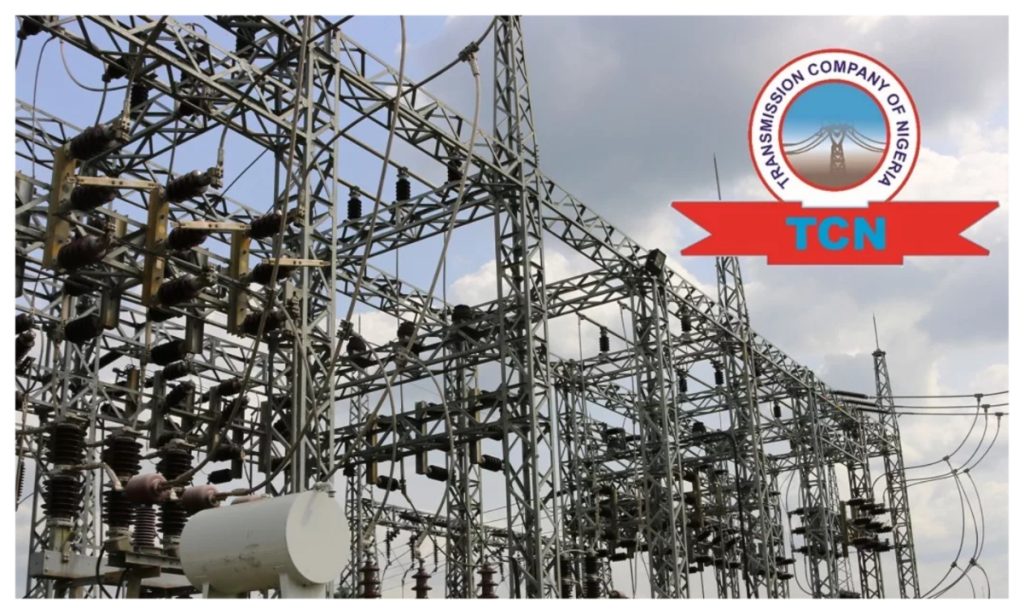
The Transmission Company of Nigeria (TCN) has successfully commissioned a new 330/132/33kV Bauchi Transmission Substation in Bauchi town.
The substation commissioning, a TCN/World Bank initiative, took place on July 3, 2025, adding an additional 250 MW to the nation’s grid.
A statement signed by the General Manager, Public Affairs, Ndidi Mbah, said that the new Bauchi substation project commenced in February 2022. The substation comprises 2x150MVA power transformers and a 1x75MVA reactor, among others.
“Currently, however, the substation feeds the existing Bauchi 132/33kV substation, supply will be extended to other substations subsequently. Two new transmission towers were also erected as part of the project to further boost network flexibility,” said Mbah.
TCN explained that the project aims to further enhance power supply in Bauchi as well as the Northeast. The benefiting customers are mostly within the Jos Electricity Distribution Company franchise.
The development, according to the GM, underscores TCN’s commitment to expanding the transmission grid and improving electricity infrastructure nationwide.
Available generation capacity across grid-connected plants hits 5,366.88MW in 2025/Q1 – NERC
…No system disturbance in national grid in 2025/Q1
The Nigerian Electricity Regulatory Commission (NERC) has revealed that the average available generation capacity across the grid-connected
plants increased by 69.99MW (+1.32%) from the 5,296.89MW recorded in quarter four of 2024 to 5,366.88MW in quarter one of 2025.
According to NERC in its Quarterly Report of First Quarter 2025, there were twenty eight (28) grid-connected power plants consisting of, five (5) hydro,
two (2) steam, nineteen (19) OCGT2
and two (2) CCGT3
plants for this quarter.
Out of the 28 grid-connected power plants, fifteen (15) power plants recorded increased available generation capacities in 2025/Q1 compared to 2024/Q4.
The report under review disclosed that average hourly generation on the grid
in 2025/Q1 was 4,770.59MWh/h, which translates to a total generation of 10,304.47GWh. While the average hourly generation of the grid-connected power plants increased by 563.18MWh/h (+13.39%) from 4,207.41MWh/h in 2024/Q4, the total electricity generated in the quarter also increased by 1,014.52GWh (+10.92%)4 from 9,289.95GWh in 2024/Q4.
NERC said the increase in energy generation during the quarter can be attributed to the increase in available generation capacity as well as the increase in energy offtake
by the grid-connected customers (including DisCos) compared to 2024/Q4.
On grid performance, NERC reported that during the first quarter, the average lower daily 49.28Hz and average upper daily 50.77Hz system frequencies were outside the normal operating limits 49.75Hz – 50.25Hz but remained within the lower and higher bound stress limits 48.75Hz – 51.25Hz. The average lower daily system voltage 296.56kV and the average upper daily system voltage 346.82kV were outside the lower 313.50kV and upper 346.50kV limits specified in the grid code.
The Commission noted that it has continued to push the System Operator (SO) to improve its system coordination activities to avert the system risk posed by the continuous operation of the grid outside the normal operating limits.
“There was no incidence of system disturbance on the National Grid in 2025/Q1,” the report revealed.
On Energy offtake performance, the Commission said in 2025/Q1, the average energy offtake by DisCos at their trading points was 3,781.94MWh/h which represents an increase of 421.17MWh/h (+12.53%) compared to the average offtake recorded in 2024/Q4 (3,360.77MWh/h).
Cumulatively, DisCos recorded an overall offtake performance of 97.94% – the available Partially Contracted Capacity (PCC) during the quarter was 3,861.53MWh/h.



