

……. Inherits sector where technical failures intersect with governance challenges, economic distortions, policy inconsistencies
….. Calls for coordinated action across electricity value chain
…… To introduce performance-based incentive for productivity, innovation and efficiency
By Joy Onu
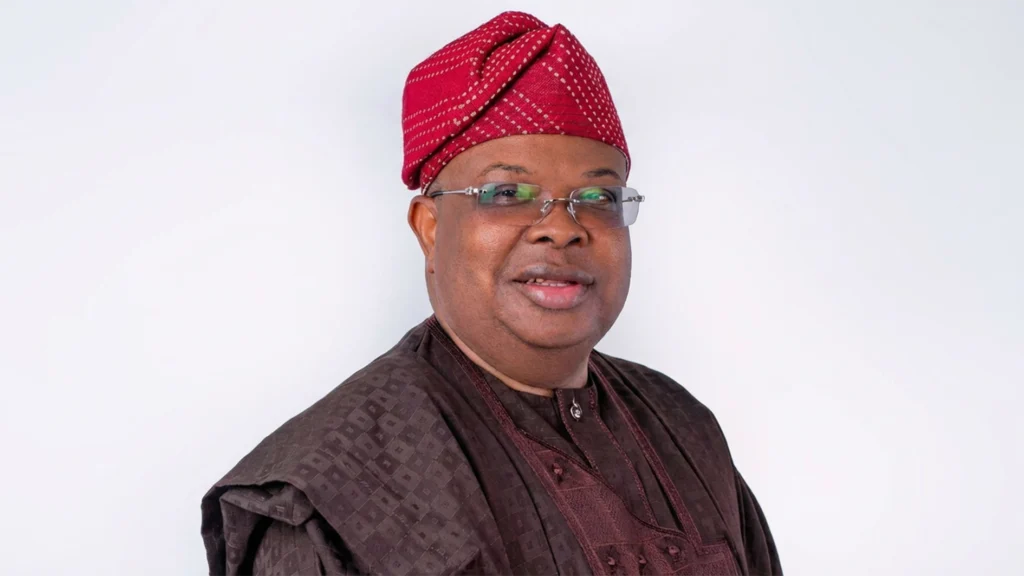
Nigeria’s electricity sector has entered another critical phase with the assumption of office of Chief Joseph Olasunkanmi Tegbe as Minister of Power, at a time when persistent grid instability, weak transmission infrastructure, liquidity constraints and rising public dissatisfaction continue to define the country’s electricity landscape.
Tegbe officially resumed duties in Abuja this week, stepping into a sector that has recorded more than 160 national grid collapses since 2013, including 12 in 2024 and additional disruptions already experienced in 2026. The repeated failures underscore the fragility of the national grid, which continues to operate under severe technical and financial pressure despite successive reform programmes.
His appointment comes as the Federal Government intensifies implementation of the Electricity Act 2023, which has introduced state-level electricity markets, expanded private sector participation and created frameworks for decentralised power generation aimed at reducing pressure on the national grid. While regarded as one of the most significant structural shifts in decades, implementation remains uneven across states.
The minister inherits a sector where technical failures intersect with governance challenges, economic distortions, institutional fragmentation and long-standing policy inconsistencies that have resisted reform across multiple administrations.
At his inaugural meeting with heads of agencies under the Ministry of Power in Abuja, Tegbe stressed that Nigeria’s electricity crisis cannot be explained by technical faults alone.
“This sector faces serious challenges. Technical issues account for only a fraction of those challenges. The larger challenge is governance. No agency can solve this alone,” he said.
He highlighted that President Bola Ahmed Tinubu’s administration has set clear objectives for the sector, including boosting generation capacity, enhancing transmission capacity, strengthening sector liquidity and accelerating investment in renewable energy. While noting progress recorded over the past three years, he said further work was required to meet set targets.
Tegbe called for coordinated action across the electricity value chain, including the Transmission Company of Nigeria (TCN), the Nigerian Electricity Regulatory Commission (NERC), the Nigerian Bulk Electricity Trading Plc (NBET), the Rural Electrification Agency (REA), and the Nigerian Independent System Operator (NISO), describing fragmentation as a major barrier to system stability.
He also commended the Transmission Company of Nigeria for what he described as swift restoration of a recent feeder outage within 12 hours, citing it as evidence that improved coordination can deliver operational efficiency when responsibilities are clearly defined.
The minister further said there were plans to introduce a performance-based incentive framework across the sector to reward productivity, innovation and efficiency, while assuring stakeholders of regular engagement and a transparent approach to resolving industry challenges.
A major concern Tegbe will be confronted with is the liquidity crisis in the power sector. Distribution companies struggle to recover revenue, creating a circular debt cycle that affects payments to generators and gas suppliers, weakening investment across the value chain. The result is a structurally unstable market whereby financial stress feeds operational failure.
Experts describe the system as one where electricity is generated but not efficiently delivered, while delivered power is not consistently paid for,, creating a cycle that reinforces instability.
Tegbe’s immediate priorities include stabilising the national grid, reducing collapse frequency, improving gas-to-power coordination, expanding metering coverage, strengthening transmission infrastructure, restoring investor confidence and accelerating renewable energy deployment.
Industry data shows that grid instability remains persistent despite marginal improvements in recent years, with underlying causes such as weak reserves, system imbalance and inadequate monitoring still unresolved.
An economist, Prof. Wumi Iledare argues that Nigeria’s electricity crisis is fundamentally structural rather than technical, warning that reforms focused only on engineering solutions will not deliver lasting stability. He said market design flaws, inconsistent policies, weak economic frameworks and fragmented governance structures continue to undermine sector performance, noting that tariff adjustments alone cannot resolve affordability and sustainability challenges.
Energy expert, Oluwafemi Olaoye also supports decentralised power systems, arguing that smaller regional electricity networks would reduce pressure on the national grid, improve resilience and enable faster recovery during system failures.
In a chat with the New National Star Newspaper, Democracy Advocate and Electoral reform expert, Chief Ezenwa Nwagwu, said Nigeria’s power crisis is rooted primarily in governance failure rather than technical limitations.
He argued that weak political will, flawed privatisation processes and inconsistent reforms have significantly contributed to the sector’s persistent challenges.
“It’s both governance and technical, but more of a governance challenge. The privatisation process was flawed from the beginning, incompetence entered the system, and we have not recovered from it,” he said.
Nwagwu said leadership failure remains central, insisting that no amount of technical intervention can fix structural governance breakdowns.
He also questioned the readiness of state governments to manage electricity markets under the Electricity Act 2023, stressing that performance at subnational level has not consistently demonstrated the capacity required for effective power management.
“The challenge is political will. How have governors performed in their various states? Some claim 24-hour electricity, but when you go there, it is not reality, we lack the political will to do what is right. Resolving these issues is not rocket science,” he said.
On alternative energy, Nwagwu cautioned against overreliance on solar for industrialisation, noting that large-scale manufacturing requires stable baseload electricity. “You cannot power heavy industry with solar alone. Industrialisation requires steady electricity supply.”
He urged the Minister to prioritise delivery over rhetoric. “He should talk less, promise less, and deliver power to Nigerians.”
Beyond policy debates, Nigeria’s power infrastructure continues to face deep technical constraints. The grid operates without sufficient spinning reserves, lacks real-time monitoring systems and suffers from weak voltage support mechanisms. Many transmission assets remain outdated, while system redundancy is limited, increasing vulnerability to cascading failures.
The absence of fully functional SCADA systems continues to hinder real-time grid management, making it difficult to prevent system-wide collapses when faults occur. Distribution companies also struggle with overload violations and weak coordination with transmission operators.
Stakeholders across the sector have intensified calls for regulatory clarity, improved metering systems and stronger enforcement of market rules. There is also growing interest in private investment for transmission expansion, renewable energy deployment and decentralised generation projects.
The Electricity Act 2023 has created new opportunities for state participation in electricity generation and distribution, allowing subnational governments to establish regulatory frameworks and develop independent electricity markets.
States such as Abia and Edo are already moving to operationalise these provisions through various power initiatives.
In Abia State, the Geometric Power project has demonstrated how embedded generation can reduce dependence on the unstable national grid by supplying dedicated electricity to industrial and residential clusters. Similar developments in other states are gradually reshaping the national conversation toward decentralised and state-driven electricity systems.
Proponents argue that decentralisation will reduce pressure on the national grid, improve efficiency and enable tailored energy solutions at regional levels. Critics, however, warn that uneven state capacity could deepen disparities if not properly coordinated within a strong national framework.
For ordinary Nigerians, however, these policy debates remain distant from daily realities.
In Lagos, 27-year-old laundry operator Ms. Emeneka, responding to our online vox pop, said unreliable electricity has become a constant burden on her business, forcing heavy reliance on generators and inverters.
“At the moment, we are managing with an inverter and a generator, but the skyrocketing fuel prices are driving me to my wits’ end,” she said, adding that daily fuel costs can reach ₦35,000 during prolonged outages.
She also described difficulties with metering systems, noting that malfunctioning meters and non-functional application platforms have made billing and replacement processes frustrating.
Another business owner in Abuja, Ms. Chidma Eeka, said electricity instability has become a routine operational constraint, increasing costs and reducing profitability due to generator dependence and loss of productive hours.
Across the country, households continue to report spoiled food, disrupted sleep, reduced productivity and rising dependence on alternative power sources. In several communities, electricity supply remains increasingly unpredictable, with outages lasting hours or days.
Survey data shows that only a fraction of electricity users is supplied with reliable electricity most of the time, those categorized as ‘Band A’ customers. while a large majority rate government performance in the sector as poor. Millions remain outside reliable grid access, particularly in rural communities.
As Tegbe settles into office, he inherited not just a Ministry that was highly criticised and a system under structural strain where technical fixes alone have repeatedly failed to deliver stability.
The central question now is whether Nigeria’s electricity sector can finally move beyond cycles of reform and collapse into a system that delivers consistent, affordable and reliable power capable of supporting economic growth.
For now, expectations remain high, but outcomes will determine whether this appointment becomes another transition or a defining turning point in Nigeria’s long search for stable electricity.



