

By Joy Onu
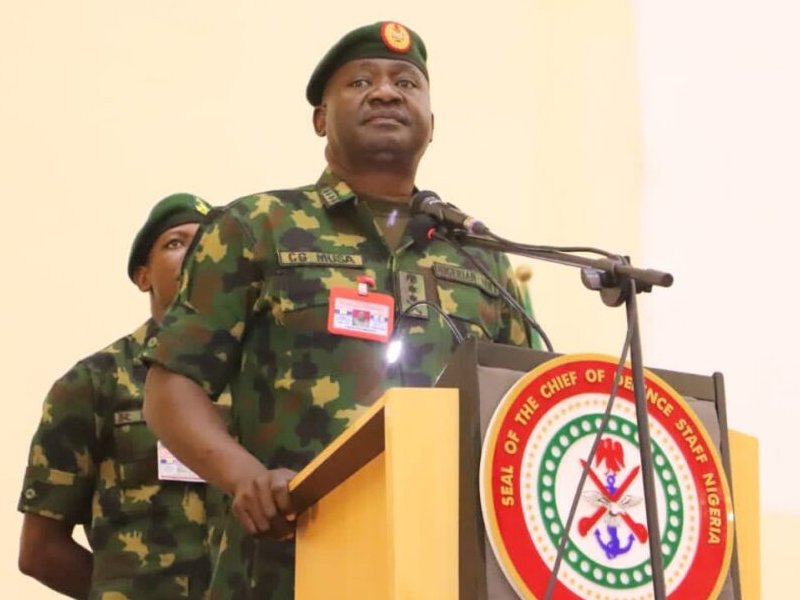
The Minister of Defence, General Christopher Gwabin Musa (Retd), has urged the international community to develop lasting support mechanisms for victims and survivors of terrorism, beyond emergency humanitarian assistance.
In a statement issued on Wednesday by the Special Adviser (Media) to the Minister of Defence, Leah Katung-Babatunde, Musa made the call in New York while addressing the Ministerial Meeting of the Group of Friends of Victims of Terrorism at the United Nations Headquarters, where he said Nigeria had secured 865 terrorism-related convictions in 2026.
The meeting, co-convened by Spain and Iraq, brought attention to the needs of terrorism victims and the need to incorporate their experiences into justice, rehabilitation and counter-terrorism responses.
The minister said terrorism had continued to impose a disproportionate burden on Africa, pointing out that Sub-Saharan Africa accounted for approximately 60 per cent of deaths from terrorism globally in 2025.
“Behind these figures are families displaced, livelihoods destroyed, communities fractured, and lives permanently changed,” Musa said.
He added: “Our task now is to ensure that the identified priorities and needs of victims, as well as lessons and good practices, are translated into sustained action.”
Musa said the 865 convictions recorded in Nigeria this year reflected the country’s efforts to ensure accountability for terrorism-related offences.
He, however, stressed that justice and security measures should be accompanied by effective assistance for those affected by violent extremism.
According to him, Nigeria’s response includes efforts to secure the release of captives and provide survivors with medical care, psychosocial rehabilitation, economic assistance and support for reintegration into their communities.
To strengthen international cooperation, the minister outlined three areas of focus: enhanced peer learning, inclusive partnerships and targeted United Nations support.
He advocated institutional arrangements that would enable countries to share operational models, referral mechanisms and lessons from their experiences, including approaches that had not achieved their intended outcomes.
Musa also called for stronger collaboration between government authorities, civil society organisations and victims’ associations, saying such partnerships would create channels for survivors to contribute meaningfully to justice and rehabilitation processes.
He urged the United Nations to increase technical assistance, capacity building and resource mobilisation for countries facing the heaviest terrorism burden.
The minister further commended the United Nations Office of Counter-Terrorism (UNOCT) Global Victims of Terrorism Support Programme and the Victims of Terrorism Associations Network (VoTAN) for their initiatives in supporting victims.
He also recognised Germany’s contribution to the development of the Toolkit for Technology-Enabled Support to Victims of Terrorism.
Musa reaffirmed Nigeria’s readiness to share its counter-terrorism experience and collaborate with other countries on survivor support.
He expressed optimism that the International Conference on Victims of Terrorism, scheduled for Baghdad, Iraq, in the fourth quarter of 2026, would further advance international cooperation in addressing the needs of victims and survivors.



