

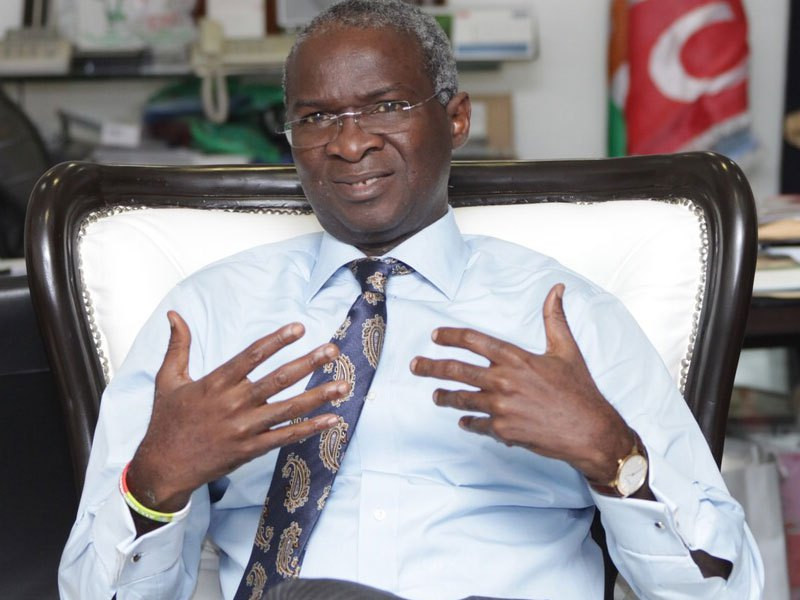
Babatunde Fashola (SAN), a former minister of works, has expressed worries about Nigeria’s reliance on outdated infrastructure from the 1970s and 1980s and has emphasized the urgent need for significant investment in the nation’s infrastructure.
During his speech at the Julius Berger Nigeria Plc “Luminary Soiree” dinner in Lagos, Fashola brought up the National Infrastructure Master Plan, which projects that funding for modernizing and expanding Nigeria’s infrastructure will need $2.3 trillion over the next 21 years (2020–2043).
Fashola emphasized the serious consequences of poor infrastructure in his address, “Outlook on the Construction Industry in Nigeria over the Next Five to Ten Years.”
He made the point that even while Nigeria produces its oil, the absence of essential infrastructure, like a local petroleum refinery, means that the country still imports a large amount of petroleum products. According to Fashola, this dependence accounts for close to 30% of Nigeria’s need for foreign money.
Fashola emphasized that shipping, insurance, and port fees could be significantly decreased by Nigerians producing petroleum products locally. He contended that this action might lower inflation and have a favorable effect on citizens’ cost of living.
“Some cost reductions such as shipping, insurance, and port taxes will be realized if petroleum products are created locally,” he stated. “And for those who have a broader view of the economy, They’ll comprehend the decrease in cost-push inflation and how it raises living standards.
“Gas pipelines, like the sea, airports, roads, bridges, and telecommunications infrastructure to supply broadband and related infrastructure in support of economic growth and jobs, are all subject to similar conditions.
Put simply, all economies that want growth, efficiency, and productivity have to make infrastructure investments corresponding to those goals.
Nigeria is one such nation, and as I have previously stated, we mostly rely on infrastructure constructed in the 1970s and 1980s since we devoted a big portion of the 1990s to the fight to restore democratic governance.
The most recent National Infrastructure Master Plan, 2020–2043, estimated at around $2.3 trillion over 21 years, or about $110 billion annually, makes clear how much development and construction we have ahead of us.
Fashola elaborated on the significance of infrastructure development, highlighting the need for investments in a range of industries, including telecommunications, gas pipelines, and transportation networks, to achieve economic growth, efficiency, and higher productivity.
He mentioned the building industry’s crucial role in promoting economic activity. Fashola provided data on the industry’s noteworthy contributions, such as creating jobs through road construction, housing development, and haulage activities.
Fashola stated that strong policies have been essential in recent times to mobilize resources for infrastructure development, even if he acknowledged the difficulties in financing infrastructure projects in the face of conflicting demands.



