

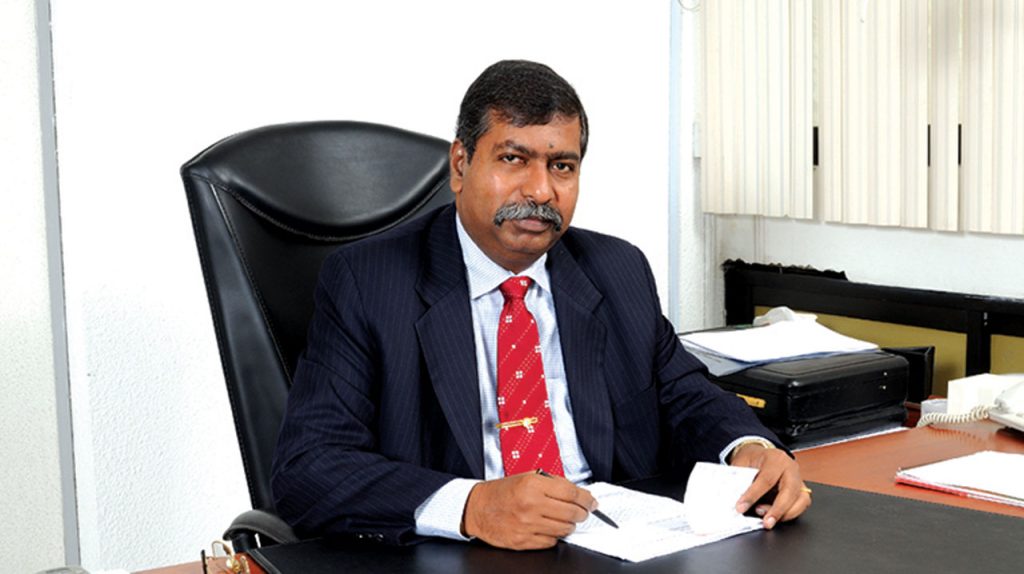
… Being transcript of address presented to senior editors of media houses during a facility tour of Dangote Petroleum Refinery and Petrochemical Company, Ibeju Lekki, Lagos recently
Dear Editors and News Directors, on behalf of the President and Management, I welcome you all to the Dangote Petroleum Refinery and Petrochemical Company.
The whole business transformation you see here started in the group when Alhaji Aliko Dangote decided that yes, he has made enough money, but what is going to be his contribution to the country? What is the legacy he is going to leave behind?
And he was very happy doing his trading business. He was bringing almost all the sugar requirements to the country. He used to bring it from Brazil. He was bringing most of the rice requirements for the country from Thailand. He was the largest importer of pasta into the country. From Italy, they used to make two brands exclusively for him, San Pietro and San Andreas. And he was bringing various other commodities too.
But he decided that okay, he should try to leave the real legacy behind. What would people remember me for? And that was in 1991. He decided to go into manufacturing, and that’s the time I joined. And he wanted to transform from trading to manufacturing. So, I joined him.
Of course, I joined as an employee. He recruited me. And we started with two textile mills, one in Kano and another in Lagos. But the industry was initially doing well. You know, textiles used to be the second largest employer in the country.
But the importation of products into the country totally destroyed the market. The second largest employer went totally down. All the textile mills were closed. In fact, we were there to the end of the spectrum.
We were not just making some part of the textiles. We were the only company, in fact, that was working right from the beginning. We were working with the cotton farmers. We had our own cotton ginning factories in Kankara in Katsina State.
So we used to buy the cotton directly from the fields and use our ginning factory to separate the lint from the seed. Then we were spinning the thread, weaving the cloth, we were bleaching, ginning, mercerizing, printing, everything we were doing, and still, the imported textiles destroyed the whole market.
He sat down and said, “Okay, what is the next opportunity?” We thought that, okay, everything we are importing, we should go into backwards integration.
We are importing sugar, so we decided to start with a sugar refinery and then sugar milling. We were importing pasta, so we wanted to go manufacturing pasta.
When we went into the manufacturing of pasta, we thought that, okay, who else is in pasta manufacturing? It was the Flour Mills of Nigeria. And they were also making flour.
So, if I go and put in a pasta plant, I have to go to Flour Mills of Nigeria to buy the flour. They were also producing pasta, so they would try to speed us out of the business. So, we decided we should also put in a flour mill.
And then he looked back, and we said, “Okay, I’m putting up a flour mill, I have to have bags for packing the flour.” I’m putting up sugar, I have to have bags for packing the sugar. Who is the biggest bag manufacturer? Bago, which is again Flour Mills of Nigeria Group.
Therefore, we thought that was not a good idea. So, we should also put up our own bagging plant. So, we came up with almost all the factors together. We came up with our first flour mills in Apapa and our pasta plant. That’s how we came up with our bag manufacturing plant in Ikeja and a sugar refinery in Apapa.
We also set up a cement terminal because we used to bring cement from Togo and Benin Republic. We started with a cement terminal before going into manufacturing.
So, all these activities came up simultaneously, and we were able to establish the business quite well. In fact, there was a time the president decided that his life and his future would be manufacturing and creating employment and generating wealth.
We always talk about him being the richest man in Africa. But where are his riches? It is all paper. It is all the shares which he is holding. It’s not cash. Every money he is making, he is reinvesting.
You are newspaper and broadcast media editors; you know that all our companies are listed. You know that because we are listed companies, we have to publish our accounts every quarter. So, you can go and track all the companies, how much money each of our companies made, and if you look at the balance sheet, how much all the companies invested in new manufacturing capacities. You will find out that every profit we made came back into the system in the form of new manufacturing activities.
That is why we started small with salt refining and all that grew up to this extent gradually because the money we have been investing is all the money made. The profit we make goes back into investments.
In fact, I was telling some people yesterday that when I joined Alhaji Dangote in 1991, he was already living in his current house. It has been 34 years since I joined him. The house is already 45 years old. He is living in a house which is 38 years old and he has not built any new house. He has not expanded the house. He is not making money to put into housing and buying properties.
In fact, when I joined him, he had a house in London. He had a house in Atlanta. He was a neighbour to Ted Turner, the former owner of CNN. He sold all the houses when we were doing the Apapa Sugar Refinery and put the money into the factories.
So, he is not investing in properties. He is not investing in his own things. And in the last 30 years I have been with him, I think he has changed his furniture in the house just thrice, maybe once in 10 years. He just doesn’t focus anything on himself. It’s all about making money, investing in manufacturing, making money, investing in manufacturing.
He is more interested in creating wealth in Nigeria, creating employment, adding to the GDP, and adding value within the country. The focus has been on backward integration. Later we went into cement.
Same thing we did. We built cement terminals and full-fledged manufacturing. But only in the case of cement, we decided to go outside Africa.
The reason being, there was a stage when we realized how manufacturing activities are crippled across Africa, especially sub-Saharan Africa. We have all the resources. We have iron ore, we have cobalt, we have copper, we have bauxite, we have oil, and we have gas. You name it, all the minerals are there. Gold, silver, uranium, diamonds. But everything is taken outside Africa to add value and bring it back.
A few months ago, I was in Walvis Bay in Namibia with the objective of putting up a terminal, an oil terminal there. I could see all the copper mined from Zambia and even in DRC, Katanga region, everything coming there to be exported. And then, if you want to buy an electric copper wire, it will come from somewhere outside Africa.
And every house has aluminum sheet roofing. We have bauxites, everything goes out, sheets are made, and coils are brought in just to roll into roofing sheets. So, the whole creation is done outside Africa by taking the raw materials out.
Not only that, we also realized that it is a kind of decided agenda because we really face the problem when we are doing the cement factor. As I said, we just started with a packing terminal to bring the bulk cement and pack so that we will know the market before we go fully into that.
And one of the biggest Groups in the world, currently Lafarge, came to us and they said, you guys don’t know how to manage the business, just give it to us, we will take it over, we will give you some small share of the profits.
We said no, we can manage the business, and we started. Immediately, they went to Global, they are all operating as a cartel, and they said nobody should give cement to Dangote. So, the terminals were stopped.
Finally, we found a company in Taiwan, a Chinese company, Taiwan Cement Corporation, who was willing to give cement to us, because they were not part of the white man’s cartel and so we started again.
Then they went to all the shipping companies because throughout Africa, they were not really producing cement, except in some little quantities. In Nigeria, they were producing a small quantity in Ashaka Cement, and a small one in Shagamu, the rest, everything was coming imported, and they were doing it all over Africa.
So, the cement used to come in the form of stones, called a clinker, or bulk cement and then bagged. So, they told all the shipping companies, don’t give us. Again, they were stopped. Then we found a company in Norway, which was willing to ship cement to us, to bring the cement. So, we used the Norwegian shipping company, and we used the cement company in Taiwan to bring in the product.
So, we knew how hard this life could be. That is why in the cement business, we also knew how all across Africa, this is what they were doing. That is the reason why we, after setting up the plant and really growing the business, decided to go all across Africa.
We went to Ethiopia, Tanzania, South Africa, Zambia, Republic of Congo, Cameroon, Ghana, and Cote D’Ivoire. At that time, we went to Senegal, Sierra Leone. So everywhere we went, everywhere they were just bringing cement or bringing clinkers. So, we went across Africa.
So, in the case of cement, we decided not only to add value within Nigeria but also all across Africa because we felt that they were really trying to cripple the countries.
Yes, they could have put up a cement plant easily. They are one of the biggest Groups in the world, and they are all the big groups, but they are forming a cartel. They will say, okay, nobody should go into this region. This region is for you. South America is for us. Africa is for you. Asia is for you. Like that, they have just divided the business.
Then we realized that, okay, Nigeria used to be most of the year’s number one importer of cement in the world. Some years it will be number two, others number one.
Now, we are able to export cement from Nigeria. We have an exclusive cement terminal in Apapa. We have set up a new terminal in Onne. So, we have a new cement plant coming up in Ogun State. It’s primarily to export cement. We don’t even have a bagging contract. It’s only to produce and export.
So, Nigeria has now become a net exporter. Now, the same thing we did in fertilizer. We have been exporting LNG. Instead, you can generate power, and you can produce fertilizer. I think you had an opportunity to see the fertilizer plant. 98 per cent of the feedstock is gas, natural gas. Another two per cent is atmospheric air.
So, we can see how much value we can add by just converting the natural gas into fertilizer. We can produce methanol. We can produce polyethene. We can produce polypropylene. So, a lot of value additions can be done, which is what we have been doing now.
And the same thing we did in crude oil. We had a lot of discussions about crude oil because there were a lot of vested interests. We were not sure whether it would be the right direction. Finally, the president said, “No, let’s go and make it, and we have done that.”
And in the case of the petroleum refinery, which you have seen today and if any of you have seen the other refineries in Nigeria, including Port Harcourt, Warri and Kaduna, you will see the difference. That is equivalent to only one or two departments of what you have seen here. It is the largest single-train petroleum refinery in the world.
Before we set it up, the largest single-train petroleum refinery was 430,000 barrels per day in the Middle East. So, what we have set up is 50% larger than the largest refinery. Major efforts went into it.
In fact, even the licensors were telling us it may not be possible. But we sat with them, watched and designed and developed.
But the biggest thing, which we are even more proud of, yes, we are proud of having the world’s largest single-train petroleum refinery, but what we are even more proud of is that a Nigerian company built it.
If you go all across the world, you can go to the U.S., you can go to Europe, you can go to Asia, refineries, whether they are built by Shell or Chevron or ExxonMobil or Total, they use a few construction companies.
Bechtel from the U.S., Saipem from Italy, Technic from France, JGC from Japan, Shimoda, etc. So, six companies are the ones who have practically built all the refineries in the world.
But when it came to our company, we went to them too. We went and talked to three of them. They all said, “Okay, you are talking about 650,000 barrels.”
The capital cost will be roughly $30,000 a barrel, which means 30,000 into 650,000 is about $19.5 billion. So, it’s a $20 billion investment. You will need to pay us a 15% fee, which is $3 billion.
And so, my president said, “Let’s go and build it ourselves.” We told him, “You see, companies like ExxonMobil, Shell, Total, Chevron, they have never tried it, and he wants us to do it.” It’s almost impossible.
Then he said, “Have you forgotten?” He has a plaque on his table, which says nothing is impossible. Have you forgotten what I keep on my table? So, he said nothing is impossible. Let’s just go and do it. And that was how we built this refinery. Dangote Projects Limited, built this refinery.
So, it is something every Nigerian should be proud of, that a Nigerian company attempted and built the world’s largest single-train refinery.
And now you can see the value addition which it is creating. You know, often we used to run short of fuel, especially during the Christmas season or sometimes when importers are having a problem.
Here, we have more than enough. We can hold a 15 days stock of fuel for the whole country. In the case of diesel, we can even hold more than one month’s stock. PMS, we can hold more than 15 days of stock and jets, much, much more.
So, we have, actually, what we are having here is like a national strategic reserve. Most countries have national strategic reserves. Unfortunately, we don’t have it because we don’t have a storage facility.
The only big storage facility is in Mosimi, which is not being used very well. So, we have a huge storage facility which will help the country to ensure that fuel is available throughout the year.
And the quality is the best. You can see we are exporting all our jet fuel primarily to Europe. Our gasoline has gone to the U.S. Our diesel is going to Europe. So, it’s not only a consistent supply of fuel, but also high-quality fuel.
And then, if you see the prices of fuel last year, after the subsidy was removed, it was going up. It stabilized at a level. You can go and check at what price it was selling before and at what price it is selling today.
I have been here for 34 years. I have not seen even the price of stationary paper or of pure water coming down. And we have seen for the first-time, fuel prices coming down.
So, we are not adding value only in terms of quality and consistency of supply, but in terms of pricing. Also, you can see the global impact of the price of the refinery.
You can see how the currency values have been stabilized and sometimes even becoming stronger because instead of importing huge quantities of finished petroleum products, now we are having products available locally, and we are also exporting products. So, we are also generating foreign exchange for the country.
There is a net benefit to the country. Instead of huge products outflow, now there is inflow, and also, outflow is reduced. So, there is an import substitution plus exports. And that is also helping the country in terms of stabilizing the currency.
In fact, if we continue to go in this direction strongly, the currency will even continue to become better. So, the refinery has been able to contribute in a large way.
And the same thing with fertilizer. Instead of LNG being wasted, it is now going as finished urea fertilizer, we are able to meet the full requirements of the country. And still we are exporting a huge quantity, it’s practically gone in most parts of the world.
Primarily, our exports go to the U.S. but we have also been exporting to Brazil, Argentina, Mexico, Colombia, and in Europe we are exporting to Turkey and even up to India we are exporting to Asia. So, the products have been going all over the world and also the quality is really good.
And so, in this way, we have been able to bring in a transformation into the economy of the country. Alhaji Dangote’s focus is to see how we can add more value to the nation’s economy.
As I said, he sold his properties overseas. He has not acquired any properties overseas. And he has not added any new personal house here, except the house he has been living in for almost 40 years.
His focus has been on how to create wealth within the country by creating employment and by transforming the economy of the country.
And now the next phase of investment, what he is looking at, is why should Nigeria export crude oil? Why can’t we convert everything to finished products and export?
So that is why a couple of days ago he made the announcement. He was thinking of doubling the capacity of our refinery and not only that, you must have seen, we are also producing polypropylene within this complex. And now we are thinking of adding more petrochemicals, polyethene and linear alkyl benzene.
Take linear alkyl benzene. Everybody uses detergent in their house, and to produce detergent, we need a chemical called linear alkyl benzene. For that, it has to come from outside. It has to come from the US or Europe or somewhere else. But it is something as simple as the detergent which we use in the house. Ultimately, the value addition has to come from somewhere else. And the raw material is here. Crude oil is here. So somebody produces linear alkyl benzene, and it is imported. And it is the same story everywhere.
We are looking at all other opportunities. In your car you use engine oil. Every factory uses lubricant oil. But to do that, you need what you call a base oil. The base oil has to come from outside Africa.
So, the economy of especially sub-Saharan Africa has been crippled more or less by importing all the key ingredients from outside. There are many companies that produce lubricant, but they all import the base oil from outside Africa.
So, this transformation is what we are looking at. And we are also talking with other countries, trying to encourage them to get into value addition.
Yesterday, I was telling somebody, you know, South Africa, people look at it as a reasonably developed country. But they mine the diamonds. But if a guy has to give a diamond ring to his wife, that diamond would have gone to Brussels or Amsterdam to cut it and polish it and bring it back to Africa.
This is because there is no cutting and polishing facility. So, the entire value is added there. And the money goes there.
So, the focus of Alhaji Aliko Dangote today is to add wealth to all the God-given raw materials within the country. And then export the finished products
That will definitely help us in creating employment, help us to create wealth, and the level of poverty will come down, and the general economic well-being of the people will go up.
So that is the philosophy with which Alhaji Aliko has been investing, and that is the primary driver behind this investment.
I thank you for coming.



