

BY GLORIA AKUDORO
The Transmission Company of Nigeria (TCN) has disclosed that a thunderstorm that occurred late in the evening of September 3, 2025, caused the snapping of the 132kV Otukpo–Nsukka–New Haven transmission line.
According to the statement signed by the General Manager, Public Affairs of TCN, Ndidi Mbah, the cut conductor fell to the ground near Tower 97 along the route.
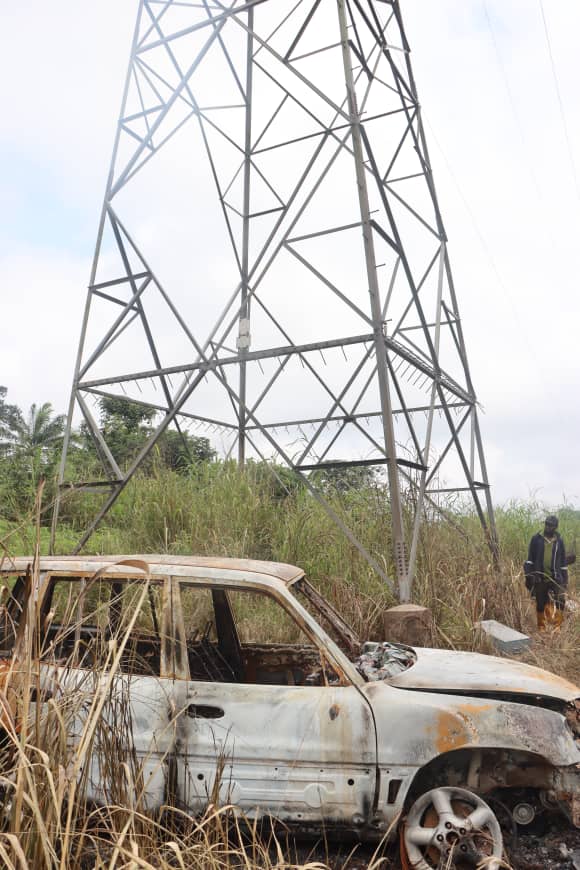
“Although there was no loss of human life, the high-voltage discharge from the fallen conductor unfortunately torched a house built under the transmission line, close to the tower, burnt a car parked under the transmission line right-of-way and killed two cows along the route,” Mbah said.
She posited that, immediately following the incident, the Regional Manager of TCN, Enugu Region, Engr. Tom Inugonum and his team visited the site of the incident for an on-the-ground assessment of the incident.
TCN’s Quick Response Line Maintenance Team has also been deployed to the site and has since commenced dismantling the damaged section of the line in preparation for restringing a new conductor.
“Despite the disruption, there has been no load loss to the Nsukka area, which is normally supplied through the affected transmission line. TCN has implemented a temporary alternative power supply arrangement by diverting bulk electricity through the Otukpo 132kV Transmission Substation to Enugu Electricity Distribution Company (EEDC) for onward distribution to the Nsukka axis,” she said.
While acknowledging that no human casualties occurred as a result of the incident, the company observed that the incident serves as a stark reminder of the critical need to avoid building, parking, or engaging in any activities within the transmission lines’ Right of Way (RoW).
TCN emphasized that such encroachments are extremely dangerous and pose serious risks to lives and property.
However, TCN urged the public to always respect the integrity of power infrastructure and comply with safety guidelines around transmission facilities as it remains committed to maintaining a stable and secure national grid while ensuring public safety.



