

By Victoria Yakubu
A UK-funded education programme has directly reached more than two million children across northern Nigeria and supported the training of over 25,000 teachers and facilitators, as government and development partners face the challenge of sustaining its gains following its closure.
The Partnership for Learning for All in Nigeria (PLANE), implemented by DAI, UNICEF, Save the Children and consortium partners, has supported improvements in foundational literacy and numeracy, strengthened school safeguarding systems and helped build the capacity of education institutions.
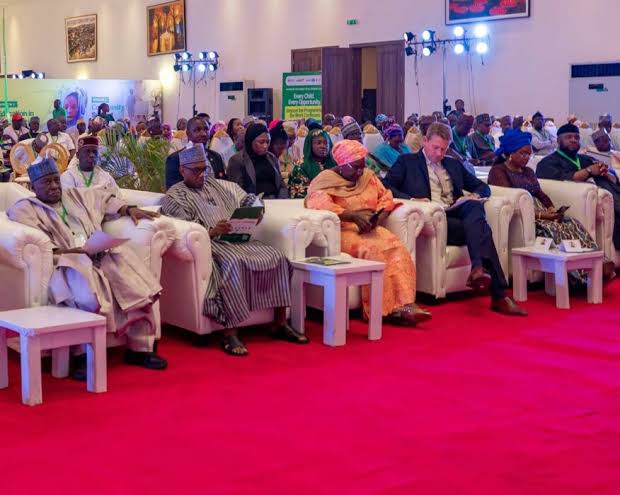
The programme’s achievements were highlighted on Wednesday in Kaduna at a close-out event attended by representatives of the United Kingdom, federal and state governments, teachers, education stakeholders and development partners.
Speaking at the event, the British High Commissioner to Nigeria, Pete Vowles, said the programme had demonstrated the importance of collaboration among governments, teachers, communities and development partners in improving children’s access to quality education.
He, however, stressed that sustaining the achievements beyond the programme’s closure would be critical to ensuring that more Nigerian children continue to benefit from improved learning opportunities.
“PLANE is closing. The UK’s education partnership with Nigeria is not,” Vowles said, reaffirming Britain’s commitment to education and human capital development in the country.
He said successful approaches introduced under the programme were being adopted and scaled by Nigerian institutions, expressing hope that the improvements recorded would continue beyond the programme’s lifespan.
PLANE was funded by the UK and worked with government institutions and communities to strengthen education delivery, particularly in northern Nigeria, where improving access to quality learning remains an important development priority.
The initiative supported foundational literacy and numeracy, strengthened policies and education systems, and generated evidence on how effective teaching approaches could improve learning outcomes when implemented at scale.
The Deputy Governor of Kaduna State, Dr. Hadiza Sabuwa Balarabe, who represented Governor Uba Sani, commended the UK government and the programme’s implementation partners for their contributions to education development in the state.
She said the programme had worked with state officials and communities, including those in remote areas, helping to build skills that would remain with teachers and education administrators after its conclusion.
Balarabe also acknowledged the support of the UK Foreign, Commonwealth and Development Office, the British High Commission and the PLANE implementation team.
Cynthia Rowe, Head of Development Cooperation at the British High Commission in Nigeria, said education remained one of the most important investments a country could make in its future.
She said PLANE’s achievements demonstrated the potential of evidence-based interventions, innovation and partnerships to improve learning outcomes.
Rowe added that the UK would continue collaborating with Nigerian governments, schools, universities and communities to support opportunities for the next generation, from foundational learning in primary schools to higher education and advanced skills development.



