

BY JENNIFER EZIMAKOR
The United Kingdom has relaxed its travel advisory on Kaduna State, acknowledging what it described as progress in tackling insecurity.
The Foreign, Commonwealth and Development Office (FCDO) reclassified Kaduna from ‘Red’ to ‘Amber,’ a shift that allows British citizens greater freedom to travel to the state.
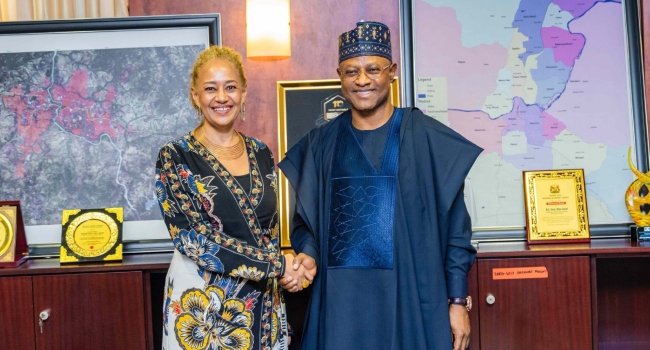
The announcement was made by FCDO Development Director, Cynthia Rowe, during the signing of the Kaduna Mutual Accountability Framework (KaMAF) with Governor Uba Sani in Kaduna on Thursday.
Rowe said Kaduna had been under the UK’s ‘Red’ category since 2022, a classification that discouraged British citizens from visiting because of high risks linked to insecurity. “The reclassification to ‘Amber’ reflects the progress made under Governor Sani’s leadership in addressing longstanding security challenges,” she said.
Kaduna, a key political and commercial hub in northern Nigeria, has endured years of violence, including banditry, kidnappings, and communal clashes. Those threats prompted foreign governments to issue strict travel warnings. But the UK’s adjustment signals renewed confidence in the state’s security landscape and its potential to draw international engagement.
Sani hailed the decision as a “clear endorsement” of his administration’s security and peace-building measures.
“This acknowledgement is a strong testament to the impact of our policies and a signal to investors that Kaduna is safe for business,” he said.
Since taking office, the governor has focused on reforms that strengthen security agency collaboration, expand community peacebuilding, and extend surveillance to rural areas. His administration has also been pushing investment in agriculture, infrastructure, and education, arguing that economic development is central to long-term stability.
Observers note that the UK’s reclassification could have both symbolic and practical significance. Beyond easing travel for British citizens, the move may encourage other foreign missions and investors to reconsider their risk outlook on Kaduna and northern Nigeria more broadly.
The development comes as Nigeria seeks to reassure international partners of its stability under President Bola Tinubu’s economic reform agenda. With its central location and abundant resources, Kaduna has been positioned as a potential hub for investment provided the security gains are sustained.
Signed by Rowe on behalf of the FCDO and Sani on behalf of Kaduna State, the KaMAF pact aims to expand on previous advancements in fields like agriculture, health, education, and government.
Sani says that the collaboration has already improved access to healthcare, strengthened teacher preparation, upgraded school facilities, and decreased maternal and child mortality.
Additionally, he stated that the productivity of crops and animals has been allocated over 10 percent of Kaduna’s 2025 budget. To boost public participation and fortify institutions, reform programs, including the Local Government Transparency, Accountability and Sustainability (LFTAS) programme, Issue-Based Projects, and Community Development Charters are also being put into action.
He also voiced hope that the new framework will quicken progress and strengthen Kaduna’s reputation as a state dedicated to inclusive prosperity and resilience.



