

BY JENNIFER EZIMAKOR
The United States has imposed sweeping sanctions on criminal networks in Southeast Asia accused of running massive online fraud schemes that have cost Americans billions of dollars.
In a press statement issued on Monday, Secretary of State Marco Rubio confirmed that the Treasury Department’s Office of Foreign Assets Control (OFAC) had sanctioned nine entities tied to scam centres in Shwe Kokko, Burma, operations allegedly protected by the Karen National Army, itself already sanctioned for facilitating online scams and forced labour.
The department confirmed that in 2024 alone, U.S. citizens lost at least $10 billion to scams orchestrated from Southeast Asia.
“These sanctions protect Americans from the pervasive threat of online scam operations by disrupting the ability of criminal networks to perpetuate industrial-scale fraud, forced labour, physical and sexual abuse, and theft of Americans’ hard-earned savings,” the State Department said.
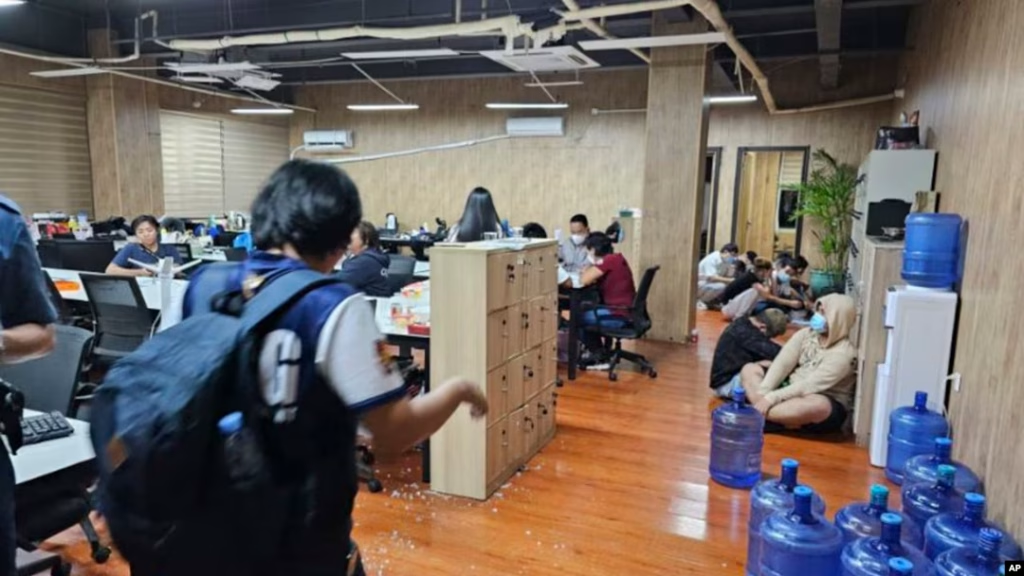
In Cambodia, four individuals and six organizations were added to the sanctions list for operating forced-labour compounds where workers are coerced into executing virtual currency scams targeting victims in the U.S., Europe, and China.
A recent investigation into one such compound offered sobering insight into how Americans fall prey. Fraudsters at a remote casino resort near the Thai border—Saitaku Resort and Casino—use social media platforms to attract victims. One scammer, identified as Bayu, admitted sending dozens of daily messages via Facebook, Instagram, and X to lure Americans into crypto investment frauds. According to the U.S. embassy in Cambodia, these scams have netted more than $100 million from Americans.
These operations are part of a broader and deeply disturbing trend. Scam centres in Cambodia employ “pig butchering” tactics, where scammers build trust online before tricking victims into high-risk cryptocurrency investments. The UN estimates that between 100,000 and 150,000 workers—many trafficked from abroad—are forced to carry out such fraud in Cambodia.
In Myanmar, the problem is even greater. Reports show that a hub known as KK Park, near the Thai border, houses as many as 100,000 trafficked individuals forced into online fraud. Victims describe life in fortified compounds run like tech campuses, complete with satellite internet systems and watchtowers enforcing inescapable control.
While U.S. sanctions and international pressure aim to dismantle these networks, the scale remains staggering, with UN and NGO reports suggesting hundreds of thousands remain trapped.


