

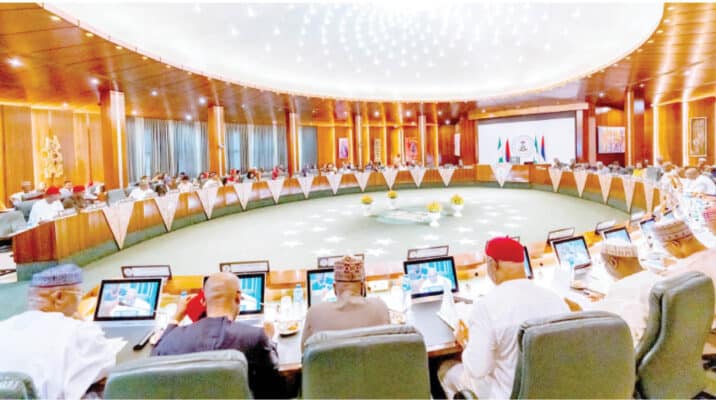
The National Economic Council (NEC) has underlined the need for Nigeria to abandon archaic livestock-raising techniques and embrace contemporary ones.
The council decided this at its meeting on Thursday at the Presidential Villa in Abuja, under the direction of Vice President Kashim Shettima. The gathering was held in the midst of an increase in violence in areas like Plateau, Benue, and Kwara, where several attacks have recently claimed many lives.
Along with a number of other governors, including Hyacinth Alia of Benue, Abdulrahman Abdulrazaq of Kwara, Monday Okpebholo of Edo, and Bassey Otu of Cross River, the meeting was attended by Delta State Governor Sheriff Oborevwori, who recently defected from the Peoples Democratic Party (PDP) to the All Progressives Congress (APC).
Several states’ deputy governors were also included in the deliberations.
Following the meeting, Bayelsa State Governor Douye Diri told reporters that the council emphasized how critical it is for Nigeria to modernize cattle management.
“We cannot continue to live in the past, and we must now work towards modernizing livestock production in Nigeria,” Diri stated after the council’s emphasis.
He clarified that conflicts between farmers and herders in different areas are being exacerbated by the way animals are now raised. In response, the Accelerated Livestock Development and Growth Strategy was unveiled by the recently formed Ministry of Livestock Development. Its goal is to raise livestock sector revenue to between $70 billion and $90 billion by 2035.
In central Nigeria, conflicts between farmers and herders are frequent, especially when it comes to land. Hyacinth Alia, the governor of Benue State, has previously claimed that recent attacks in the local government districts of Ukum and Logo were the work of “suspected herdsmen.” The violence in the Middle Belt may have an ethnic or religious component because the farmers are primarily Christians and the herders are frequently Muslim Fulani.
Unknown gunmen massacred more than 100 persons in Plateau State in two separate incidents just this month. The situation in Plateau has gotten worse as a result of the killings, which have killed over 50 people in just two districts. Local authorities say the murders were “sponsored by terrorists” and have called them “genocide.”
A herders’ group has condemned the killings in Plateau, but also pointed out that farmers have attacked their members. In the Plateau and other parts of the Middle Belt, like Benue, land is becoming scarce due to climate change and population growth, leading to deadly conflicts over land ownership and usage rights. The lack of police presence in these rural areas often exacerbates the situation, as people take matters into their own hands, seeking revenge when violence breaks out.



