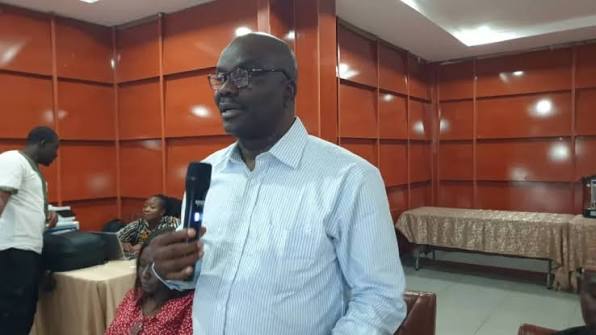
Jennifer Hembafan Alih is the founder of Julebrama Women and Children Initiative
(JUWACI). The organisation was established to tackle the pressing and very numerous
needs of vulnerable members of the society, particularly women, youths and children,
especially those with disabilities in Nigeria. In this interview with Iji Veronica, she said
JUWACI has been able to train over 100 students, dug several boreholes and carried out
many more intervention programmes in communities.
Excerpts:
What motivated you to establish Julebrama Women and Children Initiative (JUWACI)?
Thank you and please permit me to give detailed responses. My motivations were:
1. Passion for helping others: I have always been driven by a strong desire to make a positive impact in the lives of those that come in contact with me and the community where I find myself.
2. My Personal experiences: All my life, I have witnessed, firsthand, the challenges faced by women and children in Nigeria, including poverty, lack of access to good and quality education, healthcare and livelihood, and social injustice. I am also very concerned about the drastic climate changes and I take deliberate actions and efforts to reduce the negative impact of these changes.
3. Empowerment: I wanted to create an organisation that would empower women and children to break the cycle of poverty and reach their full potential.
4. Community development: My aim is to contribute to the development of my community by addressing the social, economic, and environmental challenges faced by its members. By establishing JUWACI, I had the intention of creating a supportive ecosystem that fosters education, healthcare, economic empowerment, and social justice for women and children, ultimately leading to a more equitable and prosperous society.
Which areas of focus is JUWACI in terms of the UN Sustainable Development Goals?
Our thematic focus areas which aligned with the United Nations Sustainable Development Goals (UNSDGs) Framework are: Education (SDG 4: Quality Education) JUWACI is dedicated to breaking the cycle of poverty and empowering future generations by enhancing educational opportunities for children and youth in underserved communities. Our initiative is aimed at ensuring inclusive and equitable education and fostering lifelong learning opportunities for all. We have trained over a hundred students free of tuition fees.
Our programs include:
•Establishing and supporting schools in underserved communities.
•Providing scholarships and educational resources to marginalized students and children with disabilities.
•Promoting gender equality in education through targeted programs for girls (SDG 5).
•Enhancing digital literacy and skills development to prepare youth for the modern workforce.
Health (SDG 3: Good Health and Wellbeing)
We are committed to promoting good health and well-being by improving the quality of life for vulnerable populations through health sensitization outreach, disease prevention, and access to essential healthcare services.
Our health initiatives include:
•Implementing maternal and child health programs to reduce mortality rates.
•Strengthening healthcare systems through capacity building and training for healthcare workers.
•Conducting health education campaigns to raise awareness aboutpreventive care and healthy lifestyles.
•Providing support for mental health and psychosocial services in underserved areas and for Sexual Gender Based Violence (SGBV) and Gender Based Violence (GBV) survivors.
Livelihood and Empowerment (SDG 1: No Poverty & SDG 8: Decent Work and Economic Growth) JUWACI’s livelihood programmes are designed to reduce poverty and promote sustainable economic growth by designing initiatives that aim to enhance economic opportunities and equip individuals with the tools and resources they need to thrive. These programmes include:
•Providing vocational training and skill acquisition programs to empower youth and women.
•Supporting small-scale farmers with modern agricultural techniques and access to markets.
•Establishing village savings and loans associations and entrepreneurship programs to foster economic independence.
•Promoting gender equality in economic opportunities by supporting women-led enterprises. Climate Action (SDG 13: Climate Action) In response to the growing threat of climate change, JUWACI is committed to building climate resilience and promoting environmental sustainability within vulnerable communities. We integrate climate resilience into our development projects.
Our climate change initiatives include:
•Promoting sustainable agricultural practices and reforestation projects to combat land degradation (SDG 15).
•Educating communities on climate adaptation strategies and disaster risk reduction (SDG 11).
•Supporting the development of renewable energy solutions to reduce carbon emissions (SDG 7).
•Advocating for climate justice and supporting vulnerable populations disproportionately affected by climate change. Humanitarian Response (SDG 16: Peace, Justice, and Strong Institutions) In times of crisis, JUWACI is committed to delivering timely and effective humanitarian aid to marginalized and vulnerable populations.
Our humanitarian response efforts include:
•Providing emergency relief supplies, including food, water, and shelter, to disaster-affected communities. Providing several boreholes for the communities.
•Supporting internally displacedpersons (IDPs) and refugees with essential services and protection.
•Coordinating with local and international partners to ensure a comprehensive and sustainable
response.
•Facilitating community resilience programs to enhance preparedness and reduce vulnerability to future crises.
How do you source funds for your programmes?
Our funding has come from donations from personal business, other organisations and individuals who give free will donations to support our programmes.
What are your major challenges if any?
As an organisation, the following have been our major challenges:
1. Funding constraints: Limited access to resources and funding to support our projects and programs.
2. Infrastructure and logistics: Inadequate infrastructure, transportation, and communication
networks, especially in rural areas.
3. Security concerns: Safety risks for staff and beneficiaries, particularly in conflict-affected areas.
4. Policy and regulatory hurdles: Navigating complex government policies, regulations, and bureaucratic processes.
5. Cultural and social barriers: Addressing deep-rooted cultural and social norms that may hinder
program effectiveness.
6. Limited access to data and research: Scarce reliable data and research to inform programme design and implementation.
7. Capacity building: Developing the skills and capacity of staff and partners to effectively implement programs.
8. The task of Community engagement and participation, by ensuring active participation
and ownership from beneficiary communities.
9. The challenge of Collaboration and coordination: Fostering effective partnerships with government, private sector, and other NGOs has been a huge challenge.
10. Climate and environmental factors: Mitigating the impacts of climate change, natural disasters, and environmental degradation.
11. Health system challenges: The huge task of strengthening the healthcare system, addressing
shortages of medical supplies and personnel.
12. Educational system limitations: Overcoming inadequacies in the education system, including the high number of out of school children, infrastructure and qualified teachers.
Are you in collaboration with any foreign organization?
We are in collaboration with the Mindshift Empowerment and Employment Initiative Turkey and The 1808 Foundation, United Kingdom and others.
Where do you see JUWACI in the next ten years?
At JUWACI, here is our vision for the next ten years:
1. Established leader: JUWACI becomes a renowned and respected leader in Nigeria’s NGO sector, recognised for its impactful programs and commitment to sustainable development.
2. Expanded reach: JUWACI’s programmes and services extend to more states in Nigeria, with a strong presence in both urban and rural areas.
3. Diversified funding: JUWACI secures funding from a range of sources, including international
donors, corporate partners, and individual supporters, ensuring financial sustainability.
4. Strong partnerships: JUWACI fosters robust partnerships with government agencies, private sector organizations, and other NGOs, amplifying its impact and influence.
5. Innovative programs: JUWACI develops and implements innovative, technology-driven solutions to address pressing social and environmental challenges.
6. Empowered communities: JUWACI’s work empowers marginalized communities, promoting self-sufficiency, resilience, and improved livelihoods.
7. Capacity building: JUWACI invests in staff development, ensuring a skilled and dedicated team capable of driving the organisation’s mission forward.
8. Advocacy and policy influence: JUWACI becomes a vocal advocate for policy changes and social justice, influencing decision-makers to prioritize the needs of vulnerable populations.
9. Scalable impact: JUWACI’s programs and initiatives achieve scalable impact, with measurable outcomes and a clear return on investment.
10. Sustainable future: JUWACI ensures its own sustainability, with a strong focus on environmental stewardship, social responsibility, and economic viability.
Are you satisfied with the level of government regulation of NGOs in Nigeria?
The level of government regulation of NGOs in Nigeria is a topic of ongoing debate. In my opinion, the government can streamline regulations, simplify and clarify regulations, reducing
unnecessary bureaucratic burdens. Also, it can encourage transparencyby fostering a culture of transparency and accountability within NGOs, rather than relying solely on government
oversight. Government can also protect NGO autonomy by making sure regulations respect the autonomy and independence of NGOs, allowing them to operate freely and effectively