By Joel Ajayi
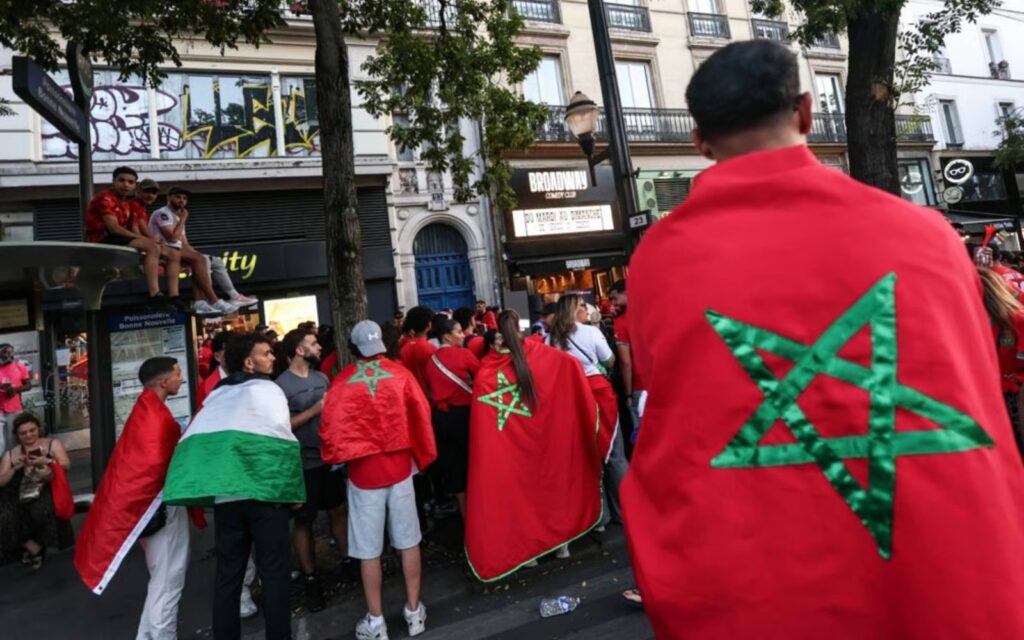
When Morocco became Africa’s last remaining representative at the 2026 FIFA World Cup, many expected a repeat of the extraordinary continental solidarity that accompanied the Atlas Lions’ historic run in Qatar four years earlier.
In 2022, Morocco captured the imagination of the football world by becoming the first African nation to reach a FIFA World Cup semi-final. Their victories over Belgium, Spain and Portugal inspired millions across Africa.
From Lagos to Nairobi, Accra to Johannesburg, supporters celebrated every Moroccan triumph as if it belonged to the entire continent.
The Atlas Lions were no longer simply Morocco’s national team – they had become Africa’s team.
But when Morocco’s impressive 2026 World Cup journey ended, the reaction across much of Africa was noticeably different.
While many football fans applauded the North African nation for another commendable tournament, there was no overwhelming wave of continental heartbreak.
Instead, social media platforms such as X, Facebook, TikTok and Instagram reflected sharply divided opinions. Some fans expressed disappointment, while others openly admitted they were relieved to see Morocco eliminated.
For many outside Africa, the mixed reactions were puzzling. Why did Africa appear less united behind its final representative?
The answer goes far beyond football. It touches on questions of identity, continental solidarity, sportsmanship and a series of events over the past year that gradually altered public perception of Morocco among many African supporters.
Morocco’s remarkable investment in football infrastructure, youth development, coaching and administration has made the country one of Africa’s leading football powers.
Following the unforgettable achievements of Qatar 2022, many expected the Atlas Lions to remain the natural rallying point for African football fans.
Instead, discussions increasingly shifted away from football itself towards questions about Morocco’s relationship with the rest of the continent.
For many supporters, football became intertwined with identity. One of the biggest turning points came after comments widely attributed to Morocco’s Sports Minister, Mohammad Saad Berrad, who reportedly stated that Morocco was competing for itself rather than for Africa.
Whether intended as an expression of national pride or simply a clarification of Morocco’s sporting ambitions, the remarks sparked widespread debate across the continent.
Many African supporters interpreted the statement as dismissive of the solidarity they had shown Morocco during its memorable 2022 World Cup campaign.
A simple question emerged across football discussions: “If Morocco says it is not representing Africa, why should Africa unite behind Morocco?”
The debate soon extended beyond football. Journalists, commentators and supporters questioned whether continental support should always be automatic when a country’s own sense of continental identity appeared uncertain.
Ironically, the identity debate became more complicated because Morocco’s national team coach, Walid Regragui, consistently projected a different message.
Throughout the 2022 World Cup and afterwards, Regragui repeatedly emphasised that Morocco was proudly African. Whenever international media focused primarily on Morocco’s Arab or Middle Eastern identity, he reminded audiences that his team represented Africa on the world’s biggest football stage.
Those comments earned widespread admiration throughout the continent.
However, the contrasting messages from different Moroccan officials created confusion. Many supporters were left wondering which position truly reflected Morocco’s identity.
Was Morocco proudly embracing Africa, or selectively distancing itself from the continent?
That uncertainty weakened some of the emotional connection many Africans had developed with the Atlas Lions.
Another issue repeatedly mentioned by football supporters involved recognition. Many believed Morocco openly celebrated support from Arab nations and the wider Muslim world but did not equally acknowledge the passionate backing it received from supporters across sub-Saharan Africa.
Football is driven by emotion, and perception often shapes public opinion more strongly than facts.
Millions of Africans vividly remember gathering in homes, viewing centres and public spaces to celebrate Morocco’s victories during Qatar 2022. Those celebrations represented genuine continental pride.
When some supporters later felt that enthusiasm had not been reciprocated or publicly appreciated, admiration gradually gave way to disappointment.
If the identity debate created cracks in Morocco’s relationship with some African supporters, the 2025 Africa Cup of Nations final against Senegal widened them considerably.
The final became one of the most controversial matches in recent African football history.
A disputed late penalty decision triggered fierce protests from Senegal’s players, with the match temporarily halted as tensions escalated. Senegal briefly left the field before eventually returning.
Months later, the Confederation of African Football ruled that Senegal’s actions amounted to forfeiture and officially awarded the title to Morocco.
Legally, the issue was settled. Emotionally, many supporters remained unconvinced. Across parts of West Africa, debates over refereeing decisions, fairness and sportsmanship continued long after the trophy presentation.
Additional controversies also fuelled criticism. Television footage appeared to show Morocco captain Achraf Hakimi throwing away Senegal goalkeeper Édouard Mendy’s towel during a crucial stage of the AFCON final. The incident quickly went viral online.
Some defended Hakimi’s actions as part of football’s competitive psychology. Others considered the behaviour unnecessary and beneath one of Africa’s biggest football stars.
Additional videos also circulated showing confrontations involving ball boys and Senegalese players.
Earlier in the tournament, Nigeria goalkeeper Stanley Nwabali had publicly complained about similar experiences involving ball boys during Morocco’s matches.
Moroccan supporters rejected many of these allegations, arguing that several incidents had been exaggerated or taken out of context. Regardless of the truth, the controversies contributed to a growing perception problem.
In today’s digital era, football debates rarely disappear. Every interview, controversial decision and viral clip remains permanently accessible online.
By the time Morocco reached the latter stages of the 2026 World Cup, months of unresolved arguments had already shaped public opinion.
Following the Atlas Lions’ elimination, many online reactions referenced events stretching back over the previous year rather than focusing solely on the team’s World Cup performance.
Some cited the Sports Minister’s remarks. Others revisited the AFCON final controversy. Many criticised what they viewed as selective solidarity, while others accused Morocco of arrogance.
Despite the divisions, it would be inaccurate to suggest that Africa celebrated Morocco’s exit. Millions of supporters continued backing the Atlas Lions throughout the tournament.
For them, football should rise above politics, regional rivalries and historical disagreements. Their argument remained straightforward: whenever an African nation competes against traditional football superpowers, it deserves the support of the entire continent. To them, Morocco’s victories remained victories for African football.
Ultimately, the conversation surrounding Morocco’s World Cup exit reflects broader issues extending far beyond sport.
It raises important questions about identity, belonging and continental unity. Can Morocco proudly embrace its African, Arab and Muslim identities simultaneously? Must national pride conflict with continental solidarity? Can Africa celebrate its diversity while maintaining unity? These are complex questions without easy answers.
Morocco occupies a unique geographical and cultural position, linking Africa, Europe and the Arab world.
Many simply wanted reassurance that Morocco valued Africa as deeply as Africa had embraced Morocco during its unforgettable journey in Qatar.
Despite the recent controversies, Morocco remains one of African football’s greatest success stories.
The Atlas Lions have enhanced Africa’s global football reputation and inspired countless young players across the continent.
Nevertheless, Morocco’s 2026 World Cup experience provides an important lesson for African football. Success alone does not automatically guarantee lasting affection.
Supporters are far more likely to embrace teams that make them feel included in the journey.
When emotional bonds weaken, unity inevitably becomes more difficult to sustain.
As African football continues to grow in quality, visibility and global influence, conversations about identity, representation and mutual respect will become increasingly important.
Preserving continental unity will require thoughtful leadership from governments, football federations, administrators, coaches and players alike.
For Morocco, rebuilding stronger emotional ties with sections of African supporters may require clearer communication and more visible demonstrations of continental solidarity.
For the rest of Africa, the episode serves as a reminder that football should unite rather than divide.
Morocco’s 2026 World Cup campaign ended on the pitch. But the wider debate it ignited—about identity, belonging, recognition and what it truly means to represent Africa—will continue long after the final whistle.
How African football responds to those questions may ultimately shape not only future World Cups but also the strength of the continent’s unity for generations to come.